

You’ve shown the property, collected applications, and found a candidate who seems perfect on paper. Now, you’re waiting on the background check, and the silence can be frustrating. Is no news good news? What’s really happening behind the scenes? The truth is, a comprehensive screening is a multi-step investigation, and its timeline depends on several moving parts. From instant credit reports to verifying employment with a busy HR department, each piece takes time. If you've ever wondered how long do tenant background checks take and why some are faster than others, you're in the right place. We’ll walk through each stage of the process so you can manage your leasing pipeline with confidence and keep your applicants informed.
Leasing Services · SF Bay Area
Schedule a Leasing Consultation
Learn how Rentals Inc. helps property owners reduce vacancy, attract qualified applicants, and lease with confidence.
Schedule a Leasing ConsultationKey Takeaways
- Plan for a 1-to-3-Day Process: A thorough background check isn't instant because it involves verifying credit, employment, and rental history separately. Setting this expectation helps you manage your vacancy timeline and communicate clearly with applicants.
- Prevent Delays at the Source: The most common slowdowns are incomplete applications and unresponsive references. You can keep the process moving by using a clear application form and advising potential tenants to give their references a heads-up.
- Define Your Criteria for Faster Decisions: Establishing objective standards for income, credit, and rental history before you list your property allows you to evaluate every applicant consistently, which speeds up your choice and ensures compliance with Fair Housing laws.
What Is a Tenant Background Check?
A tenant background check is a standard process landlords use to evaluate potential renters. Think of it as essential due diligence for your investment property. By reviewing an applicant's financial records, rental history, and personal background, you get a clear, factual picture of who might be living in your unit. This screening is fundamental to making an informed, objective decision and is a critical step in protecting your asset from potential risks like property damage or unpaid rent.
The goal isn't to be invasive; it's to verify that an applicant is reliable, responsible, and has a history of meeting their financial obligations. A thorough check confirms the information provided on the rental application and helps you select a qualified tenant who will treat your property with respect. In a competitive market like the San Francisco Bay Area, having a consistent screening process is key. When you work with a professional service, the entire process is handled efficiently and in full compliance with local and federal fair housing laws. This not only gives you peace of mind but also saves you valuable time, allowing you to build a positive and professional landlord-tenant relationship from day one.
What a Full Screening Includes
A comprehensive tenant screening goes beyond a quick gut check. It’s a multi-step investigation that typically includes a credit check, a criminal background check, employment verification, and a review of past landlord references. Each component provides a different piece of the puzzle, giving you a well-rounded view of the applicant. The credit check reveals their financial habits and history of paying bills on time, which is a strong indicator of their ability to handle rent. The background check uncovers any relevant criminal history or past evictions. Finally, verifying employment confirms their income source, while speaking to previous landlords gives you direct insight into what they were like as a tenant. Together, these steps help you assess risk and choose a responsible renter.
Why Landlords Run Background Checks
Running a background check is one of the most effective ways to protect your property and your rental income. The primary reason is risk management. A thorough screening allows you to identify potential issues—like a history of late payments or property damage—before you hand over the keys. This proactive step helps you avoid the stress and high costs associated with evictions, unpaid rent, and unexpected repairs. By establishing a consistent and fair screening process for every applicant, you ensure you are placing reliable and qualified tenants in your property. This not only secures your investment but also contributes to a safer and more stable community for all residents. Ultimately, taking the time to screen tenants properly is a smart business decision that minimizes vacancies and supports long-term profitability.
How Long Does a Tenant Background Check Take?
When you have a promising applicant, waiting for their background check to clear can feel like a test of patience. You want to fill your vacancy quickly, but you also need to be thorough to protect your investment. So, how long does a tenant background check actually take? While the complete process typically wraps up in one to three business days, it’s made up of several smaller checks, each with its own timeline. Understanding these components helps you set realistic expectations for yourself and your potential tenants, ensuring a smooth and efficient leasing process from start to finish.
A comprehensive screening is your best defense against future problems like late rent, property damage, or even an eviction. It’s not just about finding someone who can pay; it’s about finding someone who will be a responsible steward of your property. The time invested upfront pays off by reducing turnover and protecting your asset's value. The total timeline depends on several factors, including the responsiveness of the applicant and their references, as well as the thoroughness of the service you use. Let's break down the four key components of a background check and how long each one typically takes so you can plan accordingly.
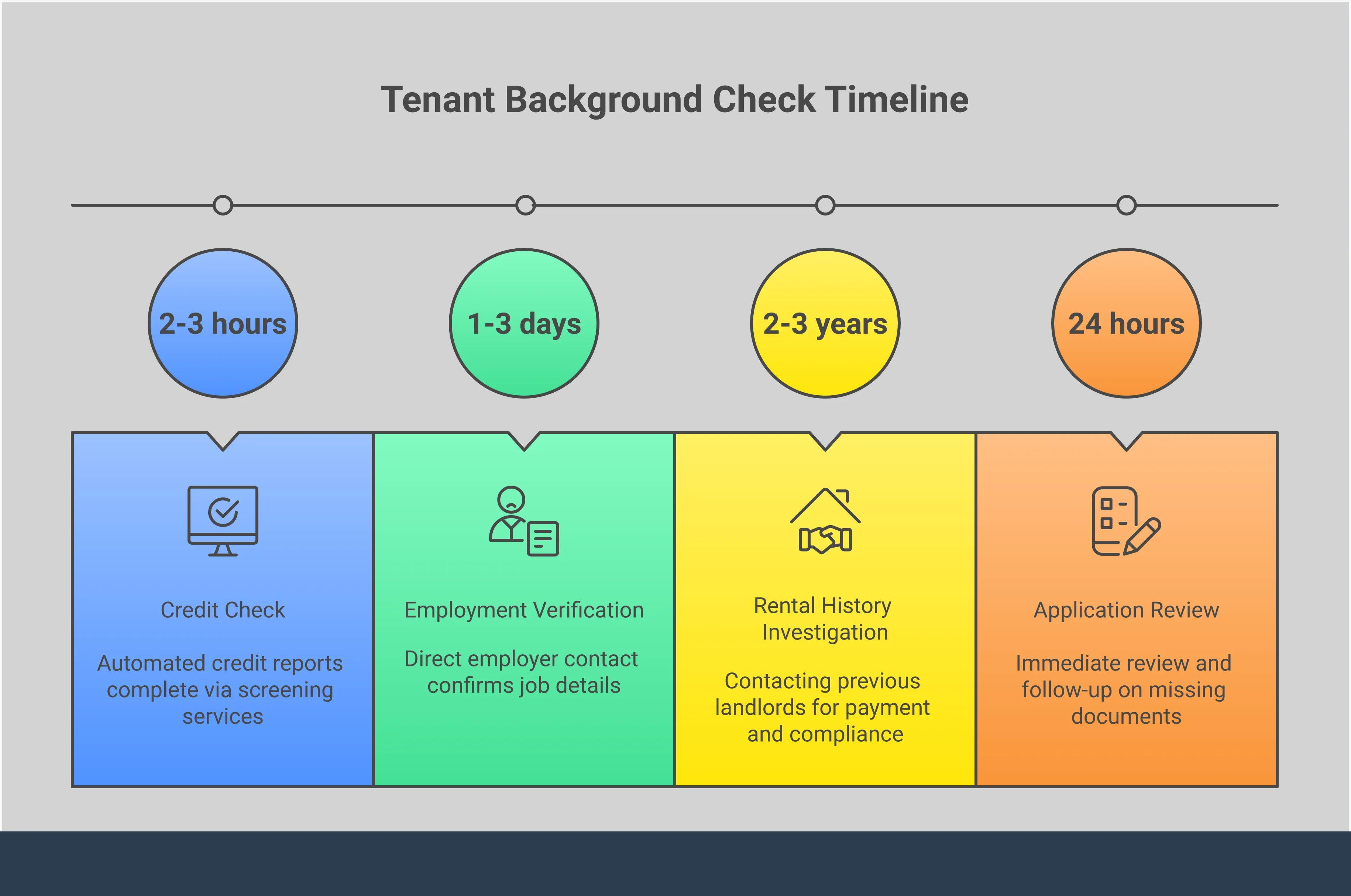
Credit Checks: 2–3 Hours
A credit check is often the fastest part of the screening process, usually taking just two to three hours. This report gives you a snapshot of an applicant's financial health, showing their payment history, debt levels, and overall creditworthiness. Because most credit reporting is automated, you can get this information almost instantly. It’s a crucial first step in assessing whether an applicant manages their financial obligations responsibly, which is a good indicator of how they’ll handle rent payments.
Employment Verification: 1–3 Days
Confirming an applicant's employment and income is essential, but it often takes a bit more time—typically one to three days. This step involves contacting the applicant's employer to verify their job status, salary, and length of employment. The timeline depends heavily on how quickly an HR department or manager responds. Delays can happen if the contact person is unavailable or if the company has a formal process for releasing employment information. This is why clear and accurate application details are so important.
Rental History Verification: 1–3 Days
Understanding how an applicant behaved in past rentals is one of the best predictors of future behavior. Verifying rental history can take anywhere from a few hours to a few days. The process involves reaching out to previous landlords to ask about on-time rent payments, property maintenance, and whether they followed the lease terms. Much like employment verification, the speed of this check depends entirely on the responsiveness of the references provided. A quick call might be all it takes, but tracking down a busy landlord can sometimes stretch the timeline.
Criminal Background Checks: 1–3 Days
A criminal background check helps ensure the safety of your property and community. The turnaround time for this report can range from a few minutes for an instant database search to about one to three days for a more comprehensive review. More detailed checks, especially those that require manual verification of court records, can sometimes take longer. It's important to have a consistent screening policy and understand how to interpret these reports in compliance with Fair Housing laws to ensure a fair process for all applicants.
What Determines the Background Check Timeline?
While a typical tenant background check takes between one and three days, the timeline isn't set in stone. Several key factors can influence how quickly you get a complete picture of your applicant. Think of it as a collaborative process—the speed depends not just on your screening service, but also on the applicant and the people they list as references. A delay in one area can easily push back the entire timeline.
Understanding these variables helps you set realistic expectations for both yourself and your potential tenants. It also highlights where you can be proactive to keep the process moving smoothly. From the completeness of the initial application to the responsiveness of a past landlord, each piece plays a critical role. Let's look at the four main factors that determine how long you'll be waiting for those results.
Applicant Responsiveness and Complete Paperwork
The single biggest factor in the screening timeline is often the applicant themselves. An organized, responsive applicant who submits a complete and accurate application from the start can make the process incredibly fast. When all necessary documents—like pay stubs, photo IDs, and signed consent forms—are provided upfront, the screening service can get to work immediately without needing to chase down missing information.
Conversely, an incomplete application is the number one cause of delays. A simple typo in a previous address or a missing digit in a phone number can bring everything to a halt. That’s why providing clear instructions and a comprehensive application form is so important. It empowers applicants to give you everything you need in one go, minimizing back-and-forth and getting you closer to a decision.
Availability of References
You can have the most diligent applicant in the world, but the process can still hit a snag if their references are slow to respond. Verifying employment and rental history requires contacting past employers and landlords, and their availability is completely out of your—and your applicant's—control. A previous landlord might be on vacation, or an HR department might have a multi-day turnaround time for verification requests.
To help manage this, encourage applicants to give their references a heads-up that a call is coming. This simple step can prime them to respond more quickly. While waiting for a reference can be frustrating, remember that this is a crucial part of your due diligence. A thorough rental history verification is one of the best indicators of a reliable future tenant, so it’s worth the wait.
Screening Service Workload
Not all screening services are created equal. The company you use to run the check plays a significant role in the timeline. Some services are simply faster and more efficient than others, leveraging better technology and streamlined processes to deliver results quickly. A professional service often has direct access to credit bureaus and databases, which speeds things up considerably compared to a landlord trying to manually verify information piece by piece.
The service's current workload can also be a factor. During peak rental seasons, even the best companies may experience slight delays due to high volume. This is why working with an experienced partner is so valuable. At Rentals Inc., we use trusted, efficient screening services to ensure our clients get comprehensive reports as quickly as possible, helping you fill vacancies with qualified tenants without unnecessary delays.
Complex Rental or Employment Histories
A straightforward history is always the quickest to verify. If an applicant has lived at the same address and worked at the same job for several years, the verification process is simple. However, more complex histories naturally require more time to investigate thoroughly. This might include applicants with multiple addresses in the last few years, several recent job changes, or periods of self-employment.
Similarly, red flags like a past eviction or a criminal record will require deeper review to ensure you have all the necessary context. While it might extend the timeline, this is a sign of a diligent process. Taking the extra day or two to understand an applicant's full history is essential for making an informed leasing decision and protecting your investment in the long run.
What Slows Down a Tenant Background Check?
A thorough tenant background check is your best tool for protecting your investment, but delays in the process can extend vacancy periods and impact your bottom line. While a standard screening can be completed in just a few days, several common roadblocks can bring the timeline to a halt. Understanding these potential hurdles helps you set realistic expectations and manage the leasing process more effectively.
Most delays aren't caused by the screening service itself, but by external factors related to the applicant's information or the responsiveness of their references. From a simple typo on an application to a previous landlord who won’t return a call, small issues can quickly add up. By anticipating these common problems, you can better guide applicants and keep the process moving forward. The goal is to gather all the necessary information efficiently so you can make a confident and timely decision about your next tenant.
Incomplete or Inaccurate Applications
The most frequent cause of delay is also the most preventable: an application that is missing information or contains errors. Even minor mistakes, like a mistyped phone number for a previous landlord or an incorrect employer name, can stop the screening process cold. When information is inaccurate, the screening service has to pause its work to track down the correct details, which often requires going back to the applicant.
This back-and-forth extends the timeline unnecessarily. Before you even begin a background check, it’s wise to review the application for completeness. Ensure every field is filled out and that the provided contact information seems correct. A quick review upfront can save you days of waiting for corrected information and help you maintain momentum.
Unresponsive References or Past Landlords
Even with a perfectly completed application, you are still dependent on the cooperation of third parties. Delays often happen when a previous landlord, employer, or personal reference is slow to respond—or doesn't respond at all. Your screening service can’t verify rental history without speaking to a past landlord, and they can’t confirm employment without connecting with the right person in HR.
While you can’t force someone to answer the phone, you can encourage applicants to help speed things up. Advise them to give their references a heads-up that they should expect a call. This simple step ensures they are prepared to provide the necessary information promptly. When references are difficult to reach, it creates a bottleneck that is entirely out of your control.
Discrepancies on a Credit Report
A credit report provides a clear picture of an applicant's financial responsibility, but it can also introduce delays. If the screening uncovers discrepancies, such as an address history that doesn’t match the application or unexpected collections accounts, it may require further investigation. The applicant might need to provide an explanation or documentation to clarify the issue, adding extra steps to the process.
Furthermore, the complexity of the background check itself can affect the timeline. If your screening includes multiple components—like criminal, education, and driving records in addition to a credit check—it naturally takes longer. Each individual check adds another layer to the process, and a discrepancy in any one area can pause the entire screening until it’s resolved.
Delays in Employment Verification
Verifying an applicant's employment and income is a critical step, but it often depends on the internal processes of their employer. Contacting a large corporation’s human resources department can be a slow-moving affair, especially if they have specific procedures for handling verification requests. Some companies may require a formal written request or use a third-party service, each of which adds time.
Typically, employment verification takes one to three days, but this can easily stretch longer if the HR contact is out of the office or slow to provide the necessary documents. If an applicant is a freelancer or has non-traditional income sources, verifying their financial stability may require additional paperwork like bank statements or tax returns, further extending the timeline.
How Tenants Can Speed Up the Process
Waiting for a background check to clear can feel like the longest part of finding a new home. While you can’t control how quickly a screening service works or how fast your old landlord responds, you have more influence over the timeline than you might think. Being organized, responsive, and transparent from the start can significantly shorten the wait. It shows the property manager that you’re a serious, reliable applicant and helps them complete their due diligence without unnecessary delays. By taking a few proactive steps, you can help move your application to the top of the pile and get an answer sooner. This approach not only speeds things up but also starts your relationship with your potential new landlord on a positive note, which is always a good thing when you're looking for a place to call home in the competitive Bay Area market.
Prepare All Documents in Advance
Think of your rental application like a go-bag—you want everything packed and ready before you need it. Before you even start touring apartments, gather all the necessary paperwork. This typically includes a government-issued ID, your last two or three pay stubs, recent bank statements, and contact information for your references. Having digital copies of these documents saved in a secure folder on your computer or cloud drive makes the application process incredibly efficient. When a landlord requests your information, you can send a complete, organized package within minutes. This preparation shows you’re on top of things and makes the landlord’s job much easier, which can help your rental application stand out from the rest.
Provide Accurate Contact Information
A simple typo can bring your application to a screeching halt. One of the most common reasons for delays is incorrect contact information for employers or previous landlords. Before you hit submit, take a minute to double-check every field. Is your email address spelled correctly? Is your phone number right? Most importantly, have you verified the contact details for your references? Make sure you have the correct phone number and email for your current manager and past landlords. It’s also a good idea to give them a heads-up that they should expect a call. This small step ensures the screening company can reach the right people quickly, preventing the frustrating back-and-forth that happens when contact details are wrong.
Respond Quickly to All Requests
Once you’ve submitted your application, stay on high alert. The property manager or screening service might need additional information or clarification, and your response time matters. Turn on email notifications and keep your phone handy. If you get a request for another document or consent to run a specific check, treat it with urgency. A quick reply shows that you’re engaged and eager to move forward. Landlords are often processing multiple applications at once, and the applicant who provides information promptly is often the one whose file gets completed first. Your responsiveness demonstrates that you’ll likely be a communicative and responsible tenant, which is a huge plus for any property owner.
Be Transparent About Rental History
If you have a blemish on your rental or credit history, it’s almost always better to address it upfront. Landlords appreciate honesty, and a background check is designed to uncover these details anyway. Whether it’s a low credit score from a past medical bill or a complicated situation with a previous landlord, provide a brief, factual explanation with your application. This gives you the chance to frame the narrative and show that you’ve taken steps to resolve the issue. Being transparent builds trust and can often outweigh the initial concern. A landlord is more likely to work with an honest applicant than someone who appears to be hiding something, which is a key part of a fair screening process.
What to Do While You Wait
The waiting period after submitting a rental application can feel like the longest part of the process. While the landlord or property manager is doing their due diligence, you aren’t powerless. Staying proactive can help manage the stress and keep your housing search moving forward. Instead of just waiting by the phone, here are a few practical steps you can take to stay in control of the situation.
How to Follow Up with the Landlord
It’s best to give the property manager some space to complete their review. If you haven’t heard back after three to five business days, a polite follow-up is perfectly reasonable. A brief email or phone call to check on the status of your application shows you’re still interested without being pushy. Simply state your name, the property you applied for, and ask if they need any additional information from you. This approach keeps the lines of communication open and reinforces your interest. For more guidance on navigating the rental process, California provides a helpful guide for tenants that outlines rights and responsibilities.
Know What a Reasonable Wait Time Is
The screening process typically takes between 24 and 72 hours. However, this timeline can easily extend, especially if the landlord needs to verify information with past landlords or employers who may not be immediately available. Background and credit checks can also add a day or two. If a week passes, it doesn't necessarily mean you've been rejected. Understanding these variables can help set realistic expectations. Our relocation services team often helps clients manage these timelines, ensuring all parties have the information they need to make a decision without unnecessary delays.
Continue Your Housing Search
Until you have a signed lease in hand, it’s wise to keep your options open. Don’t stop looking at other properties just because you’ve submitted an application you feel good about. The rental market, especially in the Bay Area, is competitive. Continuing your search ensures you have backup options ready and prevents you from losing momentum if your first choice doesn't work out. Keep browsing rental listings and scheduling viewings. This proactive approach puts you in a stronger position, no matter the outcome of your pending application.
When to Follow Up on Your Application
You’ve found a great place, submitted your application, and paid the fee. Now comes the hardest part: waiting. While it’s tempting to check in every day, giving the landlord or property manager enough time to review everything is key. Knowing when and how to follow up shows you’re responsible and genuinely interested without being pushy. A thoughtful follow-up can make a positive impression and keep your application top of mind.
The Right Time to Reach Out
Patience is a virtue in the rental application process. Landlords and property managers are often handling multiple applications for a single unit, which involves verifying income, checking references, and running background reports. These steps take time.
If you haven't heard anything after one full week, it’s a good time to make contact. This timeframe shows respect for the manager’s process while reaffirming your interest in the property. A simple check-in can bring your application back to the top of their pile and demonstrate that you’re organized and proactive.
How to Communicate Professionally
When you follow up, keep your communication brief, polite, and professional. An email is usually the best approach, as it’s less intrusive than a phone call and creates a written record.
Your message doesn’t need to be long. Simply state your name, the property you applied for, and the date you submitted your application. You can say something like:
“Hi [Property Manager Name], I'm following up on my application for the apartment at [Address], which I submitted on [Date]. I’m still very interested and wanted to check on the status or see if you need any additional information from me. Thank you for your time.”
This simple note is effective and shows you’re considerate of their busy schedule.
Know Your Rights as an Applicant
While you wait, it’s helpful to understand your rights. Landlords can legally charge an application fee to cover the cost of a credit and background check. However, the application process must be fair and non-discriminatory.
Federal Fair Housing laws protect applicants from being denied housing based on race, color, religion, sex, national origin, familial status, or disability. For example, if you are denied an apartment solely because you don’t have a Social Security Number, it could be a violation of these regulations. Being an informed applicant helps you ensure you’re treated fairly throughout your housing search. If you're moving to the area, our relocation services can help you get familiar with the local market with confidence.
After the Screening: What Comes Next?
The background check is complete, and you’ve made a decision. This next step is critical. How you communicate an approval, denial, or a delay sets the tone for your professional reputation and, in the case of an approval, the future landlord-tenant relationship. Clear, prompt communication is key to finalizing the lease with your chosen applicant and professionally managing any issues that arise. A well-handled process ensures you secure the best tenants and maintain a positive standing in the competitive Bay Area market.
What to Expect After an Approval
Once you’ve approved an applicant, move decisively. The best tenants often have multiple options, and delays can cause you to lose them to another property. Most applicants expect the entire process to take less than a week, so a quick response after screening meets their expectations and builds immediate goodwill. Start by extending a formal offer, either verbally or in writing, congratulating them on their approval. Clearly outline the next steps: signing the lease agreement, the deadline for paying the security deposit, and when the first month’s rent is due. Having a clear, efficient system helps you streamline the leasing process and get your new tenant moved in smoothly.
How to Address Red Flags or Delays
Screening doesn’t always go perfectly. Delays often happen when you’re waiting for an employer to verify income or a previous landlord to return your call. If the process is taking longer than a few days, proactive communication is essential. Let the applicant know what’s causing the delay. A simple update like, “We’re still waiting to hear back from your previous landlord to verify your rental history,” manages expectations and shows professionalism. If you uncover a red flag, address it based on your pre-defined rental criteria. Consistency is crucial for staying compliant with fair housing guidelines and ensuring every applicant is treated equitably.
Streamline Your Tenant Screening Process
A slow tenant screening process leads to longer vacancies and lost income. The key to filling your property quickly with a reliable tenant isn't cutting corners—it's creating an efficient, consistent system. By defining your standards upfront and using the right tools, you can review applications and make a decision in days, not weeks. This protects your investment and ensures you place a qualified tenant who is set up for success. A streamlined approach also provides a better experience for applicants, reflecting well on you as a landlord.
Set Clear Screening Criteria
Before you list your property, decide on the qualifications you require. Establishing clear, objective criteria is the foundation of a fast and fair screening process. This framework should include a minimum credit score, a specific income-to-rent ratio, and a clean rental history with no prior evictions. With these standards in place, you can quickly and consistently evaluate every application. This not only speeds up your decision-making but also helps you adhere to Fair Housing laws by applying the same criteria to every applicant, ensuring a compliant process from the start.
Use a Professional Screening Service
Manually checking references and running credit reports is time-consuming. A professional tenant screening service shortens the timeline significantly. These services use technology to access comprehensive reports covering credit history, criminal records, and past evictions—often in just a few hours. This gives you all the information needed to make an informed decision without delay. At Rentals Inc., we handle the entire screening process for you, leveraging professional tools to find qualified tenants for your Bay Area property while you focus on other priorities.
Stay Compliant with All Regulations
While speed is important, compliance is critical. A swift screening process must follow all federal, state, and local housing laws. The San Francisco Bay Area has specific regulations landlords must follow, and a misstep can lead to serious legal consequences. It’s essential to balance thoroughness with efficiency. This includes knowing what to ask on an application and how to handle screening fees. Partnering with a local expert ensures your process is not only fast but also fully compliant, protecting you from potential disputes.
Related Articles
- Work With Rentals Inc | Property & Renter Solutions | Rentals Inc
- Relocation Support & Housing Guidance | Rentals Inc | Rentals Inc
- Find Bay Area Rental Options | Rentals Inc
Leasing Services · SF Bay Area
Schedule a Leasing Consultation
Learn how Rentals Inc. helps property owners reduce vacancy, attract qualified applicants, and lease with confidence.
Schedule a Leasing ConsultationFrequently Asked Questions
Do I need an applicant's permission to run a background check? Yes, you absolutely must get an applicant's written consent before running a background check. This is a requirement under the Fair Credit Reporting Act (FCRA). Most standard rental application forms include a section where the applicant provides this authorization. Getting this signature not only keeps you compliant but also shows the applicant that you operate professionally and transparently.
What should I do if an applicant has a low credit score or a past eviction? Finding a red flag like a low credit score doesn't have to mean an automatic denial. The key is to have consistent, pre-defined screening criteria for all applicants. For example, you might accept a lower credit score if the applicant can provide a larger security deposit or has a strong co-signer. For past evictions, consider how long ago it occurred and the circumstances. Having clear standards helps you make objective decisions and stay compliant with Fair Housing laws.
Can I run a background check myself, or should I use a professional service? While you can attempt to verify information on your own, using a professional screening service is far more efficient and reliable. These services have direct access to credit bureaus and comprehensive databases, delivering a complete report in a fraction of the time it would take you to contact references and verify records manually. More importantly, a professional service ensures the entire process is handled in full compliance with all relevant laws, protecting you from potential legal issues.
How do I handle income verification for a self-employed applicant? Verifying income for freelancers or business owners requires a different approach than calling an HR department. Instead of pay stubs, you should ask for documents that provide a clear picture of their financial stability. The most common and effective documents are the last two years of tax returns and the three most recent bank statements. This information allows you to confirm a consistent and sufficient income stream to cover the rent.
What is the single biggest thing I can do to speed up the screening process? The most effective way to ensure a fast screening process is to start with a complete and accurate application. Before you even begin the background check, review the application to make sure every field is filled out and all necessary documents are attached. An incomplete form is the number one cause of delays, as it forces you to go back and forth with the applicant to get the information you need. A thorough review upfront can save you days of waiting.