

Every landlord has heard the horror stories: late rent, damaged property, and costly evictions. These situations don't just happen by chance; they often start with a weak screening process. Protecting your investment begins with choosing the right tenant, and that requires looking beyond the application form. A thorough background check is your most effective tool for minimizing risk and securing peace of mind. But what does a comprehensive check actually involve? Understanding what is included in a tenant background check—from credit reports and eviction history to criminal records—is the first step toward making a fair, informed, and confident leasing decision.
Leasing Services · SF Bay Area
Schedule a Leasing Consultation
Learn how Rentals Inc. helps property owners reduce vacancy, attract qualified applicants, and lease with confidence.
Schedule a Leasing ConsultationKey Takeaways
- Establish your rental criteria first: Before listing your property, create a written set of qualifications for all applicants, such as a minimum credit score and a specific income-to-rent ratio. This ensures you evaluate everyone fairly and consistently, which is your best defense against potential discrimination claims.
- Verify information beyond the application: A thorough screening process requires you to actively confirm the details an applicant provides. This means contacting previous landlords to ask about payment history, calling employers to verify job stability, and analyzing the full credit report, not just the score.
- Understand your legal responsibilities: You must get an applicant's written permission before running a background check. If you deny their application based on information in the report, you are legally required to provide them with an adverse action notice explaining their rights.
What Is a Tenant Background Check?
A tenant background check is a standard part of the rental application process. Think of it as a tool that helps you get a clearer picture of who you’re renting to. These reports, often called resident screening reports, are put together by specialized companies that gather information from various sources. A comprehensive check gives you a look into an applicant's financial responsibility and rental history, helping you make a fair and informed leasing decision.
A typical report includes four key pieces of information: a credit report, eviction history, criminal history, and income verification. Each part offers a different perspective on the applicant's reliability. The credit report shows how they manage their finances, while the eviction history tells you if they’ve had issues with previous landlords. Together, these components help you assess risk and choose a tenant who is likely to pay rent on time and take care of your property.
Why You Need to Run One
Running a background check is one of the most effective ways to protect your rental property and your peace of mind. The primary goal is to find reliable tenants who will pay rent consistently and respect your property. Skipping this step can expose you to significant financial and logistical problems. Renting to an unqualified applicant can lead to late or missed payments, property damage, and complaints from neighbors.
Ultimately, a thorough screening process saves you time and money. The cost of an eviction, both in legal fees and lost rent, can be substantial, especially in the Bay Area. By investing a small amount of time and money upfront to properly vet applicants, you can avoid these costly headaches down the road. It’s a foundational step in building a positive and profitable relationship with your tenants.
Staying Compliant: The Legal Basics
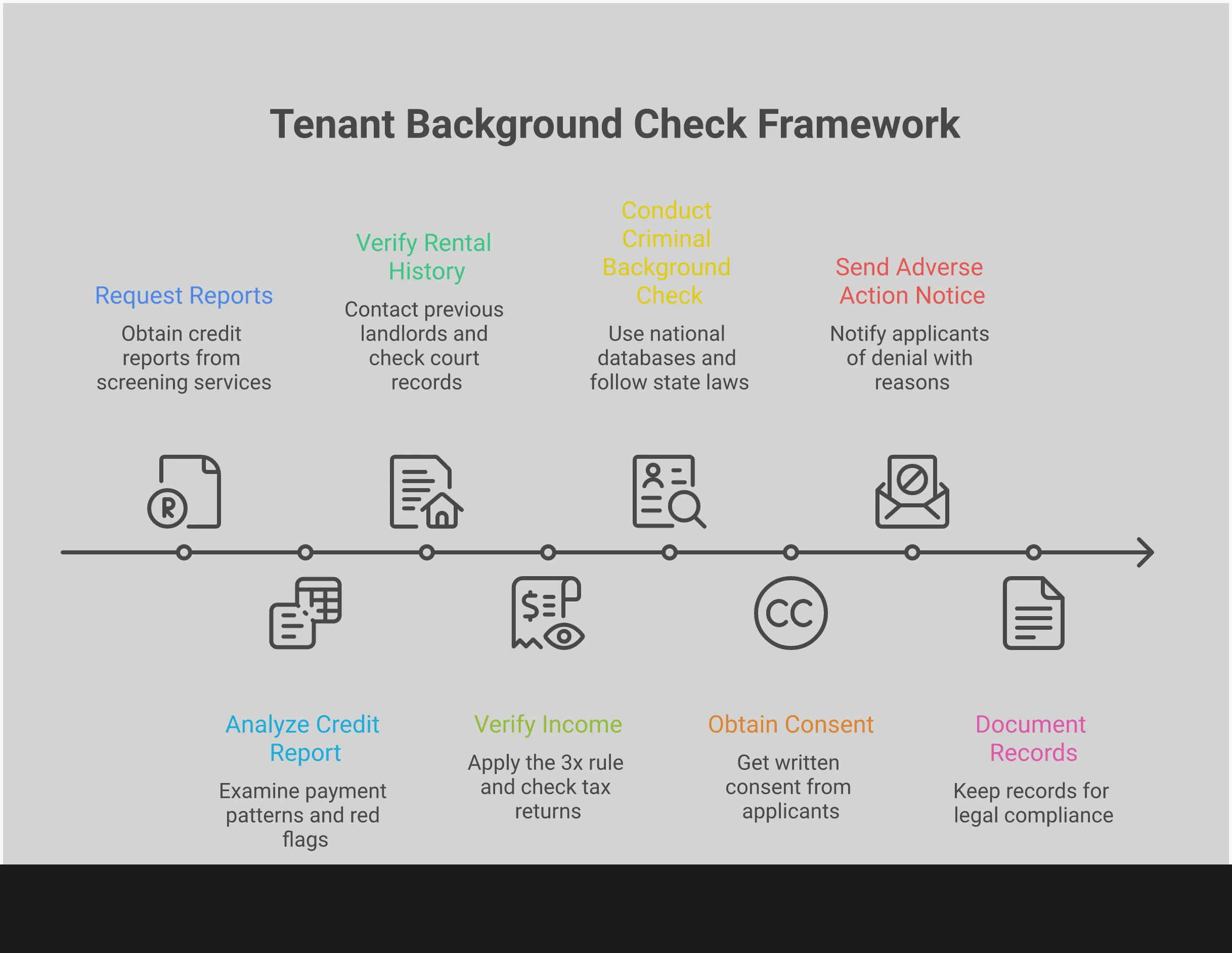
While background checks are essential, you have to conduct them legally. The process is regulated to protect applicants, so it’s important to follow the rules. First and foremost, you must get written permission from an applicant before running a credit or background check. This is a non-negotiable first step.
The Fair Credit Reporting Act (FCRA) is the federal law that governs these reports. Under this act, if you decide to deny an applicant based on information in their screening report, you are required to provide them with an "adverse action notice." This written notice must inform them of the denial, name the company that provided the report, and let them know they have the right to dispute the information. Following these guidelines ensures you are screening applicants fairly and legally.
What to Look for in a Credit Report
A credit report is one of the most valuable tools you have for evaluating a potential tenant. It offers a detailed look into an applicant's financial habits and helps you predict their ability to pay rent consistently and on time. Think of it as a financial resume. It shows you their current debts, how they’ve handled payments in the past, and any major financial issues like bankruptcies or collections.
Reviewing this report carefully is a critical step in protecting your investment and finding a reliable tenant. It allows you to verify the information an applicant provides and make a decision based on objective financial data. If you need support with this part of the process, our team can work with you to handle the entire screening process from start to finish.
Decoding the Credit Score
The three-digit credit score is a quick summary of an applicant's credit history. Scores typically range from 300 to 850, and a higher score generally indicates lower risk. While there’s no magic number, most landlords look for a score in the mid-600s or higher. It’s a good practice to establish a minimum score as part of your rental criteria to maintain consistency across all applications.
However, the score itself doesn't tell the whole story. It’s important to look at the factors contributing to that number. For instance, a lower score due to past medical debt might be less concerning than a score dragged down by a pattern of missed credit card payments. Use the score as a starting point, but always dig deeper into the full report.
Analyzing Payment History
The payment history section is where you’ll find the most telling details. Look for a consistent record of on-time payments. A few late payments over several years may not be a dealbreaker, but a recent history of missed payments or accounts in collections is a significant red flag. Also, pay attention to the amount of debt an applicant carries, especially high-interest debt like credit card balances.
A large number of recent credit applications can also signal financial instability. One of the most important rules is to always run the credit report yourself through a reputable screening service. Never accept a report provided by the applicant, as it could be altered or incomplete. This ensures you get an accurate and unbiased financial history.
Understanding Debt-to-Income Ratios
A great credit score doesn’t mean much if the applicant can’t actually afford your property. This is where the debt-to-income (DTI) ratio comes in. While a full DTI calculation isn't always on a standard credit report, you can assess affordability by comparing their verified income to their rent and other debt obligations.
A widely used guideline is the "3x rule," which suggests an applicant's gross monthly income should be at least three times the monthly rent. This simple check helps ensure that tenants have enough income to cover rent comfortably after their other financial commitments are met. Setting a clear income requirement helps you find a financially stable tenant and reduces your risk of dealing with late payments down the road.
Verifying an Applicant's Rental History
An applicant’s credit report tells you about their financial habits, but their rental history shows you what they’re like as a tenant. This step gives you direct insight into how they’ve treated previous properties and their relationships with landlords. A thorough rental history check is one of the best ways to predict how an applicant will behave in your property, making it an essential part of your screening process.
Getting this information requires a bit of detective work, from contacting past landlords to searching for public records. It’s a non-negotiable step for protecting your investment and ensuring a positive rental experience for everyone involved. If you’re short on time, our team can work with you to handle the entire screening process, including detailed rental history verification. We focus on finding reliable tenants who will care for your property as if it were their own.
What to Ask Previous Landlords
Contacting an applicant’s previous landlords is your chance to get a firsthand account of their tenancy. When you call, be prepared with a list of specific questions to guide the conversation. Go beyond a simple "Were they a good tenant?" and ask questions that give you a clearer picture. Did they consistently pay rent on time? Did they maintain the property well, or were there damages beyond normal wear and tear? Were there any complaints from neighbors? A landlord’s willingness to answer these questions can tell you a lot. One of the most telling questions you can ask is, "Would you rent to them again?" Their answer, and any hesitation behind it, often speaks volumes.
Confirming On-Time Rent Payments
A history of on-time rent payments is one of the strongest indicators of a reliable tenant. It shows financial stability and a respect for their contractual obligations. When speaking with a previous landlord, make this one of your first questions. While a single late payment over several years might be understandable, a pattern of late payments is a significant red flag. It could signal that the applicant is living beyond their means or is disorganized with their finances. This information helps you assess the risk of future payment issues, which can save you from months of stress and lost income down the road.
Checking for Prior Evictions
An eviction is a landlord’s last resort, and a history of eviction is a serious concern. An eviction check will search public court records for any judgments against a potential tenant, such as for non-payment of rent or other serious lease violations. Research shows that tenants with a past eviction are nearly three times more likely to be evicted again. While you must apply your screening criteria consistently to all applicants, an eviction record is a critical piece of information for assessing risk. A comprehensive tenant screening service will always include a national eviction search to help you make an informed and objective decision.
Screening for Criminal History
A criminal background check is a standard part of the screening process, designed to help you protect your property, your other tenants, and the surrounding community. While it can feel like a sensitive topic, it’s a necessary step for responsible property management. A thorough report gives you a clearer picture of who you’re renting to, allowing you to make an informed decision based on objective information. However, it's critical to handle this information correctly and in full compliance with local and state laws to ensure a fair process for everyone.
What a Criminal Background Check Reveals
A criminal background check searches millions of public records to identify past convictions. Data from screening services shows that a significant number of applicants have some kind of criminal record, so it's a step you don't want to skip. A quality report will scan national databases like the FBI’s Most Wanted list and Sex Offender Registries. It also pulls from federal, state, and county court records to provide a comprehensive view of an applicant’s history. This information helps you assess potential risks and maintain a safe environment for your rental community.
Navigating State Laws and Lookback Periods
Before you review a criminal record, you need to understand the rules, especially here in California. The law is very specific about what you can and cannot consider. For example, you can only inquire about an applicant’s criminal history after you’ve made a conditional offer to rent. California landlords must follow strict regulations and cannot use arrests that didn’t lead to a conviction, sealed or expunged records, or nonviolent offenses older than seven years in their decision. Understanding these rules isn't just about fairness; it's about protecting your business from potential legal issues. Following a consistent, compliant process is your best defense.
How to Verify Employment and Income
Confirming an applicant's income is one of the most important parts of the screening process. It’s not just about a single number; it’s about ensuring they have a stable, reliable source of funds to cover rent each month. This step protects your investment and minimizes the risk of late or missed payments. A thorough but fair income verification process sets the foundation for a successful tenancy.
Assessing Job Stability
A steady income is the best indicator that a tenant can consistently afford the rent. While pay stubs show what someone earns, job stability tells you how likely they are to continue earning it. Proper income verification is crucial to ensure that a tenant can afford the rent. A common rule is that a tenant's monthly income should be at least three times the rent. This simple benchmark provides a clear, objective standard for all applicants.
To get a fuller picture, you can request permission to contact their current employer. A quick call can confirm their job title, start date, and employment status. This helps you verify the information on their application and gives you more confidence in their ability to meet their lease obligations.
What Counts as Proof of Income?
To verify income, you need clear documentation. The most common and reliable proof is a recent pay stub. It's a good practice to ask for several months of pay stubs to check income and confirm its consistency. This helps you see an average and account for any fluctuations from overtime or bonuses.
Other acceptable documents include W-2s, recent tax returns, or an official offer letter on company letterhead if they are starting a new job. If an applicant’s income is too low on their own, you might consider allowing a co-signer, which is someone else who agrees to pay if the tenant can't. This can be a great way to approve a promising applicant who just needs a bit of extra financial backing.
Handling Non-Traditional Income Sources
In the Bay Area, many qualified renters have income that doesn't come from a traditional 9-to-5 job. It’s important to have a process for these situations. Be sure to verify any non-traditional income sources, such as freelance work or government assistance, by requesting documentation that clearly outlines the income amount and frequency.
For self-employed applicants, ask for recent tax returns and several months of bank statements showing consistent deposits. Other valid sources can include alimony, child support, or disability benefits, which can be verified with court orders or official award letters. The key is to confirm that the income is regular and reliable. Properly vetting these documents helps you fairly assess all applicants and find the right tenant for your property. If you need help with these complexities, our team can work with you to create a compliant and effective screening process.
Using Background Check Results Fairly
Once you have the background check in hand, the real work begins. This report is full of sensitive information, and how you use it is just as important as what’s in it. The key is to interpret the results consistently and fairly for every single applicant. Having a clear, documented process protects you from potential discrimination claims and helps you choose the best tenant based on objective qualifications, not gut feelings. A standardized approach ensures you treat everyone equally and make decisions that are both smart for your business and compliant with the law. This isn't just about following rules; it's about building a professional and reputable rental business. By focusing on fairness and consistency, you can confidently select a reliable tenant who is a great fit for your property.
Setting Your Screening Criteria
Before you even list your property, you should decide on your ideal tenant qualifications and write them down. These are your screening criteria, and they will be your guide for every application you receive. Your criteria should be directly related to an applicant's ability to pay rent and care for your property. Common examples include a minimum credit score, a specific income-to-rent ratio (like three times the monthly rent), and a clean rental history with no prior evictions. Establishing these standards upfront is critical. It helps you evaluate all applicants fairly and objectively, ensuring you apply the same qualifications to everyone who walks through the door.
Making an Informed, Objective Decision
With your criteria set, your decision-making process becomes straightforward. Your job is to compare each applicant's background check results against your pre-defined standards. If an applicant meets your criteria, they move forward. If they don’t, you have a clear, business-related reason for denying their application. This data-driven approach removes personal bias from the equation. A thorough screening process protects you from issues like late payments and property damage by focusing on facts, not feelings. Making decisions based on the data you collect is the most reliable way to secure a responsible tenant for your property.
How to Remain Compliant with Fair Housing Laws
Following a consistent, criteria-based process is your best defense against violating fair housing laws. The federal Fair Housing Act prohibits discrimination based on race, color, religion, sex, disability, familial status, or national origin. Applying your screening criteria equally to every applicant is the foundation of compliance. Remember, you must get written consent from an applicant before running a background check. If you’re unsure about navigating these regulations, it can be helpful to work with professionals who understand the nuances of local and federal laws, ensuring your process is fair, compliant, and effective.
Understanding Tenant Rights During Screening
While your goal is to find a reliable tenant, it’s just as important to run a screening process that is fair, transparent, and legally compliant. Applicants have specific rights during this stage, and understanding your obligations protects both you and your potential tenants. Staying informed about these regulations isn't just about following the law; it’s about building a foundation of trust from the very beginning. A well-managed screening process shows you’re a professional and responsible landlord, which helps attract the kind of tenants you want for your property.
Your Obligations Under the Fair Credit Reporting Act (FCRA)
When you use a background check to evaluate an applicant, you’re operating under the Fair Credit Reporting Act (FCRA). This federal law regulates how consumer reporting agencies can collect and use an individual's information. As a landlord, you have a few key responsibilities. First, you must get written permission from the applicant before you run a background check. Second, you must use the information only for housing purposes. The FCRA ensures that applicants have rights regarding these reports, and it’s your job to respect them throughout the screening process.
How to Handle Disputes and Inaccuracies
Sometimes, a background check contains errors. If an applicant disputes information in their report, they have the right to correct it. Your role is to inform them which screening company you used so they can initiate the dispute. The screening company is then required to investigate the claim, typically within 30 days. If the report is corrected, the applicant can provide you with the updated version. It’s best practice to pause your decision-making process until the dispute is resolved to ensure you’re working with the most accurate information available.
When and How to Send an Adverse Action Notice
If you decide to deny an application, require a co-signer, or charge a higher security deposit based on information in the background check, you must provide the applicant with an adverse action notice. This notice is a legal requirement. It must include the name, address, and phone number of the screening company that provided the report. It also needs to state that the screening company did not make the rental decision and that the applicant has the right to dispute the report's accuracy and request a free copy within 60 days. This step ensures transparency and gives the applicant a clear path forward.
What a Prepared Applicant Looks Like
After running the numbers and checking the facts, what does an ideal applicant actually look like? Recognizing a prepared candidate isn't just about spotting green flags; it's about identifying a future tenant who is responsible, organized, and ready to build a positive rental relationship from day one. These applicants make the screening process smoother for everyone and often become the reliable, long-term tenants every landlord hopes for.
Why Proactive Applicants Stand Out
Tenant screening is one of the most critical steps in property management, and making common screening mistakes can lead to major headaches down the road. Proactive applicants understand this. They show up to a viewing on time, ask thoughtful questions about the property and lease terms, and have their information ready to go. This level of preparation demonstrates respect for your time and the process itself. It’s often the first sign that you’re dealing with a responsible individual who will likely treat your property with the same care and attention.
Recognizing Applicants Who've Done Their Homework
A prepared applicant arrives with a complete package. Look for a neatly filled-out application, a copy of their photo ID, and recent pay stubs or other proof of income. They should also have contact information for previous landlords and employers ready. These applicants have often reviewed their own credit history and are prepared to discuss it. A thorough credit check is essential for gauging financial reliability, and a candidate who is transparent about their financial history is already a step ahead of the competition.
The Importance of Organized Documentation
It’s not just about having the right documents; it’s about how they’re presented. An applicant who provides a complete, organized file makes your job much easier. This allows you to efficiently process their application and maintain the detailed records required for fair housing compliance. This simple act of organization is a strong indicator of a responsible tenant who pays attention to detail. At Rentals Inc., our process is designed to attract these kinds of qualified applicants, ensuring you can work with us to find reliable tenants for your Bay Area properties.
Leasing Services · SF Bay Area
Schedule a Leasing Consultation
Learn how Rentals Inc. helps property owners reduce vacancy, attract qualified applicants, and lease with confidence.
Schedule a Leasing ConsultationFrequently Asked Questions
Can I accept a background check report directly from an applicant? You should never accept a report provided by an applicant. The primary reason is that you have no way to verify its authenticity or accuracy. Documents can be easily altered, and the information could be outdated or incomplete. To ensure you are making a decision based on reliable, unbiased data, always run the background check yourself through a reputable, third-party screening service.
What should I do if an applicant has a low credit score but a high income? This is a common situation that requires looking beyond the three-digit score. A high income is a great sign of affordability, but a low credit score can indicate a history of financial mismanagement. Look at the details of the credit report to understand why the score is low. Is it due to a past bankruptcy, a pattern of late payments, or something less concerning like high medical debt? You have to weigh their ability to pay against their demonstrated willingness to pay debts on time, all while sticking to your pre-set screening criteria.
How do I reliably verify income for a freelancer or gig worker? For applicants without traditional pay stubs, you need to ask for different documentation. The best practice is to request their two most recent tax returns and at least three months of consecutive bank statements. The tax returns give you a verified annual income, while the bank statements show consistent, recent cash flow. This combination gives you a much clearer picture of their financial stability than a single pay stub ever could.
What's the biggest legal mistake landlords make during screening? The most common and costly mistake is inconsistency. Many landlords rely on a "gut feeling" instead of establishing and following written screening criteria for every single applicant. This opens you up to accusations of discrimination. To protect yourself, define your standards for credit, income, and rental history before you even list your property, and then apply those exact same standards to everyone.
What should I do if I can't get in touch with an applicant's previous landlord? If a previous landlord is unresponsive, it can be a challenge, but it doesn't have to be a dead end. You can ask the applicant to provide alternative proof of their rental history, such as copies of canceled rent checks or bank statements showing consistent, on-time payments to the landlord or property management company. If they are unable or unwilling to provide this, you should consider it a red flag.