

The financial risks of placing the wrong tenant are significant. A single bad tenancy can cost thousands in lost rent, legal fees for eviction, and repairs for property damage. The good news is that most of these problems are preventable with a diligent screening process. A comprehensive background check is your first and best line of defense against the most common landlord frustrations. Knowing what do landlords look for in a background check allows you to identify potentially risky renters before they ever sign a lease. In this guide, we’ll cover the biggest red flags to watch for, from past evictions to patterns of late payments, helping you protect your cash flow and your property.
Key Takeaways
- Base decisions on data, not feelings: A thorough background check allows you to objectively verify an applicant's financial health, rental history, and income, which is the most reliable way to protect your investment.
- Establish and apply criteria consistently: Create a written set of standards for income, credit, and rental history, then apply them uniformly to every single applicant. This practice is your best protection against fair housing complaints.
- Guide applicants for a smoother process: Make your application process clear by telling prospective tenants exactly what documents they need. An organized system saves you time and attracts the kind of responsible renters you want.
Why Screen Tenants in the First Place?
As a landlord, your property is one of your most significant assets. Tenant screening is the single most important step you can take to protect that investment. Skipping a thorough background check is a common but costly mistake that can lead to late payments, property damage, and stressful legal complications down the road. Think of screening not as a barrier, but as a professional due diligence process. It’s how you verify that an applicant is who they say they are and has a history of being a responsible tenant.
A consistent, fair, and comprehensive screening process is the foundation of a successful rental business. It helps you move beyond a first impression and make an informed decision based on objective criteria. This ensures you place reliable tenants who will pay rent on time and care for your property as if it were their own. By establishing clear standards from the start, you set the tone for a professional landlord-tenant relationship and minimize the risks that can turn a great investment into a major headache. When you work with us, we handle this entire process to ensure you find qualified, trustworthy renters.
The Goal of a Background Check
The primary goal of a background check is simple: to verify the information an applicant provides and assess their ability to meet the terms of the lease. It’s a fact-checking exercise that gives you a clear picture of their financial health and rental history. You’re looking for evidence of responsibility, consistency, and stability. A proper screening process moves beyond subjective feelings and focuses on concrete data, like payment history and past landlord references.
This process also ensures fairness by applying the same objective standards to every applicant. It’s not about prying into someone’s personal life. In fact, a professionally conducted background check for a rental application has no negative effect on an applicant's credit score. The goal is to confirm that you are leasing your property to someone who has a track record of respecting their financial and contractual obligations, creating a secure situation for both you and your new tenant.
How Screening Protects Your Property
Thorough screening is your first line of defense against the most common landlord frustrations. The financial risks of placing the wrong tenant are significant. Not getting paid on time is a top concern for landlords, and for good reason. The costs associated with a difficult tenancy add up quickly. Tenant turnover can cost thousands in lost rent and marketing, while a formal eviction process can cost even more in legal fees and take weeks or months to resolve.
A comprehensive background check helps you identify potentially risky renters before they ever sign a lease. By reviewing credit reports, rental histories, and income verification, you can spot red flags early and avoid preventable problems. This proactive approach saves you time, money, and stress in the long run. It allows you to confidently choose tenants for your rental listings who are likely to be great long-term partners in maintaining the value and integrity of your property.
What Information Do You Actually See in a Background Check?
A thorough tenant background check isn’t just a single report. It’s a comprehensive profile built from several key sources of information. When you screen an applicant, you’re piecing together a puzzle to see if they are a responsible and reliable choice for your property. A complete check gives you a clear, objective look at an applicant’s history, helping you make a confident decision based on facts, not feelings.
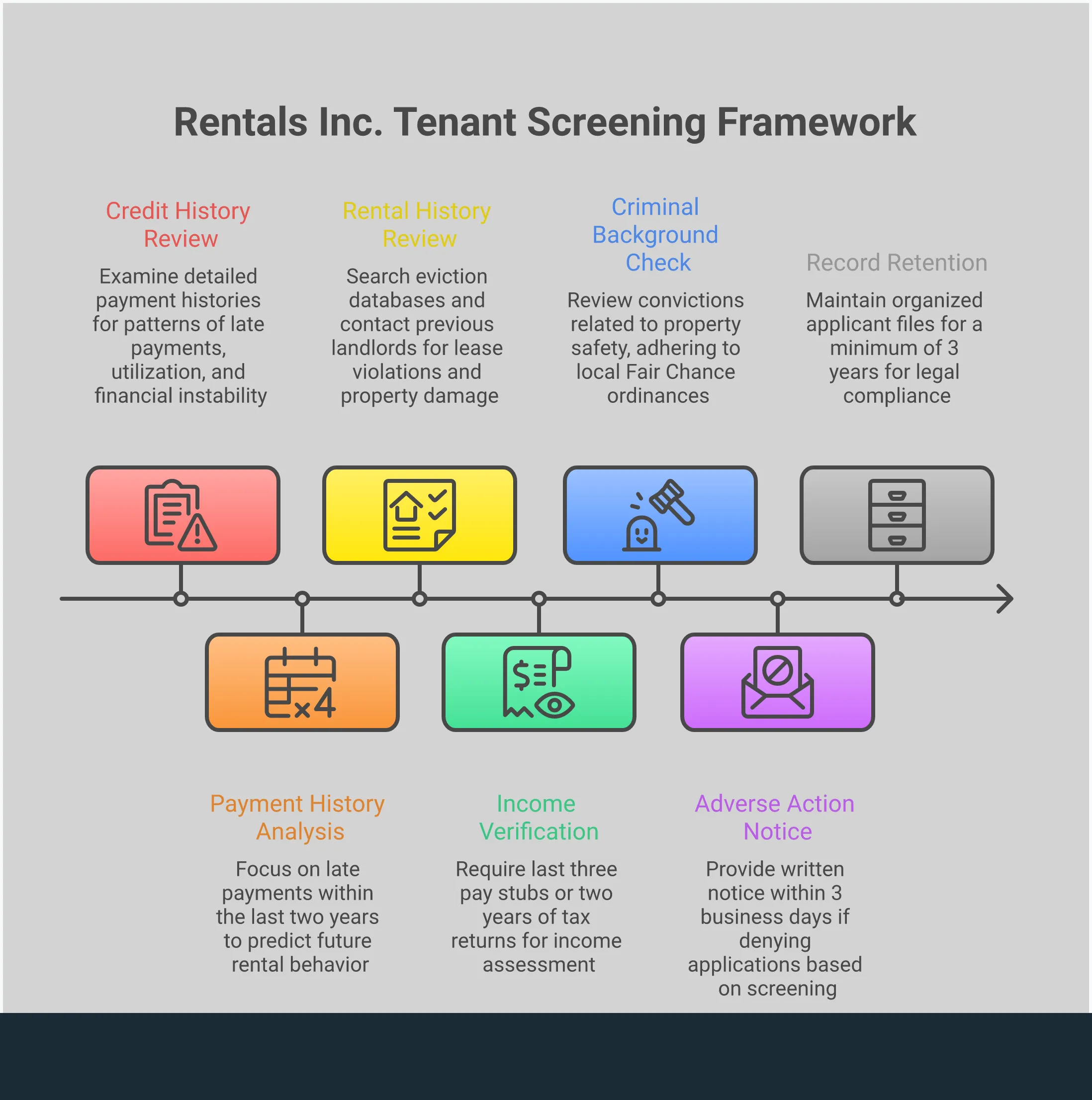
The screening process typically examines four critical areas: financial health, past rental behavior, criminal history, and employment stability. Each component provides a different piece of the puzzle. The credit report shows how they handle their financial obligations, while their rental history tells you what kind of tenant they’ve been in the past. A criminal check helps ensure the safety of your property and community, and income verification confirms they can afford the rent. Managing this process correctly is crucial, and our team is here to help you work with us to find qualified tenants for your Bay Area property.
Credit Reports and Financial Health
A credit report offers a detailed look into an applicant's financial habits. It’s not just about the three-digit credit score, though that is an important snapshot. The full report shows you how someone manages their money, including their history of paying bills on time, a list of their current debts like car loans or credit card balances, and any major financial setbacks like bankruptcies or collections. This information helps you assess an applicant’s level of financial responsibility. A consistent history of on-time payments is a strong indicator that they will prioritize paying their rent each month. You can learn more about what a credit report contains from official sources.
Past Rental Behavior
An applicant’s rental history is one of the most reliable predictors of their future behavior as a tenant. This part of the background check looks for significant red flags, with a past eviction being the most serious. An eviction filing shows a formal, legal process was required to remove the tenant from a previous property, often due to non-payment of rent or severe lease violations. Beyond formal evictions, this check can also uncover feedback from previous landlords regarding late payments, property damage, or broken lease rules. A clean rental history suggests the applicant is respectful of properties and honors their lease agreements.
Criminal Records
A criminal background check is a standard safety measure for protecting your property, your other tenants, and the surrounding neighborhood. This report searches various databases to find records of past criminal activity. It typically includes information on both misdemeanors and felonies from county, state, and federal records. The check also scans national databases, such as the sex offender registry. Reviewing this information helps you identify applicants whose past behavior could pose a direct threat to the safety and well-being of your rental community. It’s a necessary step in responsible property management.
Employment and Income
Verifying an applicant's income and employment is fundamental to ensuring they can consistently afford the rent. This step confirms that the applicant has a stable and sufficient source of income to meet their financial obligations. The industry standard is to look for a gross monthly income that is at least three times the monthly rent. This ratio ensures the tenant has enough money left over for other living expenses after rent is paid, reducing the likelihood of late payments. Verification usually involves reviewing recent pay stubs or, in some cases, contacting the employer directly to confirm their employment status and salary.
How to Read a Credit Report
A credit report tells a story about an applicant's financial habits, but it’s more than just a three-digit score. To get the full picture, you need to look at a few key areas. Understanding these components helps you make a fair and informed decision about who you trust with your property. It’s about assessing risk and finding a tenant who is likely to pay rent on time, every time. Let’s break down what to look for.
Setting a Credit Score Standard
Most landlords start with the credit score, and it’s a good idea to have a minimum standard in mind. Many property owners look for a score of 620 or higher as a baseline for financial responsibility. However, the number itself doesn't tell you everything. A low score could be due to a past medical bill or a lack of credit history, not necessarily a pattern of irresponsibility.
Think of the credit report as a snapshot, not a full biography. It’s a helpful starting point, but it’s crucial to dig deeper into the details behind the score to understand the context. Set your criteria, but be prepared to look at the complete financial picture.
Analyzing the Debt-to-Income Ratio
The debt-to-income (DTI) ratio shows you how much of an applicant's monthly income goes toward paying their debts. This figure is a powerful indicator of their ability to afford your rent on top of their existing obligations. To calculate it, you divide their total monthly debt payments by their gross monthly income. A lower DTI is always better.
Generally, a DTI ratio of 36% or lower is considered healthy and manageable. A TransUnion credit report provides the debt information you need for this calculation. An applicant might have a great credit score, but if their DTI is high, they could be stretched too thin financially to handle rent payments consistently.
Looking for Consistent Payment History
This is where you can see an applicant's track record in action. The payment history section details how consistently they've paid their bills, from credit cards to car loans. Look for a long history of on-time payments, as this is one of the strongest predictors of a reliable tenant.
An occasional late payment from years ago may not be a dealbreaker, but a recent pattern of missed or late payments is a significant red flag. A tenant's credit report will show you account-by-account details, giving you a clear view of their financial discipline. Ultimately, past behavior is the best indicator of how they’ll handle their rental obligations.
What Are the Biggest Red Flags in a Rental History?
A credit report shows financial habits, but a rental history tells you exactly how an applicant behaves as a tenant. This is where you’ll find the most direct predictors of a successful tenancy. Past behavior is often the best indicator of future actions, so pay close attention to the details in this report. A thorough review can help you avoid costly problems like property damage, missed rent, and stressful legal disputes. Here are the four main red flags to watch for when you review an applicant’s rental history.
Eviction History
An eviction is the ultimate red flag. It’s not just a disagreement; it’s a formal legal process a previous landlord initiated to remove the tenant. This action is expensive and time-consuming, so it’s usually a last resort for serious issues like non-payment of rent or severe lease violations. Research shows that tenants with a past eviction are significantly more likely to face eviction again. An eviction filing on an applicant’s record signals a high level of risk to your property and your income stream. While you should always consider the context, a history of eviction is a serious warning sign that requires careful consideration before you proceed.
Late Rent Payments
Consistent, on-time rent payments are the foundation of a good landlord-tenant relationship. A rental history report will often show an applicant's payment patterns with previous landlords. While a single late payment over several years might be explainable, a history of frequent delays is a major concern. This pattern suggests the applicant may have trouble managing their finances or respecting deadlines, which can disrupt your cash flow. As one resource notes, frequently missing rent payments can lead a new landlord to assume the applicant will be unreliable. Protecting your rental income is a top priority, and a history of late payments indicates a potential threat to that stability.
Property Damage
Your property is a significant investment, and you need a tenant who will treat it with care. A rental history can reveal if an applicant has a track record of causing damage beyond normal wear and tear. Look for notes from previous landlords or records of security deposit deductions used for repairs. Bad tenants can cause serious problems, from broken appliances and stained carpets to more significant structural issues. These repairs can quickly add up, turning a profitable rental into a financial drain. Finding a tenant who respects the property is just as important as finding one who pays on time. Our goal at Rentals Inc. is to find tenants who will help you maintain property quality.
Lease Violations
A lease is a binding contract, and a tenant’s willingness to follow its rules is crucial for a smooth tenancy. A rental history may highlight previous lease violations, which can range from minor infractions to major issues. Common examples include having unauthorized pets, allowing unlisted occupants to live in the unit, repeated noise complaints from neighbors, or improper use of the property. A pattern of breaking lease rules suggests an applicant may not take their contractual obligations seriously. This can create ongoing management headaches and potential legal liabilities for you as the property owner.
How to Verify Income and Employment
Confirming an applicant's income and employment is a critical step in the screening process. It’s not about being invasive; it’s about making sure a tenant can comfortably afford the rent, which protects both your investment and their financial well-being. A steady, verifiable income is the best indicator of a tenant's ability to pay on time. This process involves more than just a single number. It requires calculating their income-to-rent ratio, confirming stable employment, and considering all legitimate sources of income to get a complete financial picture.
Calculating the Income-to-Rent Ratio
A widely accepted guideline is the 3:1 income-to-rent ratio, meaning an applicant’s gross monthly income should be at least three times the rent. For a $3,000 per month rental, you’d look for an applicant earning at least $9,000 per month. This simple formula helps ensure tenants have enough money for other living expenses after paying rent. It’s a straightforward, objective standard that reduces the risk of late payments. Applying this benchmark consistently is a key part of a fair screening system when you work with us to find qualified tenants for your property.
Confirming Stable Employment
An income figure on an application doesn't mean much until you verify it. The next step is to confirm a stable source of that income. The most common way is by requesting the last two or three recent pay stubs. For applicants starting a new job, an official offer letter on company letterhead works well. With the applicant’s written consent, you can also call their employer’s HR department to verify their employment and income. This step is crucial for anyone using our relocation services to move to the Bay Area for work, as it provides clear proof of their financial stability.
Considering Other Sources of Income
Not everyone earns their living from a traditional 9-to-5 job, especially in the Bay Area. It's important to consider all legitimate sources of income to get an accurate view of an applicant's finances. This can include earnings from freelance work, self-employment, retirement funds, alimony, or government assistance. To verify these sources, you can ask for documents like recent tax returns, bank statements showing consistent deposits, or official court documents. Acknowledging these diverse income streams ensures you are conducting a fair evaluation and not overlooking a great applicant who simply doesn't have a W-2.
What to Look for in a Criminal Background Check
A criminal background check is a standard part of the screening process, but it’s also one of the most sensitive. The goal isn’t to pass judgment; it’s to assess potential risks to your property and the community you’re building. A criminal record doesn’t automatically disqualify an applicant, but it does provide information you need to make a responsible decision. Handling this step correctly means creating a clear, consistent policy that you apply to every applicant. This protects you, your investment, and your future tenants while ensuring you follow fair housing laws.
When reviewing a criminal history, you’re looking for patterns or specific offenses that could reasonably suggest a risk to safety or property. For example, a history of property damage or violence is more relevant to a tenancy than a minor, unrelated offense from many years ago. It's about context and relevance. The key is to evaluate the information in the context of the entire application, including their rental history, income, and references. This holistic approach gives you a much clearer picture of the applicant. Remember, the laws around using criminal records in housing decisions are strict. Having a documented policy helps you make fair, objective decisions and reduces your liability. When you work with a professional, we help you establish these criteria from the start, ensuring your process is both effective and compliant.
Which Offenses Matter for a Rental?
Not all criminal records carry the same weight. Your focus should be on convictions that are directly relevant to the safety of your property and other residents. Offenses like burglary, arson, vandalism, or violent crimes are clear red flags because they pose a direct threat. Similarly, a conviction for manufacturing or distributing illegal drugs on a property is a major concern. On the other hand, a single misdemeanor for a minor issue from a decade ago may not be relevant to an applicant's ability to be a good tenant. It’s important to distinguish between an arrest and a conviction; a conviction means the person was found guilty in court, which is a more reliable indicator for your assessment.
How Far Back Should You Look?
A common question is how far back to look into an applicant's history. While many screening services provide records going back seven to ten years, the most important factor is your local law. In the San Francisco Bay Area, cities like San Francisco and Oakland have specific Fair Chance ordinances that limit how landlords can use criminal records in housing decisions. These rules often restrict the lookback period and the types of convictions you can consider. It’s essential to understand and follow these local regulations to stay compliant. The general idea behind these time limits is to assess an applicant's recent history while acknowledging that people can and do move on from past mistakes.
Assessing the Severity of a Record
Context is everything when you’re evaluating a criminal record. A single conviction from years ago is very different from a recent pattern of repeat offenses. When you see a flag on a report, consider the nature of the crime, how long ago it happened, and what the applicant has done since. Look at this information alongside the rest of their application. Do they have glowing references from previous landlords? Is their income stable? Strong qualifications in other areas can help provide a more complete picture. Your goal is to make an informed decision based on a holistic review of the applicant, not just one piece of information from their past.
Staying Compliant: The Legal Side of Screening
Screening tenants is a critical step in protecting your investment, but it comes with serious legal responsibilities. As a landlord, you’re not just evaluating a potential tenant; you’re handling sensitive personal data, which means you must follow strict federal, state, and local laws. Getting this part wrong can lead to costly lawsuits and penalties. Understanding the rules isn’t just about avoiding trouble, it’s about running a fair, ethical, and professional rental business. The key is to establish a clear, consistent process that treats every applicant the same way, ensuring you’re compliant from the moment you accept an application.
Following Fair Housing Rules
The most important law to understand is the federal Fair Housing Act. This law makes it illegal to discriminate against tenants based on seven protected classes: race, color, religion, national origin, sex, disability, and familial status. This means you cannot make any housing decision, including approving or denying an application, based on these characteristics. The best way to stay compliant is to create a written set of rental criteria, like minimum credit score and income requirements, and apply it uniformly to every single person who applies. This consistent process is your best defense against a discrimination claim.
Your Obligations Under the FCRA
When you run a background or credit check, you are using what the law calls a "consumer report." These reports are regulated by the Fair Credit Reporting Act (FCRA), a federal law enforced by the Federal Trade Commission (FTC). The FCRA gives you specific obligations as a landlord. You must have a legally permissible purpose for ordering a report, such as for a housing application. You also have a duty to handle the information responsibly and securely. The FCRA is designed to protect consumer privacy and ensure the information used to make decisions about them is accurate.
Getting Written Consent to Screen
Before you can run a background or credit check, you must get the applicant's written permission. This is a non-negotiable step under the FCRA. The consent form should be a clear part of your rental application, explicitly stating that you will be obtaining a consumer report as part of the screening process. Having the applicant sign this authorization creates a clear paper trail and confirms they understand that their credit, rental, and criminal history will be reviewed. This simple step protects both you and the applicant by ensuring the entire process is transparent and lawful from the start.
How to Properly Deny an Applicant
If you decide to deny an applicant based wholly or partly on information in their consumer report, the FCRA requires you to provide them with an "adverse action notice." This notice informs the applicant of the denial and provides the name and contact information of the screening company you used. It must also state that the screening company did not make the decision and that the applicant has the right to dispute the report's accuracy and request a free copy within 60 days. This step is a legal requirement, not a courtesy. Ensuring compliance with these detailed regulations is one of the key ways our team can help you lease your property confidently.
Common Myths Applicants Believe About Screening
Applicants often come to the rental process with a few common misconceptions. Understanding what they might be thinking can help you communicate more clearly, set proper expectations, and build a better landlord-tenant relationship from day one. When you can confidently explain your process, it reassures applicants that you are professional, fair, and transparent. Addressing these myths head-on can also prevent misunderstandings that might otherwise cause a great applicant to walk away or lead to disputes down the line. Let's clear up a few things you might hear from prospective tenants.
"This will hurt my credit score."
Many applicants worry that applying for a rental will damage their credit score. This fear usually comes from their experience with loan applications, where a "hard inquiry" can cause a temporary dip in their score. However, the credit check for a rental application is typically a "soft inquiry." A properly conducted tenant background check does not affect an applicant's credit score. You can reassure your applicants that your screening process is designed to assess their financial responsibility without penalizing them for searching for a home. This small piece of information can ease a lot of anxiety for potential renters.
"The report is always 100% accurate."
It’s easy to assume that a formal report is free of errors, but that isn't always the case. Both applicants and landlords sometimes believe these reports are infallible. The reality is that errors can happen, from outdated information to cases of mistaken identity. The Consumer Financial Protection Bureau has highlighted how problems with tenant background checks can create unfair barriers for renters. If something in a report seems off, give the applicant an opportunity to explain or provide correcting documentation. This approach ensures you make decisions based on the most accurate information available.
"Every landlord has the same rules."
Applicants who have rented before may assume your screening criteria are identical to their last landlord's. While all landlords must follow Fair Housing laws, specific requirements for income, credit scores, and rental history can differ significantly from one property to the next. The most important thing is not to adopt someone else's rules, but to establish your own and apply them consistently. Having a clear, written set of criteria is your best defense against accusations of discrimination. When you work with us, we help you create a fair, compliant, and effective screening process tailored to your property.
How to Guide Applicants for a Smoother Process
A clear and straightforward application process doesn't just benefit prospective tenants; it’s one of the most effective tools a landlord has. When you guide applicants, you set a professional tone from the very first interaction. This simple step helps filter for serious, organized individuals and significantly cuts down on the time you spend chasing down missing information. By outlining your expectations and requirements upfront, you reduce friction and make the entire screening process more efficient for everyone involved.
Think of it as the first step in building a positive landlord-tenant relationship. Clear communication shows that you are a thorough and fair property manager, which can make your property more appealing to high-quality tenants. Instead of dealing with incomplete applications and endless back-and-forth emails, you can create a system that attracts prepared applicants and helps you fill vacancies faster. When you work with a professional team, we manage this communication for you, ensuring every applicant understands exactly what’s needed to move forward. A smooth process from the start leads to a better outcome for your investment property.
Tell Them What Documents to Prepare
Nothing slows down an application faster than missing paperwork. To keep things moving, provide every interested applicant with a simple checklist of required documents. Your rental application should be designed to collect all the information you need for verification, so be explicit about what that includes. Typically, you’ll need a government-issued photo ID, recent pay stubs or bank statements to verify income, and contact information for previous landlords. If an applicant is self-employed or has other income sources, clarify what you need to see, such as tax returns or 1099 forms. Providing this list upfront helps applicants prepare and submit a complete package, saving you valuable time.
Encourage Honesty About Their History
While a background check provides data, it doesn’t always tell the full story. Encourage applicants to be upfront about any potential red flags in their history. You can frame this as an opportunity for them to provide context. For example, a low credit score from years ago might be explainable, or a past rental issue may have a reasonable explanation. When an applicant is honest, it demonstrates responsibility and maturity. In return, be transparent about your screening process. Letting them know what tenant screening service you use and what your general criteria are can build trust and encourage a more open dialogue.
Advise Them to Review Their Own Reports
Errors on background and credit reports are surprisingly common and can create unnecessary barriers for good tenants. The Consumer Financial Protection Bureau has highlighted how inaccuracies can unfairly impact rental housing access. You can help prevent this by advising applicants to review their own credit reports before applying. This gives them a chance to spot and dispute any errors that could hurt their application. It’s a simple, proactive step that shows you’re committed to a fair process. It also saves you from wasting time on an application that is destined for denial due to incorrect information, allowing you to focus on qualified candidates.
Best Practices for a Fair and Effective Screening Process
A well-defined screening process is your best tool for finding reliable tenants and protecting your investment. It’s not about being difficult; it’s about being thorough and fair. When you have a clear system, you can evaluate every applicant against the same objective standards, which helps you make sound business decisions while staying compliant with housing laws. A strong process removes guesswork and emotion, focusing instead on the qualifications that matter most for a successful tenancy.
Think of your screening process as a framework. It guides you from the moment an application lands in your inbox to the final decision. This framework should be built on three core principles: consistency, professional verification, and meticulous record-keeping. By mastering these practices, you not only reduce your risk of vacancies and property issues but also build a reputation as a fair and professional landlord. This approach ensures you treat every applicant equitably and can confidently stand by your leasing decisions. If you need help establishing a compliant process, our team is here to work with you to manage your properties effectively.
Apply Your Criteria Consistently to Every Applicant
The single most important rule in tenant screening is to treat every applicant the same. Before you even list your property, you should decide on your minimum qualification standards. This could include a specific income-to-rent ratio, a minimum credit score, and a clean rental history. Once you set these criteria, you must apply them uniformly to everyone who submits an application.
Inconsistency is a fast track to a discrimination complaint. You cannot change your standards based on a "good feeling" or a personal connection. Document your criteria and stick to them. This not only ensures you are being fair but also provides a clear, legal basis for your decisions if an applicant is denied. A consistent process protects you and ensures every applicant gets an equal opportunity.
Use a Professional Screening Service
While it might be tempting to run a quick online search yourself, using a professional screening service is the best way to get accurate, compliant background checks. These services have secure access to credit reports, eviction histories, and criminal records, and they know how to operate within the rules of the Fair Credit Reporting Act (FCRA). This protects you from legal missteps and ensures the information you receive is reliable.
Furthermore, many applicants worry that a rental inquiry will hurt their credit. A properly conducted background check from a reputable service is considered a soft inquiry and has no effect on their credit score. Using a professional service shows applicants you are a serious landlord and helps you make decisions based on verified, comprehensive data.
Keep Clear and Organized Records
Documentation is your best friend in property management. From the initial application to your final decision, keep organized records for every applicant, not just the one you select. Your files should include the completed application, the screening report, any communications you had, and your notes detailing how the applicant measured up against your pre-set criteria.
This paper trail is crucial. If a denied applicant ever questions your decision, you’ll have clear evidence that you followed a fair and consistent process. Good record-keeping also involves properly handling screening fees and providing the required disclosures. By keeping everything in order, you can avoid common screening mistakes and operate with confidence, knowing your process is defensible and professional.
Related Articles
- Work With Rentals Inc | Property & Renter Solutions | Rentals Inc
- Relocation Support & Housing Guidance | Rentals Inc | Rentals Inc
- Find Bay Area Rental Options | Rentals Inc
Frequently Asked Questions
What's the single biggest red flag I should look for in an application? While every part of the application tells a story, a history of eviction is the most serious warning sign. An eviction is a formal legal action, meaning a previous landlord had to go to court to remove the tenant, usually for major issues like not paying rent. Beyond that, look for patterns. A single late payment from years ago might be explainable, but a recent history of missed payments or negative references from past landlords suggests a higher risk.
Do I really need to have the same screening criteria for every single applicant? Yes, absolutely. This is the most important rule for staying compliant and fair. Before you even start accepting applications, you should decide on your minimum requirements for things like income, credit history, and rental background. Applying these same standards to every person who applies is your best protection against claims of discrimination. It removes guesswork and ensures your decision is based on objective business qualifications.
Is a high credit score enough to approve an applicant? A good credit score is a great start, but it doesn't show the whole picture. You should also look at their full credit report to understand their debt-to-income ratio. An applicant might have a 750 credit score but also have significant monthly debt payments that could make affording rent a challenge. A consistent history of on-time payments across all their accounts is often a more reliable indicator of financial responsibility than the score alone.
What should I do if an applicant has a criminal record? A criminal record requires careful and fair evaluation. First, you need to be aware of local laws, like those in San Francisco and Oakland, which limit how you can use this information. Focus on convictions that are directly relevant to the safety of the property and other tenants, such as violent crimes or property damage. Consider how long ago the offense occurred and what the applicant has done since. It's about assessing actual risk, not passing judgment.
How do I verify income for someone who is self-employed or a freelancer? This is common, especially in the Bay Area. Instead of asking for pay stubs, you can request other documents to verify their income. The most reliable are the last two years of tax returns, which show a history of consistent earnings. You can also ask for recent bank statements to see regular deposits or 1099 forms from their clients. The goal is the same: to confirm they have a stable and sufficient income to comfortably pay the rent.


