

Owning rental property in the Bay Area means dealing with some of the most complex landlord-tenant laws in the country. From fair housing regulations to city-specific ordinances, a single misstep in your screening process can lead to serious legal trouble. The best way to protect yourself is by establishing a fair, consistent, and defensible system for evaluating every applicant. At the heart of this system is a detailed rental application processing checklist. This tool ensures you apply the same objective criteria to everyone, creating a clear paper trail that demonstrates compliance and helps you make decisions based on legitimate business reasons, not bias.
Key Takeaways
- Establish a Repeatable Screening System: Use the same checklist, criteria, and workflow for every single applicant. This is your best defense against discrimination claims and ensures you can objectively compare candidates to find the most qualified tenant.
- Look Beyond the Application Form: Always verify income and employment directly with the source and call an applicant's previous landlords. A direct conversation provides crucial insights into payment history and property care that you won't find on paper.
- Know Your Local Landlord-Tenant Laws: The Bay Area has complex, city-specific rules. Understanding your obligations regarding screening fees, fair housing, and disclosures is essential to protect your investment and avoid legal trouble.
What Is a Rental Application Checklist?
A rental application checklist is your roadmap for systematically collecting and evaluating information from prospective tenants. Think of it as a standardized tool that ensures you gather all the essential details needed to make an informed decision. It’s more than just a form; it’s a structured process that guides you through verifying an applicant's identity, financial stability, and rental background. A thorough checklist typically includes sections for personal information, employment and income verification, rental history with previous landlord references, and written authorization to run credit and background checks.
Having a consistent checklist is the foundation of a fair and effective screening process. It helps you organize applicant information, compare candidates using the same objective criteria, and maintain clear records. This systematic approach not only simplifies your workflow but also demonstrates professionalism to potential renters. When you have a clear, repeatable system in place, you’re better equipped to identify qualified tenants who are a great fit for your property. If you’re looking to refine your process, our team can help you work with us to implement a screening system that protects your investment.
Why a Systematic Approach Matters
A systematic approach to screening is your best defense against inconsistency and potential legal issues. Using a checklist helps you screen every tenant fairly and consistently, which is crucial for complying with fair housing laws. When you apply the same criteria to every single applicant, you reduce the risk of discrimination claims and ensure your decisions are based on legitimate business reasons. This consistency isn't just about legal protection; it’s about good business. By carefully reviewing each application against your pre-set standards, you significantly increase your chances of finding a reliable, long-term tenant who will pay rent on time and care for your property.
The High Cost of a Disorganized Process
Without a structured process, it’s easy to miss critical red flags and make a costly mistake. The financial fallout from choosing the wrong tenant can be substantial, involving everything from missed rent and expensive eviction proceedings to property damage and extended vacancies. A disorganized approach also opens you up to legal risks, especially if your application asks for information that isn't permissible under local or state law. Using a generic, unvetted application form can lead to serious compliance issues. Investing in a professional, organized system from the start is one of the smartest decisions you can make to protect your asset and your peace of mind. Our relocation services are designed to help landlords avoid these pitfalls by finding qualified tenants efficiently.
Essential Documents for Every Application
A complete application package is the foundation of a solid tenant screening process. When you require the same set of documents from every single applicant, you create a fair, consistent, and efficient system. This standardization isn't just about making your life easier; it's a critical step in objective evaluation and helps you stay compliant with fair housing regulations. A disorganized approach, where you ask for different things from different people, can lead to confusion, delays, and even accusations of discrimination. It opens the door to unconscious bias and makes it difficult to defend your decisions if they are ever questioned.
By establishing a clear checklist of required documents from the start, you set professional expectations and attract serious applicants. This list should cover three core areas: financial stability, personal identity, and proof of income. Having all the necessary paperwork upfront allows you to move quickly and confidently through your screening workflow. It minimizes back-and-forth communication and ensures you have everything you need to make an informed decision. If you're looking to build a more streamlined process, our team can help you establish a system that finds qualified tenants for your properties. A well-defined document list is the first step toward minimizing vacancy and securing a reliable renter for your Bay Area property.
Financial Verification
To accurately assess an applicant's financial health, you need more than just a credit score. Ask for the two most recent bank statements to see their cash flow and verify they have funds for the security deposit and first month's rent. Your rental application should also have a section for applicants to list all sources of income. While pay stubs cover traditional employment, you may need to request documents like tax returns or 1099s to verify income from freelance work, a side business, or other investments. This complete financial picture helps you confirm that the applicant can comfortably afford the rent and meet their obligations for the entire lease term.
Personal ID and References
First and foremost, you need to confirm you’re renting to the person they claim to be. A clear copy of a government-issued photo ID, like a driver's license or passport, is non-negotiable for every adult applicant. Beyond identity, references provide crucial context about an applicant's history as a tenant. A reference from a previous landlord is invaluable—it can tell you about their payment timeliness, how they maintained the property, and whether they followed lease terms. While personal references can be helpful, a landlord reference gives you the most direct insight into what you can expect as their new landlord. Make sure to get contact information for at least their two most recent landlords.
Proof of Employment and Income
Verifying income is one of the most important steps in the screening process. The most common way to do this is by requesting the last two or three pay stubs, which show both gross and net income. For an extra layer of confirmation, an employment verification letter from their employer is a great tool. This letter should state their position, start date, and annual salary. For self-employed applicants or those with non-traditional income, ask for the last two years of tax returns or a recent profit and loss statement to get a clear and accurate picture of their earnings. This documentation ensures your decision is based on verified, consistent income.
A Step-by-Step Application Processing Workflow
A disorganized application process creates unnecessary risk. When you don’t have a consistent workflow, it’s easy to miss critical details, treat applicants unfairly, or run into compliance issues. A systematic approach ensures every applicant is evaluated against the same objective criteria, which is your best defense against discrimination claims and the key to finding a reliable tenant. By following a clear, step-by-step process, you can make informed decisions efficiently and confidently.
This workflow breaks down tenant screening into four manageable stages. From the initial review to the final decision, each step is designed to build a complete picture of the applicant. This structured method not only simplifies your workload but also helps you select a qualified tenant who will pay rent on time and take care of your property. If managing this process feels overwhelming, our team is here to help you find the right tenants for your Bay Area properties.
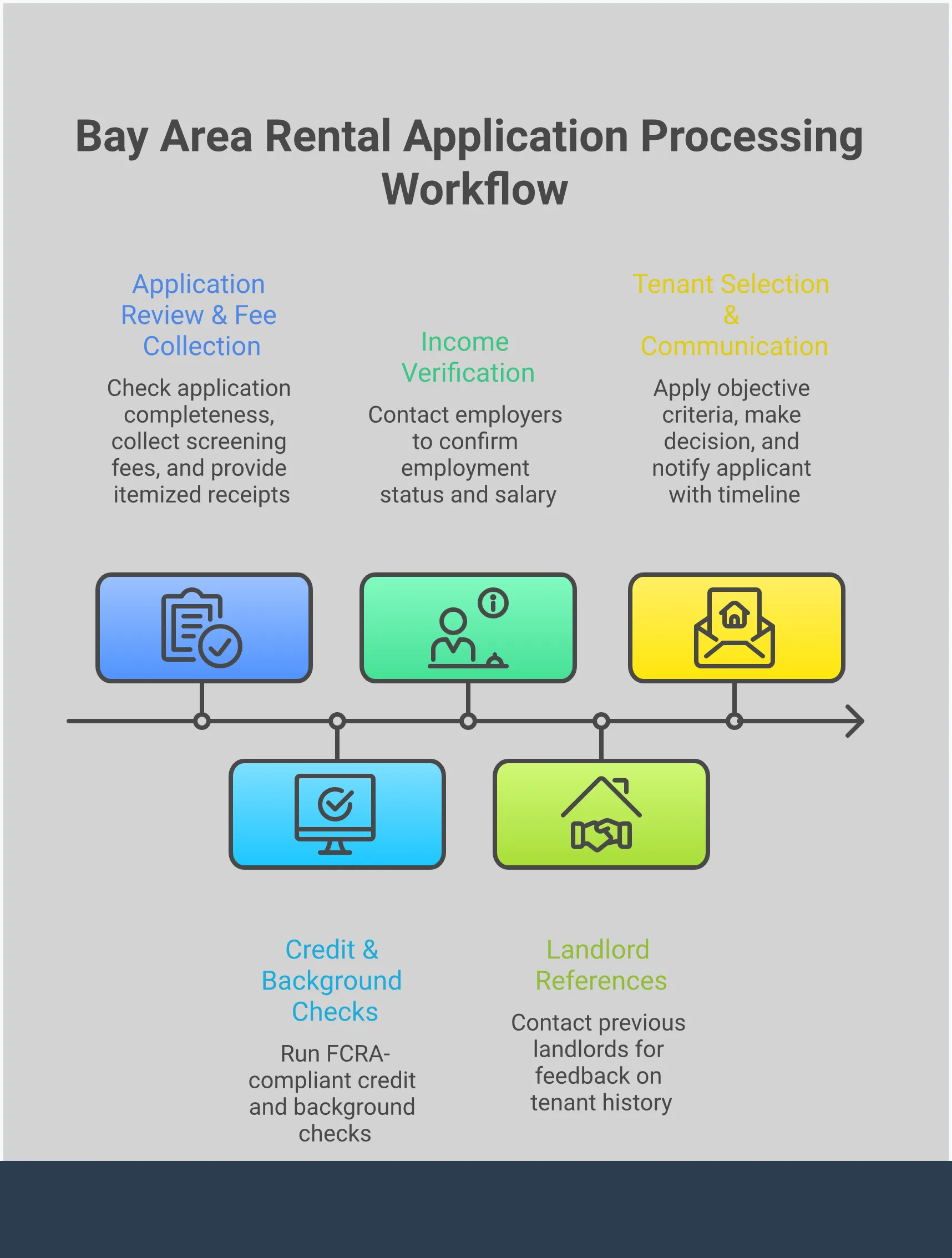
Step 1: Check for Completeness
Before you invest time in screening, your first step is to ensure the application is complete. A complete application includes all requested information, necessary signatures, and any required supporting documents. Don’t move forward with an application that has blank fields or missing paperwork, as this can be an early indicator of a disorganized applicant. Set a clear policy that only fully completed applications will be processed.
This is also the stage to handle screening fees correctly. If you charge a fee, be aware that local and state laws may require you to provide an itemized receipt of your costs. Make sure your process is transparent and compliant from the very beginning. A thorough initial check saves you from wasting time on applicants who haven't followed instructions.
Step 2: Run Credit and Background Checks
Once you have a complete application, you can proceed with credit and background checks. These reports provide objective data on an applicant's financial responsibility and history. A credit check reveals their debt, payment history, and credit score, offering insight into their ability to manage financial obligations. A background check can surface relevant criminal history or eviction records that might impact their suitability as a tenant.
By conducting these checks diligently and within legal guidelines, you can better protect your investment. Landlords typically review credit reports, verify rental history, and check for past evictions. It’s essential to use a reputable screening service that complies with the Fair Credit Reporting Act (FCRA) to ensure the information is accurate and obtained legally.
Step 3: Verify Income and Employment
The next step is to confirm that the applicant has a stable and sufficient source of income to afford the rent. The industry standard is often an income of at least three times the monthly rent, but you should set a clear, consistent standard for all applicants. Ask for recent pay stubs, bank statements, or tax returns to verify their stated income. An offer letter on company letterhead can also work for applicants starting a new job.
Don’t just take the documents at face value. Call the employer listed on the application to confirm the applicant’s employment status, position, and length of employment. This simple call helps verify the information provided and protects you from fraudulent documents.
Step 4: Check References and Make Your Decision
References provide valuable context that numbers on a report can’t. Your most important reference is the applicant’s previous landlord. Ask them about the applicant’s payment history, how they maintained the property, and whether they would rent to them again. This conversation can reveal a lot about what you can expect from the prospective tenant. A positive landlord reference is one of the strongest indicators of a reliable renter.
After you’ve checked for completeness, run the necessary reports, verified income, and spoken with references, you have a full picture. With all this information, you can make a well-informed and objective decision. Document your decision-making process for each applicant to maintain clear records and ensure fairness.
How to Fairly Evaluate Rental Applications
A fair and consistent evaluation process is your best defense against vacancies and potential legal issues. By establishing clear, objective criteria before you even list your property, you can assess every application through the same lens. This protects your investment and ensures you treat every applicant fairly, helping you find a reliable tenant who is set up for success in your property.
Setting Income and Financial Standards
The first step is to confirm an applicant can comfortably afford the rent. A widely accepted guideline is to require a gross monthly income that is at least three times the monthly rent. For a property renting at $3,000 per month, you’d look for an income of at least $9,000. In a competitive market like the Bay Area, some landlords use an annual income standard of 40 times the monthly rent. These financial benchmarks are not arbitrary; they are a reliable indicator of a tenant's ability to meet their obligations without financial strain, which is a win for everyone involved.
Defining Credit and Rental History Criteria
A credit score provides a snapshot of financial responsibility, but the full report tells the whole story. While many landlords look for a score above 650, you should also review their history for late payments, collections, or bankruptcies. Just as important is a solid rental history. Always contact previous landlords to ask about their experience with the applicant. Did they pay on time? Did they take care of the property? A glowing reference from a past landlord is often one of the strongest indicators of a great future tenant. This is a critical part of the tenant screening checklist you should be using.
Red Flags to Watch For
Diligence during the screening process can save you major headaches later. Be alert for common red flags in rental applications, such as unverifiable income, significant gaps in rental history, or inconsistencies between what they told you and what their references say. An applicant who is evasive or provides incomplete information should also give you pause. Trust your criteria and your gut. A thorough and consistent process is the foundation of a successful tenancy, and if you need expert help, our team is ready to work with you to manage the entire process.
Navigating Bay Area Landlord-Tenant Laws
The San Francisco Bay Area has some of the most complex and tenant-friendly laws in the country. For property owners, staying on top of these regulations isn’t just good practice—it’s a critical part of protecting your investment and running a smooth, successful rental business. A misstep, even an unintentional one, can lead to costly legal disputes and vacancies. Understanding your legal obligations from the start helps you create a fair, transparent, and defensible screening process that attracts the best tenants while keeping you compliant.
The key is to build your application workflow around a solid understanding of federal, state, and local rules. This includes everything from anti-discrimination laws that apply everywhere to the very specific ordinances found in cities like San Francisco and Berkeley. By familiarizing yourself with these requirements, you can confidently evaluate applicants based on objective criteria. This not only helps you find reliable tenants but also creates a clear, documented paper trail that can protect you if a decision is ever questioned. Let’s cover three of the most important legal areas you need to manage: fair housing compliance, city-specific ordinances, and the correct way to handle fees and disclosures. Getting these right is fundamental to successful property management in the Bay Area.
Staying Compliant with Fair Housing Rules
The foundation of any legal tenant screening process is fairness. The federal Fair Housing Act is clear: you cannot deny an applicant based on race, color, national origin, religion, sex, familial status, or disability. California law adds even more protected classes, including marital status, sexual orientation, and source of income. This means your decisions must be based on legitimate business reasons, not personal biases. The best way to ensure compliance is to establish objective, written screening criteria and apply them consistently to every single applicant. Focus on measurable factors like verified income, credit history, and positive rental references. When you treat everyone the same and document your process, you not only find qualified tenants but also protect yourself from potential discrimination claims.
Understanding San Francisco’s Specific Ordinances
If you own property in San Francisco, you’re dealing with an extra layer of local regulations. The San Francisco Rent Ordinance is one of the most significant, as it establishes both rent control and strict eviction limitations. For example, you can’t simply end a tenancy when a lease is up; you must have a "just cause" for eviction, chosen from a list of 16 approved reasons. These rules create unique challenges for landlords, making it essential to be diligent from day one. A thorough and compliant screening process is your first line of defense. By selecting responsible, well-qualified tenants who are likely to care for your property and pay rent on time, you reduce the chances of facing difficult situations down the road.
Handling Disclosures and Screening Fees Correctly
When you collect an application, you also handle sensitive information and often, a screening fee. California law sets specific rules for this process. The screening fee you charge cannot exceed the actual out-of-pocket costs of gathering information on the applicant, with a state-mandated maximum that adjusts annually. You aren't meant to profit from these fees. To maintain transparency and compliance, you should be prepared to provide applicants with an itemized receipt of your screening costs if they request one. This means keeping clear records of what you paid for a credit report or background check. Being upfront about what the fee covers and handling it correctly builds trust with prospective tenants and ensures your process is fair and lawful from the very beginning.
Common Challenges in Application Processing
Even with a solid checklist, processing rental applications comes with its own set of hurdles. The Bay Area’s dynamic market creates a unique environment where landlords must be efficient, thorough, and compliant all at once. Anticipating these challenges is the first step toward building a process that doesn’t just fill vacancies but finds the right, reliable tenants for your property. From managing a flood of interest to staying on top of local laws, here are the most common obstacles you’ll likely face.
Managing High Applicant Volume
In a competitive rental market like the Bay Area, a well-priced property can attract dozens of applications in a short time. While high interest is a great sign, it can quickly become overwhelming. The sheer volume makes it difficult to give each application the attention it deserves, increasing the risk of overlooking qualified candidates or missing red flags on others. The region's high tenant turnover rates contribute to this constant influx, putting pressure on landlords to move quickly. Without a systematic approach, you can easily get buried in paperwork. This is where a standardized workflow becomes essential, ensuring every applicant is evaluated consistently and efficiently.
Handling Inconsistent Information
One of the most time-consuming parts of screening is dealing with incomplete or inconsistent applications. You might receive an application with a missing pay stub, a vague reference, or an unexplained gap in rental history. Chasing down this information from multiple applicants eats up valuable time and delays your decision-making process. According to one analysis, many application forms create patterns of questionable information, leading to confusion and missing details. To avoid this, your application must be clear and comprehensive, requiring all necessary documents upfront. A standardized form ensures you collect the same critical data from every person, making your evaluation process fair and straightforward.
Keeping Up with Legal Complexities
The San Francisco Bay Area has some of the most complex and tenant-friendly laws in the country. Ordinances change frequently, and a small misstep in your screening process can lead to significant legal and financial trouble. For example, the San Francisco’s Rent Ordinance requires a "just cause" for eviction, which shapes the entire landlord-tenant relationship from day one. Understanding the rules around screening fees, what questions you can legally ask, and how to provide proper disclosures is non-negotiable. Staying current with these regulations is a major challenge, which is why many property owners choose to work with us to ensure their process is always compliant.
How to Streamline Your Application Process
A slow or disorganized application process can cost you the best tenants. In a competitive market like the Bay Area, qualified renters have options and won’t wait around for a landlord who seems unprepared. A streamlined system not only helps you fill vacancies faster but also establishes a professional tone from the very beginning. It reduces administrative headaches, ensures you’re treating every applicant fairly, and helps you make a confident, well-informed decision. By refining your workflow, you can move from collecting applications to signing a lease with efficiency and clarity. The key is to focus on clear communication, consistent standards, and the right tools to support your process.
Set Clear Timelines and Expectations
The Bay Area rental market moves quickly, and prepared applicants expect a straightforward process. Start by clearly communicating your timeline and requirements to every potential tenant. Let them know exactly which documents they need to submit with their application, what your screening fee covers, and how long they should expect to wait for a decision. Providing this information upfront helps applicants prepare and shows that you run a professional operation. It also helps you manage expectations and reduces follow-up questions, saving you valuable time. A simple, clear outline of your process ensures everyone is on the same page from day one.
Create Standardized Evaluation Criteria
Before you even list your property, you should define your tenant selection criteria. A standardized checklist ensures you evaluate every application consistently and fairly, which is crucial for complying with fair housing laws. Your criteria should be objective and directly related to a tenant's ability to pay rent and care for the property. This typically includes a minimum credit score, a specific income-to-rent ratio, and a clean rental history. Using a comprehensive rental application to collect this information is the first step. By applying the same standards to everyone, you protect yourself legally and make the decision-making process much more straightforward.
Use Digital Tools and Screening Services
Manually processing applications is time-consuming and prone to error. Using digital tools can make a significant difference in your efficiency. Online application platforms allow you to collect information and documents in a secure, organized way. Reputable tenant screening services can run credit and background checks quickly, providing you with detailed reports in a fraction of the time it would take to do it yourself. These services help you mitigate risk and handle sensitive data securely. If managing this process feels overwhelming, you can always work with us to handle tenant screening and placement for you, ensuring a smooth and compliant experience.
Best Practices for a Smooth Screening Process
A well-defined screening process does more than just fill vacancies; it protects your investment, ensures legal compliance, and builds a positive reputation in the market. By focusing on clear communication, diligent record-keeping, and smart automation, you can create a system that is both efficient and fair. These practices help you manage applicant expectations, maintain organized files for every decision, and use technology to handle the heavy lifting, allowing you to focus on selecting the best-qualified tenant for your property.
Communicate Professionally with Every Applicant
Clear and consistent communication is the foundation of a professional screening process. This starts with your rental listing. Be upfront about your screening requirements, such as the need for a completed application, a credit and background check, and any associated fees. Stating these criteria in your ad helps pre-qualify applicants and ensures everyone starts on the same page. Once applications come in, acknowledge their receipt and provide a realistic timeline for your decision. Whether you approve or deny an applicant, a timely and professional response shows respect and helps you maintain a positive reputation as a landlord. For property owners who prefer a hands-off approach, getting professional leasing support can ensure every interaction is handled expertly.
Keep Meticulous Records
Thorough documentation is your best defense against potential disputes and is essential for staying organized. For every applicant, you should keep a complete file containing their application, screening reports, and any communication records. This creates a clear paper trail demonstrating that you followed a consistent, criteria-based process for everyone. It’s also critical to handle screening fees correctly. In California, if you charge an application screening fee, you must provide an itemized receipt to the applicant. Keeping meticulous financial records not only ensures you are following the law but also builds trust and transparency with prospective tenants from the very beginning.
Automate Where You Can
Modern property management runs on efficiency, and automation is your key to a streamlined workflow. Using high-quality tenant screening services can make a significant difference, allowing you to accept online applications, run background and credit checks instantly, and keep all your documents in one secure place. Automation reduces manual data entry, minimizes the risk of human error, and speeds up the entire process, which is a major advantage in a competitive market. By letting technology handle the repetitive tasks, you free up your time to focus on the most important steps, like checking references and making a well-informed final decision. If you want to fully automate your leasing process, you can partner with a leasing expert to manage everything for you.
Build Your Efficient Tenant Screening System
A solid tenant screening system is your best tool for protecting your investment and minimizing vacancies. It’s not about being rigid; it’s about being consistent, fair, and efficient. When you have a clear, repeatable workflow, you can evaluate every applicant against the same objective criteria. This approach not only helps you find reliable tenants faster but also ensures you’re operating in full compliance with local and federal laws. Building this system takes some upfront effort, but it pays off by saving you time, reducing stress, and securing the right people for your property.
Tools and Resources to Get Started
You don’t have to manage applications with spreadsheets and sticky notes. Modern property management software can centralize your entire leasing workflow, from listing your rental to running background checks. Using top-notch tenant screening services makes a huge difference in managing your properties, simplifying the application process and reducing your risk. These platforms are designed to keep you organized and compliant, often bundling credit reports, criminal background checks, and eviction histories into one easy-to-read report. Think of them as your command center for finding qualified renters.
Create a Repeatable, Fair Process
Consistency is the foundation of a fair and effective screening process. By carefully reviewing every rental application with the same criteria, you increase your chances of finding a reliable, long-term tenant. A strong process includes verifying income, checking rental history, and contacting references for every single applicant. This removes guesswork and helps you make objective, data-driven decisions. Establishing these procedures not only helps you identify reputable renters but also demonstrates your commitment to fair housing. If you need help defining your criteria, our team can work with you to build a process that fits your properties.
Maintain Your Compliance Records
Meticulous record-keeping is non-negotiable. When you collect an application, you must handle screening fees and sensitive information correctly. In California, if you charge a screening fee, you are required to provide an itemized receipt to the applicant. Diligently conducting credit and background checks within legal guidelines helps secure reliable tenants while protecting your investment. Keep organized files for every applicant—whether approved or denied—documenting the reasons for your decision. This paper trail is your best defense in a dispute and proves you are following California’s fair housing laws.
Related Articles
- Relocation Support & Housing Guidance | Rentals Inc
- Work With Rentals Inc | Property & Renter Solutions | Rentals Inc
- Find Bay Area Rental Options | Rentals Inc
Frequently Asked Questions
How much can I legally charge for a screening fee in California? In California, you can only charge an application screening fee that covers your actual out-of-pocket costs for things like credit reports and background checks. The law sets a maximum amount, which is adjusted for inflation each year, so you can't profit from the fee. The best practice is to keep records of your screening expenses and be prepared to provide an itemized receipt to any applicant who asks for one. This transparency builds trust and ensures you stay compliant.
Should I automatically reject an applicant with a low credit score? Not necessarily. While a credit score is a useful snapshot, the full credit report tells a more complete story. Look for the reasons behind the score. A low score due to past medical debt is very different from a history of consistently late rent or car payments. The key is to establish your credit criteria beforehand and apply it consistently to every applicant. A holistic review of their payment history and a strong landlord reference often provide better insight than the score alone.
My property gets a ton of interest. How can I manage all the applications without getting overwhelmed? The best way to handle high volume is to have a system. Start by clearly stating your minimum criteria (like income requirements) in your rental listing to help pre-qualify applicants. Then, set a firm policy to only process fully completed applications. This simple step filters out those who aren't serious or can't follow instructions. Using an online application portal can also help you keep everything organized and move through the process much more efficiently.
What's the most important reference to check? Without a doubt, the most valuable reference is from the applicant's most recent landlord. While a personal reference will always be positive, a previous landlord can give you direct, unbiased answers about the most important things: Did the applicant pay rent on time? Did they take good care of the property? Were there any issues with neighbors? A positive report from a past landlord is one of the strongest indicators you've found a reliable tenant.
I'm worried about breaking a rule in San Francisco. What's the best way to stay compliant? The single best way to protect yourself is to create a set of objective, written screening criteria and apply them uniformly to every single applicant. Your decisions should be based on measurable factors like income, credit history, and rental references—not on subjective feelings. This consistency is your strongest defense against discrimination claims. When you have a fair, documented process, you can confidently show that your decisions are based on legitimate business reasons.


