

Choosing a new tenant based on a gut feeling is one of the biggest gambles a landlord can make. An applicant might seem perfect during a showing, but intuition can’t tell you about their history of late payments or a past eviction. This is where objective data becomes your most valuable asset. A comprehensive rental screening report removes the guesswork from your decision-making process. It provides a clear, factual picture of an applicant's financial responsibility, rental history, and background. By relying on this essential tool, you can move past first impressions and make a confident, informed choice that protects your property and ensures a stable, positive tenancy from the start.
Leasing Services · SF Bay Area
Schedule a Leasing Consultation
Learn how Rentals Inc. helps property owners reduce vacancy, attract qualified applicants, and lease with confidence.
Schedule a Leasing ConsultationKey Takeaways
- Look Beyond the Credit Score: A comprehensive screening report is your most reliable tool, offering a full picture of an applicant's financial habits, eviction records, and rental history so you can make an objective, data-backed decision.
- Set Your Standards and Apply Them Fairly: Protect your business from legal claims by establishing clear, objective rental criteria upfront and applying them consistently to every single applicant, without exception.
- Interpret the Data to Find the Story: A single red flag isn't the whole picture; look for consistent patterns of behavior, both positive and negative. Understanding the context behind the information helps you accurately assess risk and identify a responsible, long-term tenant.
What's in a Rental Screening Report?
A rental screening report is your single most important tool for evaluating a prospective tenant. Think of it as a detailed resume of an applicant's history as a renter and consumer. It pulls together several key pieces of information into one organized document, giving you a clear, objective picture of who you’re considering for your property. This report goes far beyond a simple credit check, covering everything from their payment habits and rental background to their public records. By understanding each component, you can move past your gut feeling and make a data-driven decision that protects your investment and gives you peace of mind. Let's break down exactly what you'll find inside.
Credit and Financial History
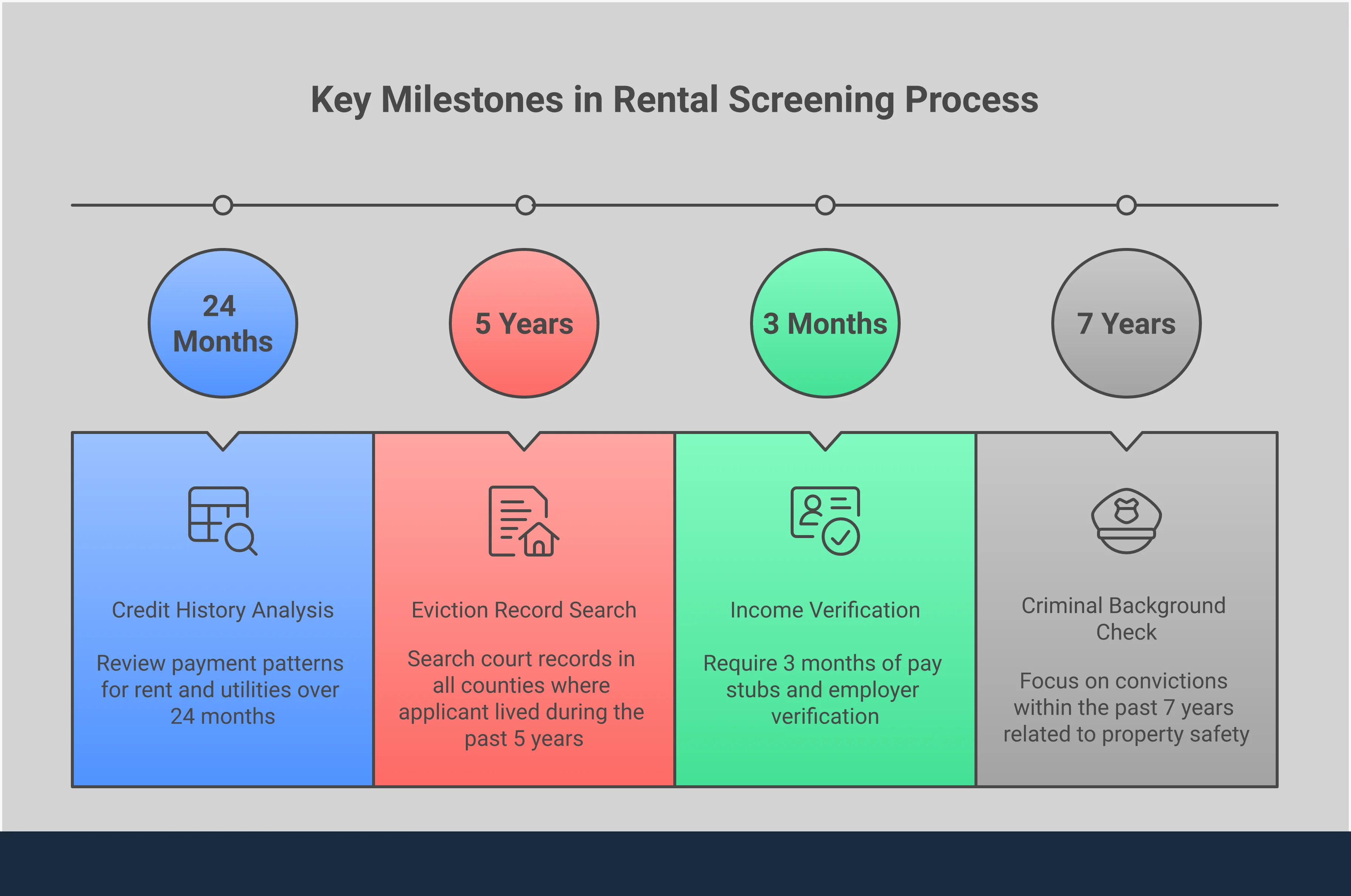
This is the financial foundation of the screening report. It includes a full credit report and score from a major credit bureau, giving you a snapshot of an applicant's financial responsibility. You’ll see their history of paying bills on time, their total debt, and any major financial events like bankruptcies or collections. While a high credit score is great, the details are what really matter. Look for patterns of late payments, especially for rent or utilities, as this can be a strong indicator of future behavior. A thorough review of their credit history helps you assess whether an applicant manages their financial obligations responsibly and can handle the monthly rent payment.
Rental History and Landlord References
Past behavior is often the best predictor of future performance, and that’s exactly what this section is for. A good screening report verifies an applicant's previous addresses and rental history, confirming that they lived where they claimed. More importantly, it provides feedback from past landlords. You can find out if the applicant paid rent on time, took care of the property, followed lease terms, and gave proper notice before moving out. This insight is invaluable because it tells you what it’s actually like to have this person as a tenant. A positive reference can confirm you’ve found a great renter, while a negative one can help you avoid potential problems and costly repairs.
Criminal and Court Records
A criminal background check is a standard part of a comprehensive screening report. It scans national, state, and local databases for any criminal convictions that could pose a risk to your property or the safety of other residents. It’s important to approach this information carefully and consistently, in line with fair housing laws. Not all criminal records are relevant. When reviewing this section, you should consider the nature of the offense, how long ago it occurred, and whether it directly impacts the applicant's ability to be a responsible tenant. Following HUD's guidance ensures you apply your criteria fairly and avoid discrimination claims.
Employment and Income Verification
This part of the report confirms that an applicant has a stable and sufficient source of income to afford the rent. It verifies their current employment status and salary, giving you confidence in their ability to make payments consistently. As a general guideline, many landlords look for a monthly income that is at least three times the rent. However, it’s not just about the amount; it’s also about stability. The report helps you verify the information provided on the application, such as by cross-referencing pay stubs or contacting the employer directly. This step is critical for minimizing the risk of late or missed payments down the line.
Eviction History
An eviction history search is one of the most critical components of a screening report. This check scans court records specifically for past eviction filings and judgments against an applicant. A prior eviction is a significant red flag, as it indicates a serious breach of a previous lease agreement that resulted in legal action. It’s a direct reflection of an applicant’s rental past and one of the strongest predictors of future issues. Finding an eviction in an applicant's history gives you a clear reason to pause and reconsider their application, as it often points to a pattern of non-payment or other major lease violations.
Why Use a Rental Screening Report?
A rental screening report is more than just a background check; it’s the foundation of a secure and profitable rental business. By gathering objective information on an applicant's financial, criminal, and rental history, you can move beyond a gut feeling and make an informed decision. This simple step is one of the most effective ways to protect your property, ensure consistent cash flow, and build a positive landlord-tenant relationship from day one.
Minimize Risk and Protect Your Investment
Your rental property is a significant investment, and protecting it is your top priority. A thorough screening report is your first line of defense. It helps you verify an applicant's ability to pay rent on time and uncovers a history of property damage or irresponsible behavior. Finding a reliable tenant means fewer late payments, less wear and tear on your unit, and a lower chance of costly evictions. By taking the time to screen properly, you’re not just filling a vacancy—you’re safeguarding your asset for the long term. We help property owners work with us to implement these best practices.
Find and Keep Great Tenants
The goal isn't just to avoid problem tenants; it's to attract and retain great ones. A consistent screening process helps you identify applicants with a steady income and a solid rental history—the key ingredients for a successful tenancy. When responsible applicants see that you have a professional process, it signals that you're a serious and organized landlord, which can make your property more attractive. This helps you build a stable rental business with lower turnover rates, saving you the time and money it takes to find new tenants every year.
Make Confident Decisions, Faster
In a competitive market like the San Francisco Bay Area, you need to move quickly without sacrificing quality. A comprehensive screening report gives you all the critical information in one place, allowing you to make a confident decision efficiently. Instead of relying on intuition, you can use objective data to compare applicants fairly. This standardized approach removes guesswork and helps you choose the most qualified tenant with confidence. Filling your vacancy faster means you minimize lost rent and get your property generating income again without unnecessary delays.
Stay Compliant and Document Everything
Navigating landlord-tenant law can be complex, but a proper screening process helps keep you on the right side of the rules. Federal laws like the Fair Credit Reporting Act (FCRA) require you to get an applicant's written permission before running a credit check. Using a consistent, criteria-based screening process for every applicant is also essential for complying with Fair Housing laws. This creates a clear, documented trail that demonstrates your decisions are based on legitimate business reasons, protecting you from potential discrimination claims and ensuring a fair process for everyone.
How to Choose the Right Tenant Screening Service
Selecting a tenant screening service is a critical decision for your rental business. The right partner helps you find reliable tenants quickly, while the wrong one can lead to costly mistakes and legal headaches. With so many options available, from DIY software to full-service management, it’s important to know what to look for. Your goal is to find a service that delivers accurate information, operates efficiently, and keeps you compliant with all relevant laws. Think of it as choosing a key business tool—it should save you time, reduce your risk, and support your long-term success as a landlord. The best services combine comprehensive data with a simple, streamlined process for both you and your applicants.
How Rentals Inc. Can Help
Navigating the tenant screening process on your own can be time-consuming and complex, especially in the competitive San Francisco Bay Area market. At Rentals Inc., we handle every step for you. Our process is designed to attract high-quality applicants and perform thorough, consistent, and fair screenings on your behalf. We manage everything from marketing your property and collecting applications to running detailed background checks and verifying information. By letting our team manage the screening, you save valuable time and gain confidence knowing the process is handled by experienced professionals who understand local regulations. If you want to streamline your leasing process, you can work with us to find your next great tenant.
Look for Accurate, Comprehensive Reports
The foundation of any good screening service is the quality of its data. A vague or incomplete report won’t give you the clarity you need to make a confident decision. A truly comprehensive tenant screening report includes a person's financial and rental past, covering everything from credit history and evictions to criminal records. You need a full picture of an applicant’s background to assess their reliability. Make sure the service you choose pulls data from reputable sources and presents it in a clear, easy-to-understand format. Accuracy is non-negotiable, as your decision depends on it.
Compare Pricing and Turnaround Times
Screening services come with different pricing models and speeds. Some services are free for landlords, with the applicant paying a fee for the report, which typically costs between $30 and $60. Others may charge landlords a subscription or per-report fee. Consider which model works best for your business and be transparent about costs with your applicants. Equally important is the turnaround time. In a fast-moving market, you can’t afford to wait days for a report. Look for a service that delivers results quickly, often on the same day, so you can secure a qualified tenant before they find another property.
Verify Compliance and Legal Support
Tenant screening is governed by strict laws, and non-compliance can lead to serious penalties. Your screening partner must adhere to the Fair Credit Reporting Act (FCRA), which requires you to get an applicant’s written permission before running a report. A good service will have compliance built into its platform, with features for obtaining consent and generating adverse action notices if you deny an applicant based on the report’s findings. This is especially important in the Bay Area, where local ordinances add another layer of complexity. A compliant service protects both you and your applicants.
Check for an Easy-to-Use Platform
The screening process should be simple for everyone involved. A clunky, confusing platform can frustrate you and may even cause qualified applicants to drop out of the process. Look for a service that is online, intuitive, and easy to use. The best platforms allow applicants to fill out their information and provide consent from any device. For you, the landlord, the dashboard should be straightforward, making it easy to request reports and review the results. A smooth, professional experience reflects well on you as a landlord and sets a positive tone for the potential tenancy from the very beginning.
How to Read a Rental Screening Report
Once you have a screening report in hand, the real work begins. This document is packed with information, but it doesn’t give you a simple "yes" or "no." Interpreting it correctly is a skill that protects your investment and helps you find reliable, long-term tenants. It’s about looking beyond the numbers to see the full picture of a potential renter. A thorough and consistent review process is your best defense against future headaches, from late rent to property damage.
Think of the report as a story about the applicant’s financial and rental history. Your job is to read that story and decide if it aligns with your criteria for a responsible tenant. This means knowing what to look for, understanding how to weigh different pieces of information, and applying your standards fairly to every application you receive. By developing a clear process, you can make confident, objective decisions that are legally compliant and set you up for a successful tenancy. Let’s break down how to do it right.
Identify Key Information and Red Flags
A tenant screening report gives you a detailed look into an applicant's background, covering their financial, rental, and criminal history. The first step is to scan for major red flags that might immediately disqualify a candidate based on your pre-set criteria. Key items to look for include prior evictions, a history of late rent payments, or significant unpaid debts sent to collections.
While a single negative mark isn’t always a dealbreaker, certain issues carry more weight. For example, an eviction history is one of the strongest predictors of future rental problems. Similarly, a criminal record with convictions relevant to the safety of the property or other residents should be carefully considered. Identifying these critical data points early helps you quickly sort through applications and focus on the most qualified candidates.
Look for Patterns, Not Just Incidents
One of the biggest mistakes a landlord can make is overreacting to a single negative item. The key is to look for consistent patterns of behavior, not isolated incidents. A single late payment from three years ago is very different from a consistent history of paying rent 15 days late every month. The screening report helps you assess an applicant's risk by showing you their long-term habits.
Look for recurring issues. Do they have multiple accounts in collections? Is there a pattern of short-term rentals and frequent moves? These trends can signal instability or a lack of financial responsibility. A pattern of behavior is far more telling than a one-off mistake. By focusing on the bigger picture, you can better predict how an applicant is likely to behave as your tenant.
Put Negative Information in Context
Not all negative information is created equal. A low credit score might be concerning, but it’s important to understand why it’s low. Was it caused by a single major event, like a medical emergency or job loss, or is it the result of chronic financial mismanagement? Some screening reports will break down the sources of debt, helping you distinguish between medical bills and maxed-out credit cards.
Income is another area that requires context. A general rule of thumb is that an applicant’s income should be at least 2.5 to 3 times the monthly rent, but you also need to consider its stability. Verifying employment and income history helps ensure they can comfortably afford the rent long-term. If you need help interpreting these details, our team at Rentals Inc. can work with you to analyze reports and make informed decisions.
Know When to Follow Up with Applicants
A screening report provides data, but it doesn't always provide the full story. If you find information that’s unclear or concerning, don’t be afraid to follow up with the applicant. Failing to communicate is a common misstep that can lead you to reject an otherwise great tenant. Asking for clarification is a crucial part of your due diligence.
For example, you might ask about a gap in their rental history or inquire about a specific collection account on their credit report. Their willingness to provide a reasonable explanation can tell you a lot about their transparency and responsibility. This dialogue not only gives you more context but also helps ensure your screening process is fair and thorough. It shows you’re making a decision based on complete information, not just assumptions.
Apply Your Criteria Consistently
To protect yourself legally and ensure fairness, you must apply your rental criteria consistently to every single applicant. This means you need to establish your standards before you start accepting applications and stick to them. Your criteria might include a minimum credit score, a specific income-to-rent ratio, and a clean rental history.
This consistency must extend to all adults who will be living in the property. A common mistake is failing to screen co-applicants, which can become a major issue if one tenant leaves or stops paying rent. By screening everyone and applying the same standards to all, you avoid any appearance of discrimination and comply with Fair Housing laws. This disciplined approach is the foundation of a sound and legally defensible tenant selection process.
Tenant Screening and the Law: What You Must Know
Screening tenants is a critical part of managing your rental property, but it’s also governed by a web of federal, state, and local laws. A single misstep, even an unintentional one, can lead to costly legal disputes and discrimination claims. Understanding your legal obligations isn’t just about compliance; it’s about running a fair, ethical, and sustainable business. By establishing a standardized and legally sound screening process, you protect your investment, your reputation, and your peace of mind. This framework ensures you treat every applicant consistently while gathering the information you need to make a confident leasing decision.
Follow the Fair Credit Reporting Act (FCRA)
When you use a tenant screening report to evaluate an applicant, you must comply with the Fair Credit Reporting Act (FCRA). This federal law regulates how consumer reporting agencies can collect and share personal financial information. Because credit reports, criminal records, and eviction histories are considered consumer reports, the FCRA applies directly to your screening process. The most important requirement is that you must have a legally permissible purpose for requesting a report, and renting a property qualifies. Following the FCRA is non-negotiable and forms the foundation of a compliant screening process.
Get Written Consent and Send Adverse Action Notices
Before you run a background or credit check, you must get the applicant’s written permission. This is a core requirement of the FCRA. Make this consent form a standard part of your rental application package. If you decide to deny an application, require a co-signer, or charge a higher deposit based on information in the screening report, you are required to send an "adverse action notice." This letter must inform the applicant of the decision, provide the name and contact information of the screening company you used, and state that they have the right to obtain a free copy of the report and dispute any inaccurate information.
Understand Fair Housing Laws
The federal Fair Housing Act prohibits discrimination based on race, color, religion, sex, disability, familial status, or national origin. To stay compliant, it's essential to establish objective rental criteria and apply them consistently to every single applicant. For example, you cannot deny an applicant simply because they don't have a Social Security Number, as this could be seen as discrimination based on national origin. Your criteria should focus on factors directly related to a tenant's ability to pay rent and care for the property, such as verified income, credit history, and positive landlord references.
Know Your State and Local Rules
While federal laws provide a baseline, many states and cities have their own, often stricter, tenant protection laws. In the San Francisco Bay Area, landlords must follow a complex set of local ordinances that can dictate everything from the maximum application fee you can charge to the types of criminal records you can consider. These rules change frequently, and staying current is crucial for avoiding violations. For example, some cities have "fair chance" housing laws that limit how landlords can use criminal history in their decisions. Always research the specific regulations for the city and county where your property is located.
Avoid Common Screening Mistakes
Many landlords make preventable errors that expose them to risk. One of the most common is failing to screen all adult applicants who will be living in the unit; every person over 18 should complete an application and go through the same screening process. Another pitfall is not verifying the references provided. Always call previous landlords to confirm rental history. Finally, failing to use a professional, compliant screening service can lead to inaccurate information and legal trouble. A thorough, consistent process is your best defense, and partnering with experts can ensure you work with us to get it right every time.
Related Articles
- Work With Rentals Inc | Property & Renter Solutions | Rentals Inc
- Relocation Support & Housing Guidance | Rentals Inc | Rentals Inc
- Find Bay Area Rental Options | Rentals Inc
Leasing Services · SF Bay Area
Schedule a Leasing Consultation
Learn how Rentals Inc. helps property owners reduce vacancy, attract qualified applicants, and lease with confidence.
Schedule a Leasing ConsultationFrequently Asked Questions
What if an applicant has a great income but a low credit score? This is a common situation where context is everything. A low credit score isn't an automatic disqualifier. You should look into the details of the credit report to understand the story behind the number. A score might be low due to past medical debt or a single financial hardship, which is very different from a consistent pattern of late payments on rent and other bills. A stable, high income can sometimes offset a weaker credit history, but it's a judgment call based on the complete financial picture.
Do I really need to screen every adult who will be living in the unit? Yes, without exception. Every person over the age of 18 who will be residing in the property should complete an application and undergo the same screening process. This is critical for two reasons. First, it ensures you have a full picture of who is responsible for the lease. Second, it's a key part of Fair Housing compliance, as you must apply your rental criteria consistently to all applicants to avoid any claims of discrimination.
What's the most critical red flag I should look for in a report? While you should review the entire report, a history of prior evictions is one of the most serious red flags. An eviction is a formal legal process that results from a significant lease violation, most often a failure to pay rent. It is one of the strongest predictors of future rental problems and suggests a higher risk to your investment and cash flow.
What are my legal obligations if I reject an applicant because of their screening report? If you deny an application based on information found in a screening report, you are legally required to send the applicant an "adverse action notice." This is a formal notification that explains your decision. The notice must include the name and contact information of the screening company that provided the report and inform the applicant of their right to obtain a free copy and dispute any inaccuracies it may contain.
Can I just run a credit check instead of a full screening report? A credit check alone only provides a partial view of an applicant's history. A comprehensive screening report gives you a much more complete picture by including eviction history, criminal background, and verification of past rental performance. This additional information is essential for properly assessing risk and making an informed decision that protects your property. Relying only on a credit score means you could miss critical red flags.