

In the San Francisco Bay Area, being a landlord comes with a unique set of challenges, especially when it comes to legal compliance. The rules governing tenant screening are complex and vary from city to city. Simply guessing or using an inconsistent process can expose you to significant legal risk. That’s why understanding how to run a background check on a tenant the right way is not just good practice—it's a necessity. This guide is designed specifically for Bay Area landlords, helping you establish a fair, compliant, and effective screening system that protects your investment while attracting the high-quality tenants your property deserves.
Leasing Services · SF Bay Area
Schedule a Leasing Consultation
Learn how Rentals Inc. helps property owners reduce vacancy, attract qualified applicants, and lease with confidence.
Schedule a Leasing ConsultationKey Takeaways
- Make Screening a Non-Negotiable Step: A thorough background check is the single most effective way to protect your investment. It helps you avoid the high costs of evictions, property damage, and lost rent by identifying risks before you sign a lease.
- Look Beyond the Credit Score: A single number doesn't tell the whole story. Base your decision on a complete profile by verifying income, speaking directly with previous landlords, and reviewing their full credit and eviction history.
- Stay Compliant with a Consistent Process: Establish objective, written screening criteria and apply them to every applicant without exception. This is your best defense against fair housing claims and ensures your decisions are always based on business, not bias.
What is a Tenant Background Check (And Why You Can't Afford to Skip It)
Think of tenant screening as your first line of defense for protecting your rental property. It’s a process of gathering information to help you choose a reliable renter who will pay on time and take care of your investment. Skipping this step is one of the biggest gambles you can take as a landlord. A thorough background check gives you a clearer picture of an applicant's financial stability and rental history, helping you avoid costly problems like evictions, property damage, and months of lost rent.
A consistent screening process for every applicant isn't just smart business—it's also a critical part of fair housing compliance. By setting objective criteria and applying them to everyone, you protect yourself from potential discrimination claims. It establishes a professional, transparent process from the very beginning of your landlord-tenant relationship. While it might seem like an extra step, a proper background check saves you time, money, and stress in the long run. If you need help establishing a compliant screening process, our team can work with you to find qualified tenants for your Bay Area property.
What a Thorough Background Check Includes
A comprehensive tenant background check isn't just one report; it's a collection of several key pieces of information. A complete screening typically includes a credit report, a national criminal background check, and a search for any past evictions. You’ll also want to verify their employment and income to ensure they can comfortably afford the rent. Looking at these different reports together gives you a well-rounded view of the applicant. For example, their credit history shows financial responsibility, while landlord references can tell you about their behavior as a tenant.
The Financial Risks of Skipping a Screening
Failing to screen tenants properly can have serious financial consequences. If you end up with a tenant who stops paying rent, the eviction process can be incredibly expensive and time-consuming. In California, a formal eviction can easily cost thousands of dollars in legal fees and lost rent, not to mention the stress involved. Beyond evictions, you risk significant property damage that a security deposit may not fully cover. Taking the time to run a background check is a small upfront investment that protects you from much larger potential losses down the road.
How Proper Screening Protects You Legally
Running a background check isn't just about protecting your property; it's also about protecting yourself legally. Federal laws like the Fair Credit Reporting Act (FCRA) set strict rules for how landlords can use consumer reports to evaluate applicants. For instance, if you decide to deny an applicant based on information in their background check, you are legally required to provide them with an "adverse action" notice. Following a consistent, documented screening process for every applicant is your best defense against accusations of discrimination and ensures you’re operating fairly and within the law.
What to Look for in a Tenant Background Check
A thorough tenant background check is your first line of defense against future problems. It’s not about being invasive; it’s about being diligent. A comprehensive screening process gives you a clear, objective picture of an applicant, helping you choose a reliable tenant who will pay on time and care for your property. The key is to look at the complete profile—not just one piece of information.
Think of it as assembling a puzzle. Each component—credit, criminal history, evictions, and income—is a piece that helps you see the full picture. By establishing a consistent set of criteria and applying it to every applicant, you create a fair process that protects your investment and complies with housing laws. When you know what to look for, you can confidently assess risk and make an informed decision that sets you up for a successful tenancy. This is a critical step in managing your property effectively, and our team is here to help you work with us to establish a screening process that finds qualified renters for your Bay Area properties.
Credit History and Financial Health
An applicant’s credit report is a window into their financial responsibility. It’s not just about the three-digit score; it’s about the story it tells. Look for a consistent history of on-time payments, as this is a strong indicator they’ll pay their rent on time, too. Also, check for significant debt, accounts in collections, or bankruptcies, which could signal financial instability. According to the experts at Baselane, effective tenant screening services help you find tenants who will pay rent on time by providing detailed credit reports. A healthy credit history shows that an applicant manages their financial obligations responsibly, which is exactly what you want in a tenant.
Criminal History
A criminal background check is a standard part of the screening process, designed to ensure the safety of your property and community. However, it’s crucial to handle this information fairly and legally. Focus on convictions that are recent and relevant—specifically, those that could pose a threat to the property or other residents. Many screening platforms offer comprehensive criminal background checks as part of their reporting. Remember, Fair Housing laws require you to assess each applicant individually rather than applying a blanket policy against anyone with a criminal record. The goal is to mitigate risk, not to discriminate.
Eviction History and Landlord References
Past rental behavior is one of the best predictors of future performance. An eviction history report will show if an applicant has ever been legally removed from a property for non-payment or other lease violations. This is a significant red flag. Beyond the official report, always contact previous landlords. Ask direct questions: Did they pay rent on time? Did they take care of the property? Were there any complaints from neighbors? Would you rent to them again? This firsthand insight is invaluable for understanding an applicant’s reliability and can confirm the information you see on their application.
Employment and Income Verification
Verifying an applicant's income is essential to confirm they can comfortably afford the rent. A general guideline is that a tenant’s gross monthly income should be at least three times the rent, though this can be adjusted for the Bay Area’s high cost of living. Don’t just take their word for it—ask for recent pay stubs, bank statements, or an offer letter from their employer. Then, follow up with a call to the employer to confirm their employment status and salary. Comprehensive screening software often includes income and employment verification to streamline this step, ensuring you have a complete financial picture before signing a lease.
Staying Compliant: The Legal Rules of Tenant Screening
Screening tenants is essential, but doing it the wrong way can land you in serious legal trouble. Federal, state, and local laws create a complex web of rules you have to follow. Understanding these regulations isn't just about checking boxes; it's about protecting your investment and running a fair, professional operation. Let's break down the key legal requirements you need to know before you review a single application.
Following the Fair Credit Reporting Act (FCRA)
The Fair Credit Reporting Act (FCRA) is a federal law that governs how consumer reports—including credit and background checks—are handled. It requires screening companies to use reasonable procedures to ensure the information they provide is accurate. For you as a landlord, the FCRA has a critical rule: if you decide to deny an applicant based on information in their report, you must follow a specific "adverse action" process. This involves sending the applicant a notice, providing them with a copy of the report, and informing them of their right to dispute any inaccurate information. This process is non-negotiable and protects both you and the applicant.
Understanding Fair Housing Laws
Fair Housing laws exist to prevent discrimination in housing. At the federal level, this means you cannot make a rental decision based on an applicant's race, color, religion, national origin, sex, disability, or familial status (having children). The best way to stay compliant is to establish objective, written screening criteria and apply them consistently to every single applicant. For example, your criteria might include a minimum credit score and a certain income-to-rent ratio. By treating everyone the same and documenting your process, you create a clear, defensible record that shows your decisions are based on business reasons, not discriminatory ones.
Local Rules: Screening in the San Francisco Bay Area
The Bay Area has some of the strictest tenant protection laws in the country, and they often go beyond federal and state requirements. For example, San Francisco’s Fair Chance Ordinance limits how landlords can use criminal history in housing decisions. Taking it a step further, Alameda County was the first in the nation to prohibit the use of criminal background checks in most rental applications. These rules change frequently and vary by city, so it's vital to know the specific ordinances for your property's location. Staying on top of these local nuances is one of the biggest challenges for landlords in our market.
Getting Written Consent from Applicants
Before you run any background or credit check, you must get clear, written consent from the applicant. This is the first and most important step in a compliant screening process. Your rental application should include a separate authorization form that explicitly states you will be running a background check and specifies what it will cover—credit report, criminal history, and eviction records. Having the applicant sign this document provides proof that they agreed to the screening. Skipping this step is a major legal risk and can invalidate your entire screening process, so make it a standard part of your application package.
How to Choose the Right Tenant Screening Service
Choosing a tenant screening service is a critical step in protecting your investment. It's not just about getting data; it's about getting the right data in a way that's efficient, compliant, and easy to understand. The market is full of options, from standalone platforms to integrated software, and picking the right partner can make the difference between a smooth leasing process and a series of headaches. A good service acts as your first line of defense, helping you verify an applicant's information quickly and confidently so you can place a reliable tenant.
The goal is to find a platform that delivers comprehensive reports while keeping you compliant with all relevant regulations, like the Fair Credit Reporting Act. Think of it as an investment in your property's future. The right tools will help you find a tenant who pays on time and respects your property, which is the foundation of a successful rental business. When you're evaluating options, focus on three key areas: the quality and depth of the reports, the platform's ease of use for both you and the applicant, and how easily the service fits into your existing workflow.
What to Look For in a Screening Service
A great screening service does more than just pull a credit score. You need a complete picture of the applicant. Look for a provider that offers comprehensive reports, including a full credit report from a major bureau like TransUnion or Experian, a national criminal background check, and a search of eviction records. These three pillars give you a solid understanding of an applicant’s financial responsibility and rental history.
Beyond the reports themselves, ensure the service is fully compliant with the Fair Credit Reporting Act (FCRA). This is non-negotiable, as it protects you from legal trouble. The best tenant screening services also make the process easy for both you and the applicant, with a simple online portal that streamlines the entire workflow from application to final report.
Understanding the Costs
Screening costs can vary, but you’ll generally find two main models: landlord-paid or tenant-paid. Most modern services give you the option to have the applicant pay the screening fee directly. This is standard practice in competitive markets like the Bay Area and helps filter for serious applicants. Services like TransUnion's SmartMove are built around this model, which simplifies the process for landlords.
Whether you pay per screening or through a subscription, look for transparent pricing. Avoid services with hidden fees or confusing packages. For most small landlords, a pay-per-use model makes the most sense, as you only pay when you have a vacancy to fill. This approach keeps your costs down while giving you access to professional-grade reports when you need them.
How to Run a Background Check, Step-by-Step
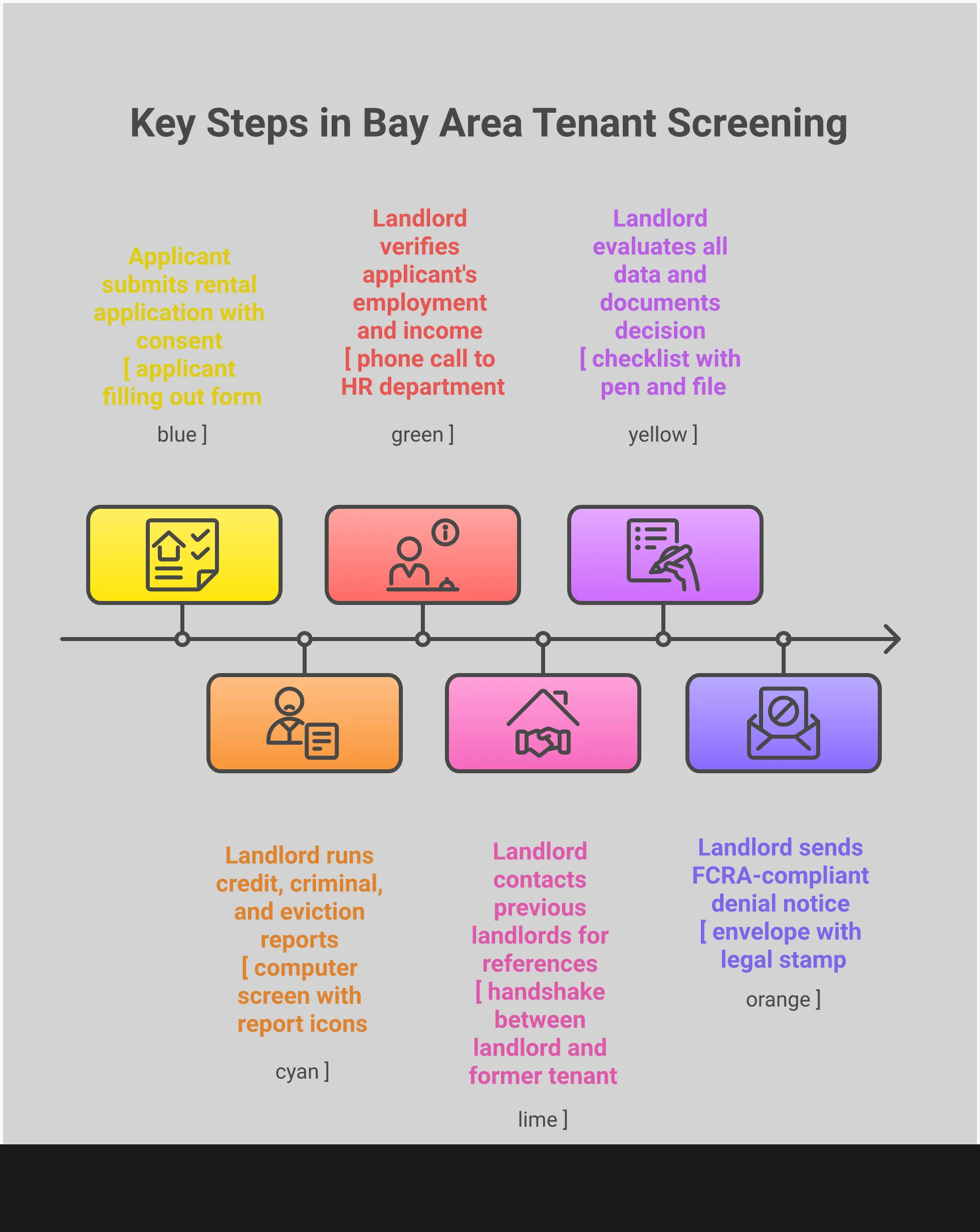
Once you’ve chosen a service, the process is usually straightforward. It starts with getting the applicant’s permission. You must have their written consent before running any background checks—your screening service will facilitate this as part of their workflow. After you initiate the request through the platform, the applicant receives a secure link to fill out their personal information, including their Social Security number.
This is a key security feature, as it means you never have to handle sensitive data directly. The applicant submits their information, and the service gets to work compiling the credit, criminal, and eviction reports. Within minutes or hours, you’ll receive a notification that the reports are ready to review in your dashboard, giving you the information you need to make an informed decision.
Integrating with Your Property Management Software
If you use property management software to keep your rentals organized, look for a screening service that integrates with it. Many platforms, like Buildium or AppFolio, have built-in screening features or partner with trusted providers. This creates a seamless experience, allowing you to manage applications, run background checks, and sign leases all from a single dashboard.
An integrated solution saves time by eliminating the need to jump between different websites and manually enter applicant data. It keeps all your records in one place, which is great for organization and compliance. At Rentals Inc., we help landlords build these efficient systems to minimize vacancies and find great tenants. If you need support managing your Bay Area properties, you can learn more about how to work with us.
You Have the Results. Now What?
Once the tenant screening report is in, it's time to make a decision. This document is your key to moving forward with confidence, but only if you interpret it correctly and act legally. A consistent, fair process protects your investment by weighing the applicant's complete picture against your pre-set criteria.
How to Read the Report
A tenant screening report consolidates credit, criminal, and eviction data. Review each section methodically, looking for patterns, not just a score. Was there a single difficult period or a history of late payments? While tenant screening services streamline this process, the final interpretation is yours. Establish your criteria beforehand—like a minimum credit score—and apply them consistently to every applicant for a fair assessment.
Making a Fair and Informed Decision
Base your decision on objective business criteria, not a gut feeling. The report helps you choose reliable renters and protect your property from issues like unpaid rent. Compare the applicant's information against your pre-defined rental criteria. If your policy requires a 3:1 income-to-rent ratio and the applicant falls short, that’s a clear reason for denial. Sticking to your standards for every applicant is good business and helps you stay compliant with fair housing laws.
What to Do If You Deny an Applicant
If you deny an applicant based on their screening report, you must send an "adverse action" notice. The Fair Credit Reporting Act (FCRA) requires this notice to be in writing. It must include the screening company's contact information and inform the applicant of their right to get a free copy of the report and dispute inaccuracies. The responsibility for the report's accuracy falls on you, so this process is crucial.
How to Communicate Your Decision
Clear communication is key, whether approving or denying. For an approval, a warm welcome and clear next steps are all you need. For a denial, be direct, respectful, and compliant. You must send the legally required adverse action notice if the decision was based on their report. Let the applicant know they have the right to see their report and correct any errors with the screening agency. This transparent approach is professional and meets your legal obligations.
Beyond the Background Check: Strengthening Your Screening Process
A tenant background check provides a critical snapshot of an applicant's history, but it’s just one piece of the puzzle. To truly protect your investment and find a reliable, long-term tenant, you need to dig a little deeper. Think of the background check as your foundation; these extra steps are the framework that ensures a stable and secure tenancy. By verifying the information you receive, speaking directly with references, and leveraging the right tools, you can build a much clearer picture of who you’re renting to.
This isn't about being invasive; it's about being thorough. A comprehensive screening process demonstrates professionalism and sets clear expectations from the start. It helps you move beyond the raw data to understand the person behind the application, ensuring they are a good fit for your property and the community. Taking these additional measures not only minimizes your risk of late payments or property damage but also helps you build a positive landlord-tenant relationship from day one. When you work with us, we handle this entire process, ensuring every detail is covered so you can have confidence in your choice.
Double-Checking Income and Rental History
An applicant’s ability to pay rent consistently is the most critical factor for any landlord. While a credit report shows financial habits, you need to confirm their current income is sufficient and stable. Don't just take the application at face value. Ask for recent pay stubs, an offer letter for a new job, or bank statements to verify the income they’ve listed. A quick call to the employer’s HR department (with the applicant's permission) can confirm their employment status and salary. This simple step ensures you’re making a decision based on verified facts, not just claims. It’s the best way to mitigate the number one risk: non-payment of rent.
The Power of a Good Interview and Reference Check
Numbers on a report don't tell the whole story. A brief, professional phone call with the applicant can provide valuable context. More importantly, always check references, especially from previous landlords. When you call a past landlord, ask specific, open-ended questions. Instead of "Were they a good tenant?" ask, "Did they pay rent on time each month?" "Did they maintain the property well?" and "Would you rent to them again?" Their answers—and any hesitation—can be incredibly revealing. This conversation is your best tool for understanding an applicant's rental behavior and reliability beyond what any document can show you.
Using Tech to Your Advantage
Modern technology can make your screening process more efficient and accurate. High-quality tenant screening services bundle credit, criminal, and eviction reports into one easy-to-read format, saving you time and administrative headaches. These platforms streamline the application process for prospective tenants, creating a professional and user-friendly experience from the start. For those moving to the area, a smooth, tech-enabled process is even more critical. Our relocation services integrate these tools to help qualified tenants find and secure the right home quickly, which means filling your vacancies faster with less hassle.
Common Screening Mistakes to Avoid
One of the biggest mistakes a landlord can make is inconsistency. You must apply the same screening criteria to every single applicant to comply with fair housing laws. Create a written policy with your minimum requirements—such as income-to-rent ratio and credit score—and stick to it. Another common error is relying on a flawed report. Remember, the responsibility for the accuracy of a screening report ultimately falls on you, the landlord. If an applicant disputes information, you need to take it seriously. By establishing a consistent, documented process, you not only make fairer decisions but also protect yourself from potential legal challenges.
Related Articles
- Relocation Support & Housing Guidance | Rentals Inc
- Work With Rentals Inc | Property & Renter Solutions | Rentals Inc
Leasing Services · SF Bay Area
Schedule a Leasing Consultation
Learn how Rentals Inc. helps property owners reduce vacancy, attract qualified applicants, and lease with confidence.
Schedule a Leasing ConsultationFrequently Asked Questions
What if an applicant has a great income but a poor credit history? This is a common situation where having pre-set rental criteria is essential. A high income shows they can afford the rent, but a low credit score might indicate a history of not paying bills on time. You need to look at the entire credit report to understand the story. Was it a single event like a medical issue, or is there a consistent pattern of late payments? Ultimately, you must weigh this against your established standards and apply your decision-making process consistently for every applicant.
How should I handle an applicant's criminal history, especially with strict Bay Area laws? This requires careful handling. Laws in cities like San Francisco and Alameda County are very specific and limit how you can use criminal records in housing decisions. Instead of applying a blanket policy, the best practice is to conduct an individual assessment. Focus only on recent and relevant convictions that could directly threaten the safety of your property or other residents. Sticking to a fair, documented process is your best protection.
Can I require applicants to pay for their own background check? Yes, it is standard and acceptable practice to have the applicant pay the screening fee directly to the screening service. Most modern platforms are set up this way. This approach not only simplifies the process for you but also helps ensure that you are only processing applications from people who are genuinely interested in your property.
What's the biggest mistake landlords make when screening tenants? The most common and costly mistake is inconsistency. You must establish a clear, written set of screening criteria—such as a minimum credit score or income-to-rent ratio—and apply it uniformly to every single person who applies. Making exceptions or relying on a "gut feeling" can lead to poor tenant choices and open you up to fair housing complaints. A consistent process is your best defense.
Do I have to send a formal denial letter if I reject someone? If your decision to deny an applicant was based on any information found in their background or credit report, you are legally required to send them an "adverse action" notice. This letter informs them of the decision, provides the name and contact information of the screening company you used, and explains their right to obtain a free copy of the report to dispute any inaccuracies. This is a non-negotiable step required by the Fair Credit Reporting Act.