

Every landlord’s worst fear is a tenant who pays rent late, damages the property, or forces a costly eviction. These situations can quickly turn a profitable investment into a stressful financial burden. The most effective way to prevent these problems is to implement a rigorous screening process before you ever hand over the keys. Proper tenant background checks are your first and best line of defense. They provide a clear picture of an applicant’s history, allowing you to make an informed decision based on facts. This article will show you exactly what to look for, how to interpret the results, and how to stay compliant with Bay Area laws.
Leasing Services · SF Bay Area
Schedule a Leasing Consultation
Learn how Rentals Inc. helps property owners reduce vacancy, attract qualified applicants, and lease with confidence.
Schedule a Leasing ConsultationKey Takeaways
- Make data-driven decisions, not gut feelings: A comprehensive background check provides the objective data you need to choose a reliable tenant, protecting your investment from costly problems like evictions and property damage.
- Look beyond the credit score for the full story: A reliable screening process evaluates four key areas—income, credit, rental history, and criminal background—to build a complete and accurate applicant profile.
- Create a written process to ensure fairness and compliance: Document your screening criteria and apply it to every applicant without exception. This is your best defense against discrimination claims and helps you follow complex Bay Area housing laws.
What Is a Tenant Background Check (And Why You Need One)
A tenant background check is your process for verifying a potential renter’s qualifications to help you select the best applicant for your property. Think of it as essential due diligence for your investment. This step typically occurs after you receive a rental application and before you offer a lease. By gathering objective information on an applicant's financial, criminal, and rental history, you can make an informed decision that protects your asset, minimizes risk, and helps ensure a stable landlord-tenant relationship.
Running a consistent and compliant background check on every applicant is one of the most important things a landlord can do. It establishes clear, fair criteria for everyone and sets a professional tone from the start. This process isn't about being invasive; it's about confirming that an applicant is reliable, responsible, and able to meet the terms of the lease agreement.
What a Thorough Background Check Includes
A comprehensive background check gives you a well-rounded picture of an applicant. It’s not just one report but a collection of data points that together tell a story. A thorough screening should always cover three core areas:
- Financial History: This includes a full credit report, which shows an applicant's credit score, payment history, and any outstanding debts or collections. It helps you assess their financial responsibility.
- Rental History: This part of the check looks for past evictions and verifies information from previous landlords. It confirms whether the applicant paid rent on time and respected their prior rental properties.
- Personal Background: A national criminal record search is standard. This helps you identify any relevant history that could pose a risk to your property or the safety of other tenants, while following all fair housing laws.
How Screening Protects You and Your Investment
Proper tenant screening is your first line of defense against significant problems like late rent, property damage, and costly evictions. By verifying an applicant's history, you can significantly reduce the chances of placing a tenant who may not be able to meet their obligations. This simple step helps you find reliable renters who will treat your property with respect and pay their rent consistently.
Beyond just protecting your cash flow, a good screening process also protects your community. For multi-unit properties, ensuring new tenants have been properly vetted contributes to a safer and more peaceful environment for everyone. When you work with a professional leasing service, you can be confident that every applicant is evaluated against fair, consistent, and legally compliant criteria.
Screening Costs vs. Eviction Costs: The Real Numbers
The small fee for a background check—often paid by the applicant—is minimal compared to the staggering cost of an eviction. A contested eviction in the Bay Area can easily cost a landlord thousands of dollars in legal fees, court costs, and lost rent. The process can drag on for months, during which you aren't collecting any income from the unit. Add in potential costs for repairing property damage, and the total financial hit can be devastating.
The average cost of an eviction can range from $3,500 to $10,000. When you weigh that against the typical $30 to $75 cost of a comprehensive screening report, the choice is clear. Investing in a thorough background check upfront is a small price to pay to avoid a massive financial and emotional burden later on.
What to Include in Your Tenant Screening
A thorough tenant screening process is your first line of defense in protecting your investment. It’s not about being invasive; it’s about gathering the right information to make a confident, informed, and fair decision. Think of it as assembling a complete picture of your applicant, piece by piece. A comprehensive check goes beyond a simple credit score to evaluate an applicant’s financial habits, background, and history as a renter. By establishing a consistent screening process for every applicant, you create a clear, objective standard that helps you choose reliable tenants while staying compliant with fair housing laws.
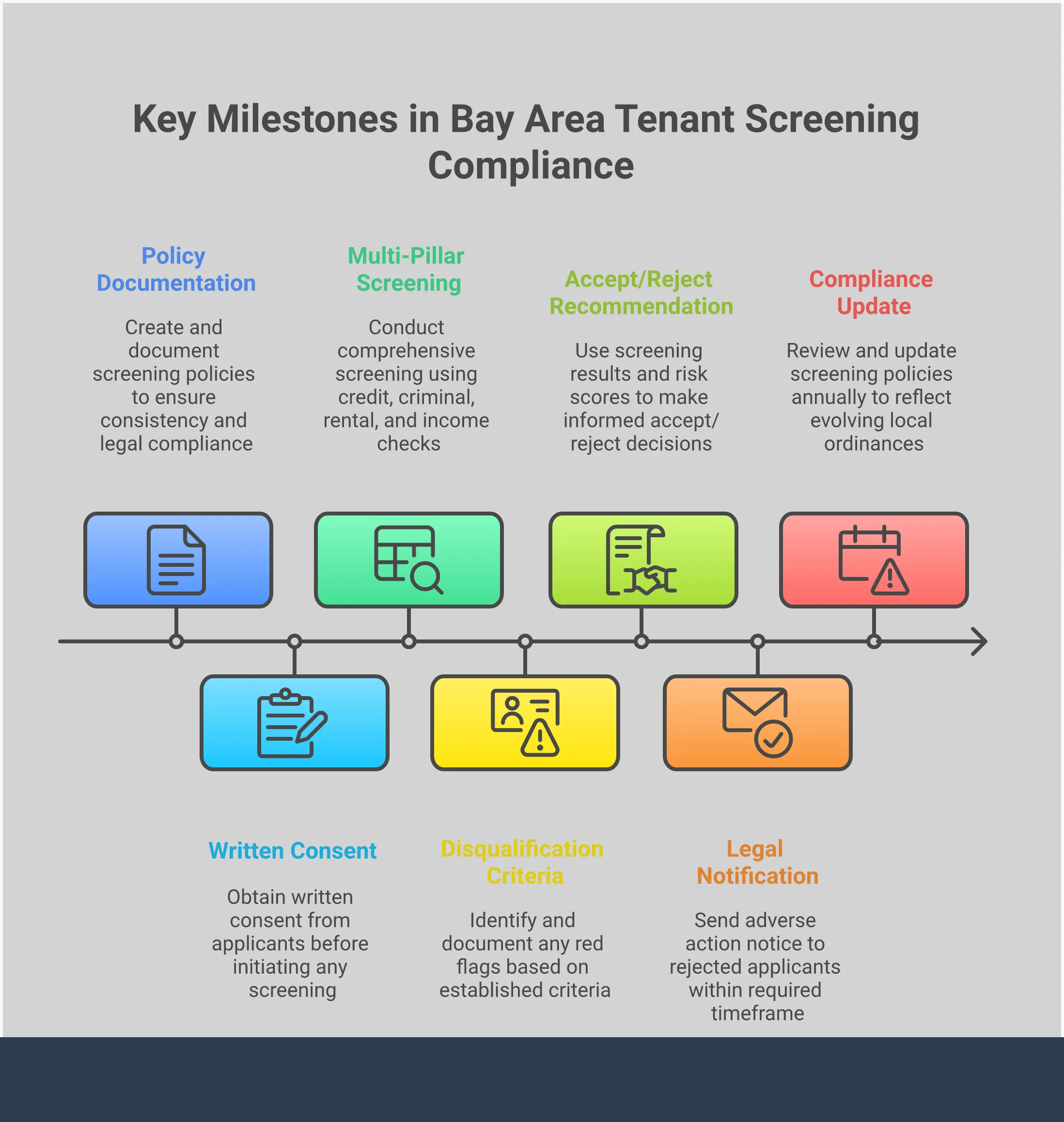
The four pillars of a strong background check are financial history, criminal records, rental history, and income verification. Each component provides a different lens through which to view an applicant. A credit report shows financial responsibility, a criminal check addresses safety, rental history predicts their behavior as a tenant, and income verification confirms they can afford the property. Neglecting any one of these areas leaves you with an incomplete picture and potential blind spots. Our approach at Rentals Inc. is built on this multi-faceted evaluation, ensuring that property owners have all the necessary information to make the best possible choice for their property.
Assessing Credit and Financial History
An applicant’s credit report tells a story about their financial responsibility. While the three-digit credit score is a useful summary, the details are what really matter. Look for patterns of on-time payments, the amount and type of debt they carry, and any major red flags like accounts in collections, bankruptcies, or past evictions. Many modern screening services now provide more than just raw data; they offer a customized renter risk score or a straightforward recommendation—like "accept" or "accept with conditions"—to help you interpret the information. This can simplify your decision-making and help you apply your criteria consistently. A solid understanding of credit reports is essential for any landlord looking to gauge an applicant's reliability.
Reviewing Criminal Records
The purpose of a criminal background check is to ensure the safety of your property, your other tenants, and the surrounding community. It’s crucial to use an approved, professional service to run this check to ensure you comply with the Fair Credit Reporting Act (FCRA) guidelines. When reviewing the results, focus on convictions that are directly relevant to the applicant’s ability to be a good tenant. This typically includes offenses related to violence, property damage, or financial fraud. It’s important to remember that an arrest is not a conviction, and local and state laws, like California’s Fair Chance Act, place strict limits on how you can use this information in your decision.
Verifying Rental History and References
How an applicant behaved in their past rentals is one of the best predictors of how they’ll behave in yours. Always contact their previous landlords—not just the current one, who might be motivated to give a good review to get rid of a problem tenant. Ask specific, open-ended questions: Did they pay rent on time? Did they maintain the property? Were there any complaints from neighbors? Did they give proper notice before moving out? Be sure you are speaking with the actual property owner or manager, not a friend posing as a reference. Having a standard list of questions helps you gather consistent information for every applicant you screen.
Confirming Employment and Income
Verifying that an applicant can comfortably afford the rent is fundamental. The general industry standard is to look for a gross monthly income that is at least three times the rent, but the key is to apply your criteria consistently to everyone. Don’t just rely on the pay stubs an applicant provides; it’s best practice to get written verification directly from their employer. For self-employed applicants or those with non-traditional income, you can request bank statements or recent tax returns. This step confirms financial stability and reduces the risk of late or missed payments. If this process feels overwhelming, our team can work with you to handle every aspect of tenant screening, from income verification to final selection.
Bay Area Legal Requirements You Must Follow
Screening tenants in the Bay Area isn’t just about finding the right fit; it’s about following a complex web of federal, state, and local laws. Getting this part wrong can lead to serious legal and financial trouble. Here’s what you need to know to keep your screening process compliant and protect your investment.
Staying Compliant with the FCRA
The Fair Credit Reporting Act (FCRA) is a federal law that regulates how consumer credit information is collected, accessed, and used. As a landlord, you have clear responsibilities. You must use a reputable screening service to ensure the reports you receive are accurate and legally sourced. If you decide not to rent to someone based on information in their background check—or if you require a co-signer or a higher deposit—you are legally required to provide them with an adverse action notice. This notice informs them of the decision and their right to see the report that influenced it.
Understanding the California Fair Chance Act
On top of federal rules, California landlords must follow the Fair Chance Act, which limits how you can use a potential tenant’s criminal history in your decision-making. The goal is to ensure people with a past record have a fair opportunity to find housing. Local laws can be even stricter. For example, San Francisco has its own Fair Chance Ordinance that adds protections for applicants, and Alameda County has gone a step further by banning the use of criminal background checks in most rental housing decisions. It’s critical to check the specific ordinances in your city and county, as these rules are constantly evolving and vary significantly across the Bay Area.
Handling Consent and Adverse Action Notices
Your screening process must begin with clear, written consent from the applicant. Before you run any checks, have every applicant sign a form that explicitly gives you permission to do so. This is a non-negotiable first step. It’s also essential to apply your screening criteria equally to every single person who applies. Don’t run a credit check on one applicant and not another, as this can lead to discrimination claims. If you do take adverse action, like denying an application, the notice you send must include the name of the screening agency you used and a statement that the agency did not make the rental decision. This gives the applicant a clear path to dispute any inaccuracies in their report.
How to Run an Effective Tenant Background Check
Once you have your screening criteria in place, it’s time to put it into action. Running a background check isn’t just about pulling a report; it’s about following a consistent and legally sound process from start to finish. A methodical approach protects your investment and ensures you treat every applicant fairly. This is where having a clear, repeatable system makes all the difference, turning a complicated task into a straightforward part of your leasing workflow. If you need help establishing a compliant process, our team is here to work with you to manage your properties effectively.
Getting Proper Written Consent
Your first step, before anything else, is to get the applicant’s written permission to run a background check. This isn’t just a good idea—it’s a legal requirement. Your rental application should include a clear and separate authorization statement that the applicant must sign. This gives you the explicit right to check their credit history, criminal record, and past evictions. Without this signed consent, you cannot proceed. Make sure the language is straightforward and specifies exactly what you’ll be looking into. This simple document is the foundation of a compliant screening process and a key part of your landlord responsibilities.
Your Step-by-Step Screening Checklist
With consent in hand, follow a consistent checklist for every applicant. Start by using a reputable, professional screening service that complies with the Fair Credit Reporting Act (FCRA). These services provide the credit, criminal, and eviction reports you need. Once you have the reports, verify the information by contacting the previous landlords and employers listed on the application. If you decide to deny an applicant based on something in the report, you must provide them with an adverse action notice. This letter explains why they were denied and gives them information on the screening company you used and their right to dispute the information.
How to Apply Screening Criteria Fairly
Fairness comes from consistency. You must apply your screening criteria uniformly to every single applicant to comply with fair housing laws. This means if you set a minimum income requirement of three times the rent, it applies to everyone. It’s best to write down your criteria before you even list your property. Be aware that local laws in the Bay Area can add another layer of complexity. Some cities restrict how you can use credit scores or criminal history in your decision. A documented, consistent process is your best tool for making objective decisions and protecting yourself from potential discrimination claims.
The Best Tenant Screening Services for Landlords
Choosing a tenant screening service is one of the most important decisions you’ll make as a landlord. The right partner provides accurate, comprehensive reports that help you make informed decisions, while the wrong one can leave you with unreliable information and legal risks. A thorough background check is your best defense against future problems, giving you the data you need to properly evaluate every applicant.
The market is filled with options, from standalone software to full-service property management solutions. Some services offer a simple credit and criminal check, while others provide detailed rental histories and customized risk scores that recommend whether to accept, reject, or accept an applicant with conditions. The key is to find a service that not only gives you the full picture but also understands the specific legal landscape of the San Francisco Bay Area. A reliable partner ensures every step, from collecting consent to delivering reports, is handled correctly and in full compliance with federal and state laws.
How Rentals Inc. Can Help
We know that screening tenants can feel like a full-time job. That’s why we handle the entire process for you. At Rentals Inc., we manage everything from marketing your property and collecting applications to conducting comprehensive background checks on every qualified applicant. Our process is designed to be fair, consistent, and fully compliant with all regulations. We verify income, check credit reports, review rental and eviction histories, and run criminal background checks. By presenting you with a clear, concise summary, we help you make a confident decision without getting lost in the details. If you’re ready to find reliable tenants without the hassle, you can work with us to get started.
What to Look For in a Screening Service
When evaluating a screening service, focus on four key areas. First, ensure they are fully compliant with the Fair Credit Reporting Act (FCRA) and California’s specific laws. Second, look for comprehensive reports that include credit history, a national criminal background check, and eviction records. Third, confirm the service has a process for handling disputes and correcting inaccurate information. Finally, the service should make compliance easy for you by providing built-in tools for obtaining applicant consent and sending an adverse action notice if you deny an applicant based on the report’s findings.
Comparing Costs and Timelines
The cost of tenant screening services can vary, with some charging landlords a flat fee and others passing the cost directly to the applicant. While it’s tempting to choose the cheapest option, remember that you often get what you pay for. An inaccurate or incomplete report can cost you far more in the long run. Turnaround time is another factor, as you don’t want to lose good applicants due to delays. However, speed should never come at the expense of accuracy. Many renters have filed complaints about problems with tenant background checks, including errors that led to wrongful denials. A reputable service will balance efficiency with a commitment to providing verified, reliable information.
Common Red Flags in Background Checks
Once you have a background check in hand, the real work begins: interpreting the results. A report filled with data can feel overwhelming, but learning to spot the important signals is key to making a sound decision. Not every alert is a deal-breaker, but some patterns definitely warrant a closer look. The goal isn’t to find a perfect applicant—it’s to find a reliable one who meets your established criteria.
A common mistake is making snap judgments based on a single piece of information. Instead, you should view the background check as one part of a complete picture, alongside the application, references, and your own interactions. A thoughtful review protects your investment and ensures you’re treating every applicant fairly. Developing a consistent process for evaluating these reports helps you make objective, defensible leasing decisions every time. If you’re unsure how to weigh different factors, our team can help you establish clear, compliant screening criteria when you work with us.
Spotting Incomplete or False Information
Tenant screening reports are not always perfect. In fact, federal regulators have highlighted how often these reports contain wrong or incomplete information. That’s why your first step should be to compare the report directly against the rental application. Look for discrepancies in names, past addresses, or employment history. A simple typo can sometimes pull incorrect data, so an inconsistency isn’t automatically a sign of deception. If you see a mismatch, it’s often best to ask the applicant for clarification before jumping to conclusions. This gives them a chance to correct a potential error and shows you’re conducting a fair and thorough review.
How to Evaluate Criminal History Fairly
In the Bay Area, evaluating criminal history requires careful attention to local laws. A past conviction is not an automatic disqualification. Ordinances like the San Francisco Fair Chance Act limit how you can use this information, requiring you to consider the nature of the offense, how long ago it occurred, and its relevance to the tenancy. For example, a conviction for disturbing the peace a decade ago is very different from a recent conviction for property damage. The key is to create a written policy that you apply consistently to every applicant. This ensures you are making a non-discriminatory assessment based on legitimate business reasons, protecting both you and the applicant.
Key Disqualifiers to Watch For
While you need to evaluate each applicant holistically, certain red flags are clear indicators of risk. A history of evictions or unpaid rent owed to previous landlords is one of the most significant disqualifiers. Your screening criteria should also include minimum income requirements and a review of their credit report for major issues like bankruptcies or a pattern of seriously delinquent accounts. Other common reasons for denial include providing false information on the application or having a verified income that doesn’t meet your stated threshold. By defining these disqualifiers in advance, you can apply your standards consistently and make objective decisions that protect your property.
How to Avoid Costly Screening Mistakes
A thorough tenant screening process does more than just find reliable tenants—it protects you from legal headaches and financial losses. Simple missteps can lead to fair housing complaints or placing a tenant who can’t pay rent. Avoiding these situations starts with a consistent, well-documented, and legally compliant process. Think of it as your playbook for every applicant, every time. It ensures you treat everyone fairly and make decisions based on objective criteria, which is your best defense if a decision is ever questioned. By creating a clear system, you not only safeguard your investment but also build a reputation as a fair and professional landlord.
How to Document Your Screening Process
Your screening process should be written down before you even list your property. This document is your guide, ensuring you apply the same criteria to every single applicant. It should clearly state your minimum requirements for income, credit history, and rental history. Keep detailed records for every applicant, including their completed application, the screening reports you received, and any notes from your reference checks. This documentation is crucial. The Consumer Financial Protection Bureau has highlighted how often tenant screening reports contain errors, leading to disputes. Having a clear, documented process shows you acted in good faith based on the information you had and followed a consistent, non-discriminatory procedure.
What to Do When You Deny an Applicant
If you decide not to rent to someone based on information in their background check, you can't just ghost them. The law requires you to provide them with an "adverse action notice." This is a formal notification that explains your decision. The notice must include the name and contact information of the screening company you used, a statement that the screening company did not make the rental decision, and information on the applicant's right to dispute the report's accuracy. This is a critical step in complying with the Fair Credit Reporting Act. Providing this notice is not just a legal requirement; it’s a fair practice that gives applicants a chance to correct potential errors in their files.
A Quick Review of California's Screening Rules
In California, landlords must follow specific regulations when screening tenants. For starters, you can only charge an application screening fee up to a certain amount, which is adjusted annually for inflation, and you must provide an itemized receipt. More importantly, you need to be aware of local "fair chance" housing laws, particularly in places like San Francisco and Oakland, which limit how you can use criminal history in your decisions. These local rules often go beyond statewide protections. While a comprehensive tenant background check is essential, you have to be careful about which information you use to make your final decision. Staying current on these evolving laws is key to avoiding violations.
Leasing Services · SF Bay Area
Schedule a Leasing Consultation
Learn how Rentals Inc. helps property owners reduce vacancy, attract qualified applicants, and lease with confidence.
Schedule a Leasing ConsultationFrequently Asked Questions
Who is responsible for paying for the tenant background check? In California, you can charge prospective tenants an application screening fee, which covers the cost of the background and credit check. However, the law sets a maximum amount you can charge, and this figure is adjusted annually. The fee must be a reasonable reflection of your actual out-of-pocket costs. If you collect a fee, you are required to provide the applicant with an itemized receipt.
Do I really need to check everything, or is a credit report enough? A credit report is essential, but it only tells one part of the story—an applicant's financial habits. It won't show you if they have a history of evictions or property damage, which is a major risk factor. A comprehensive check that includes rental history and a criminal background review gives you a much more complete picture. This helps you confirm not only if they can pay the rent, but also if they have a track record of being a responsible and respectful tenant.
What should I do if an applicant has a low credit score but seems great otherwise? This is where having pre-defined, written screening criteria is so important. A low credit score isn't always an automatic disqualifier, but you need to apply your standards consistently to every applicant to avoid fair housing violations. You might look at the reasons behind the score—was it due to a past medical issue or a pattern of late payments? If your written policy allows for it, you could consider options like requiring a qualified co-signer, but you must offer that same option to any applicant in a similar situation.
How do I handle an applicant with a criminal record without breaking the law in the Bay Area? This requires careful handling, as Bay Area ordinances are some of the strictest in the country. You cannot have a blanket policy of denying anyone with a criminal record. Instead, you must conduct an individual assessment and only consider convictions that are directly relevant to the tenancy and pose a safety risk. Focus on the nature of the offense and how long ago it occurred. The best practice is to create a clear, written policy and consult it every time to ensure you are making a fair and legally compliant decision.
What happens if I deny an applicant? Can I just let them know we went with someone else? If your decision to deny an applicant is based on anything you found in their screening report, you are legally required to provide them with an "adverse action notice." This is a formal, written notification that informs them of the denial. It must also include the name of the screening company you used and a statement explaining that the applicant has the right to see the report and dispute any inaccuracies it may contain. This is a critical step that you cannot skip.