

Handing over the keys to your property is an act of trust. To make that trust feel less like a gamble, you need a reliable way to vet applicants. A thorough screening process is your single best tool for protecting your investment from late rent, property damage, and costly evictions. It moves your decision from a gut feeling to a data-backed choice. This guide explains everything you need to know about running compliant tenant checks background credit reports in the Bay Area, giving you the confidence to choose a reliable renter who will care for your property as if it were their own.
Leasing Services · SF Bay Area
Schedule a Leasing Consultation
Learn how Rentals Inc. helps property owners reduce vacancy, attract qualified applicants, and lease with confidence.
Schedule a Leasing ConsultationKey Takeaways
- Treat Screening as Essential Insurance: A thorough background and credit check is your most effective tool for protecting your investment. It verifies an applicant's financial reliability and rental history, helping you prevent costly issues like unpaid rent, property damage, and evictions.
- Define Your Criteria Before You List: To stay compliant and make fair decisions, establish your rental standards—like income requirements and credit score minimums—in advance. Applying these objective rules to every applicant protects you from discrimination claims and simplifies your selection process.
- Master Two Key Legal Requirements: Always get written consent from an applicant before running any reports, as required by the Fair Credit Reporting Act (FCRA). If you deny an applicant based on the screening results, you are legally obligated to provide them with a formal adverse action notice.
What Are Tenant Background and Credit Checks?
Tenant background and credit checks are a standard part of the rental application process. Think of it as a systematic way to review a potential renter's qualifications before you hand over the keys. This process gives you a clearer picture of their financial responsibility and rental history, helping you protect your investment. It’s important to know that these checks are regulated by federal laws, primarily the Fair Credit Reporting Act (FCRA), which sets the rules for how you can collect and use this information.
Why Screening Matters for Bay Area Landlords
In a competitive market like the Bay Area, a vacant property is a significant financial drain. Thoroughly screening applicants is your best tool for finding reliable tenants who will pay rent on time and care for your property. A comprehensive report allows you to make an informed decision by looking at key factors like credit history, past evictions, and criminal records. While this information is incredibly valuable, it also comes with serious legal and ethical responsibilities. A consistent, fair screening process is essential to not only protect your asset but also to ensure you’re treating every applicant equitably when you work with us.
Understand California's Legal Requirements
Yes, running credit and background checks on rental applicants is legal in California, but you have to follow the rules. The most important step is getting written consent from the applicant before you run any reports. This isn't just a suggestion—it's a requirement under the FCRA. This federal law, along with state regulations, governs how you can use consumer reports. If you decide not to rent to someone based on information you find, you must follow a specific process known as providing an adverse action notice. The key takeaway is that compliance is non-negotiable.
What a Screening Report Actually Shows You
An application tells you what a prospective tenant wants you to know. A screening report shows you the objective facts. Think of it as a complete picture that helps you verify an applicant’s claims and assess potential risks before you hand over the keys. It moves your decision from a gut feeling to a data-backed choice, ensuring you find a reliable tenant who will care for your property. A thorough report gives you a clear, unbiased look at four critical areas: their financial habits, rental background, criminal history, and ability to pay.
Understanding these components is the key to protecting your investment. It allows you to spot red flags early and select tenants who have a proven history of responsibility. While it might seem like an extra step, comprehensive screening is the foundation of a successful and stress-free landlord experience. If you want to ensure your process is thorough and compliant, our team can work with you to handle every detail, from marketing your property to screening applicants and managing lease agreements. This professional oversight helps you secure qualified tenants while saving you time and preventing costly mistakes.
Credit Score and Payment History
A high income doesn't always guarantee timely rent payments. An applicant's credit history, however, reveals their actual payment habits. A screening report gives you a look at their financial track record, including their credit score and a detailed history of how they’ve handled their financial obligations. You’ll see if they consistently pay bills like car loans, credit cards, and other debts on time.
This information is crucial for assessing their reliability. A pattern of late payments or accounts in collections could be a warning sign that they may struggle to pay rent consistently. A strong credit report, on the other hand, demonstrates financial responsibility and gives you confidence in their ability to meet their lease obligations.
Rental History and Evictions
How a person has behaved as a tenant in the past is one of the best predictors of how they’ll behave in your property. A screening report digs into their rental history, verifying past addresses and checking for any prior evictions. An eviction filing is one of the most serious red flags you can find, as it indicates a significant breach of a previous lease agreement.
This part of the report helps you confirm the information provided on the application and uncovers any gaps or undisclosed issues. By reviewing their rental history, you can make a more informed decision about their suitability as a tenant. It helps you understand their track record for paying rent and following lease terms, which is essential for protecting your property.
Criminal Records
A criminal background check is a standard part of the screening process designed to ensure the safety of your property and the surrounding community. The report scans national, state, and local databases for a history of criminal convictions. This can include felonies and misdemeanors, as well as checks against sex offender and terrorist watch lists.
When reviewing this information, it’s vital to handle it carefully and in compliance with fair housing laws. Not all criminal records are relevant to a tenancy. The U.S. Department of Housing and Urban Development (HUD) provides guidance for landlords on how to use criminal history in housing decisions without discriminating. The goal is to identify convictions that could pose a direct threat to the property or other residents.
Employment and Income Verification
Finally, a screening report confirms that an applicant has the financial means to afford the rent each month. While an applicant can list any income on their application, the verification process provides proof. This step confirms their current employment status and validates their stated income, often by reviewing official documents like pay stubs or bank statements.
Most landlords look for an income that is at least three times the monthly rent, and this verification ensures the applicant meets that standard. Confirming their ability to pay is one of the most effective ways to prevent late or missed rent payments down the line. It provides peace of mind that your tenant has a stable financial foundation to uphold their end of the lease agreement.
How to Run a Tenant Background and Credit Check
Running a background and credit check is more than just pulling a report; it’s a systematic process that protects your investment and ensures you treat every applicant fairly. When done correctly, it gives you a clear, objective picture of who you’re renting to, based on verified data rather than a first impression. The key is to have a consistent system in place before you even list your property. Let's walk through the essential steps to building a screening process that is both effective and compliant, giving you the confidence to choose the right tenant for your Bay Area property.
What to Collect from Applicants
Your first step is a comprehensive rental application. This document is the foundation of your screening process and should gather all necessary information, including personal details, employment history, income verification, and rental history with landlord references. Crucially, the application must include clear language authorizing you to run a full screening. This isn't just a formality; it's a legal requirement under the Fair Credit Reporting Act (FCRA). Without this explicit, written permission, you cannot legally access an applicant's credit report, criminal background, or eviction history. Make sure your application is thorough and legally sound from the start.
Choose the Right Screening Service
Once you have a completed application, you’ll need a reliable service to run the actual reports. Not all screening services are created equal. Look for a reputable provider that offers integrated reports from major credit bureaus like TransUnion, bundling the credit check, criminal background report, and eviction history into one easy-to-read package. Because landlord-tenant laws are complex, especially in California, it’s vital to ensure the service you use complies with all federal, state, and local regulations. If you’re unsure, our team can work with you to handle the entire leasing process, including compliant tenant screening from start to finish.
The Screening Timeline: Step-by-Step
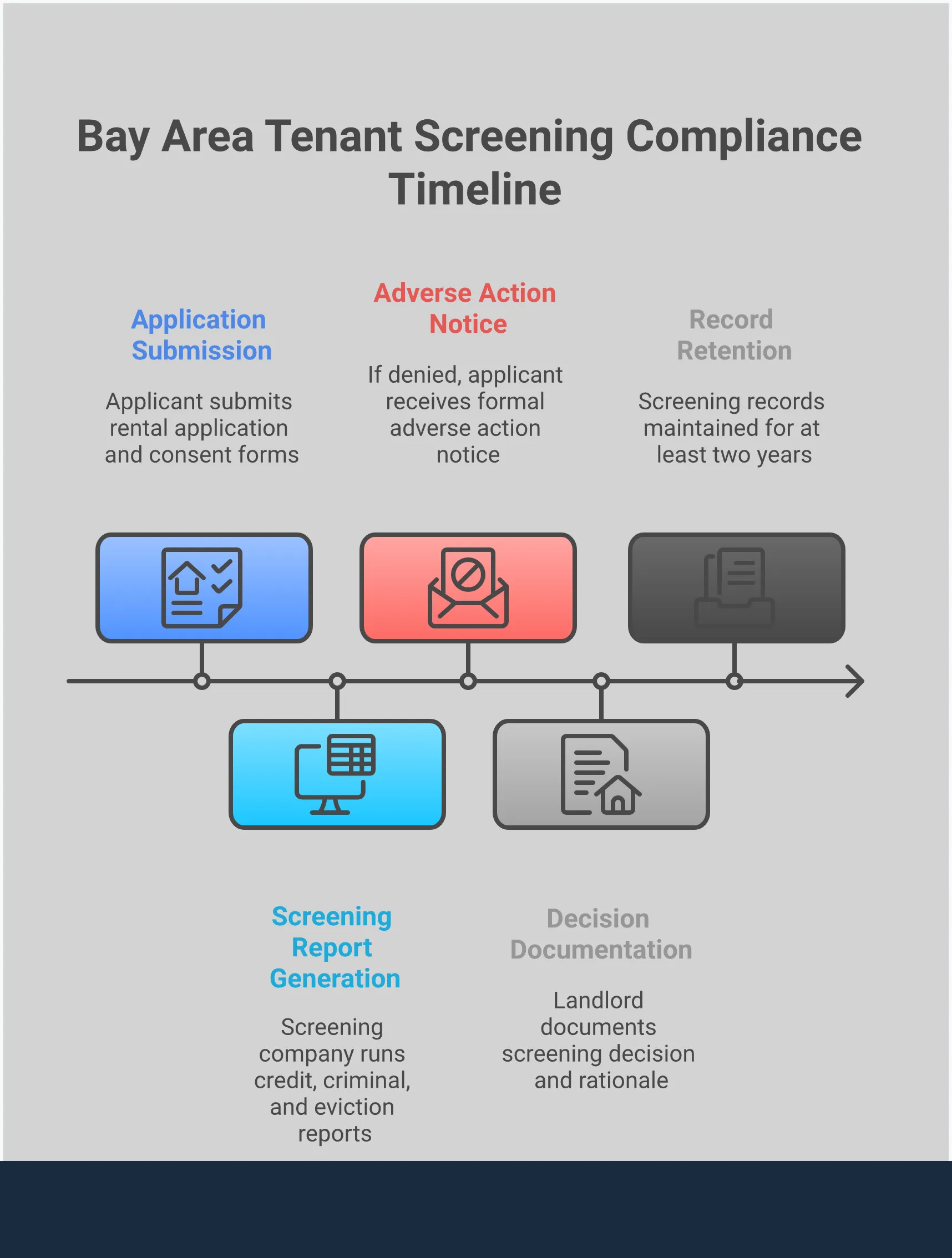
Screening should be a predictable, step-by-step process you follow for every single applicant. First, establish your screening criteria before you list your property. Next, collect completed rental applications from all interested parties. Once you have the applications and written consent, you can request the screening reports through your chosen service. Review each report against your pre-defined criteria, verifying income and contacting references as needed. This systematic approach ensures you evaluate every applicant consistently and fairly, which is essential for avoiding discrimination claims. It turns a potentially subjective decision into an objective, documented business process.
How Much Do Tenant Screenings Cost?
One of the most common questions landlords ask is about the cost of screening potential tenants. It’s a practical concern, and the good news is that a thorough screening is one of the most cost-effective investments you can make in your rental property. Think of it not as an expense, but as insurance against late rent, property damage, and the costly eviction process. The fee for a comprehensive report is minor compared to the financial and emotional toll of a difficult tenancy. Understanding the costs involved and who typically pays for them will help you set up a smooth and effective screening process for your Bay Area property.
Understanding Screening Fees
You can expect to pay between $20 and $50 per applicant for a standard report from most tenant screening services. This fee generally covers the essentials: a full credit check, a national criminal background check, and a search for any past evictions. The price can vary depending on the depth of the report you need, but this range is a reliable benchmark for budgeting. While it might be tempting to find the cheapest option, a quality report provides the detailed insights you need to make a confident decision. This small, upfront investment gives you a much clearer picture of who you’re renting to and helps protect your asset for the long term.
Who Pays: Landlord or Applicant?
In California, you have the flexibility to decide whether you’ll cover the screening fee or have the applicant pay it. It’s very common in the Bay Area for landlords to pass the cost onto the applicants. Requiring applicants to pay the fee is a great way to ensure you’re only dealing with serious candidates who are genuinely interested in your property. It’s also wise to require every adult who will be living in the unit to submit their own application and screening report. This policy protects you if the primary applicant moves out, ensuring that everyone residing in your property has been properly vetted. Managing this process correctly is key to staying compliant, and our team can work with you to handle every step.
Stay Compliant: Your Legal Obligations as a Landlord
Running a background check isn't just about finding the right tenant; it's also about following the law. As a landlord, you have a responsibility to treat every applicant fairly and consistently, which means understanding the rules that govern the screening process. Staying compliant protects you from potential lawsuits and helps you build a reputation as a fair and professional property owner.
Navigating the legal landscape can feel complicated, but it boils down to a few key principles: know the laws, apply your criteria equally to everyone, and handle sensitive information responsibly. From federal anti-discrimination laws to specific California regulations, every step of your screening process is guided by rules designed to protect both you and your potential tenants. Getting this right from the start saves you from major headaches down the road and sets the foundation for a positive landlord-tenant relationship. We can help you establish a compliant screening process when you work with us to fill your vacancies.
Fair Housing Laws and Avoiding Discrimination
The foundation of any legal screening process is the Fair Housing Act. This federal law makes it illegal to discriminate against tenants based on protected characteristics. You cannot make a rental decision based on a person's race, color, religion, national origin, sex (including gender identity and sexual orientation), disability, or familial status.
To stay compliant, it’s essential to establish objective rental criteria—like income-to-rent ratio and credit history—and apply them consistently to every single applicant. This ensures your decisions are based on business reasons, not personal biases. Documenting your criteria and your reasons for denying an applicant can provide crucial evidence that you followed a fair and lawful process.
Handling Adverse Action Notices
If you decide to deny an applicant based on information found in their credit report or background check, you are required by the Fair Credit Reporting Act (FCRA) to take a specific step. This is called sending an "adverse action" notice. An adverse action can be an outright denial, requiring a co-signer, or charging a higher security deposit.
The notice must inform the applicant that they were denied because of information in their report. It also needs to include the name and contact information of the screening company you used and clarify that the screening company did not make the final decision. This gives the applicant a chance to review their report and dispute any inaccuracies.
Key California Screening Laws
While federal laws provide a baseline, California has its own set of rules that Bay Area landlords must follow. First, you must get written consent from an applicant before you can run a credit check. You also cannot charge an application screening fee that is higher than your actual out-of-pocket costs for the screening, and there's a legal cap on this amount that is adjusted annually.
California law also reinforces the principles of fair housing, adding extra protected classes like marital status, ancestry, and source of income. By understanding these specific state requirements, you can ensure your relocation services and leasing processes are fully compliant, protecting your business and treating all applicants fairly.
How to Spot Red Flags in a Screening Report
A screening report is more than just a pass/fail document—it’s a detailed story about a potential tenant’s financial habits and rental history. Learning to read between the lines is a critical skill for any landlord. While a single late payment from years ago might not be a dealbreaker, a pattern of financial instability or frequent, unexplained moves should give you pause. A red flag doesn’t always mean an automatic "no." Instead, think of it as a signal to dig deeper, ask clarifying questions, and verify information. For example, a medical collection account might be viewed differently than a history of skipping out on rent.
The goal isn't to find a "perfect" applicant with a flawless record, but to find a reliable one who communicates openly and is likely to pay rent on time and care for your property. Understanding what to look for helps you make an informed, fair, and confident decision. It’s a key part of how we work with property owners to protect their investments and ensure a stable tenancy. By identifying potential issues early, you can avoid costly problems down the road and secure a tenant who is a great fit for your property.
Warning Signs on a Credit Report
A high income doesn't always guarantee timely rent payments; an applicant's credit history reveals their actual payment habits. Look past the three-digit score and examine the details. Consistent late payments on credit cards, car loans, or other bills are a major red flag, as this behavior could easily carry over to rent. Also, look for accounts in collections, significant charge-offs, or a high debt-to-income ratio, which can indicate financial overextension. Keep in mind that under the Fair Credit Reporting Act, most negative information can only be reported for seven years, so the report shows a recent financial picture.
Red Flags in Rental and Employment History
A stable rental and employment history is often a sign of a reliable tenant. Be cautious of applicants with an unstable work history or frequent moves in a short period, as this could signal instability. Gaps in their rental history or an inability to provide references from previous landlords are also warning signs. Always verify the information provided. Call previous landlords and employers to confirm dates, rent amounts, and reasons for leaving. If you decide to deny an applicant based on what you find, remember you must follow proper adverse action procedures to remain compliant with fair housing laws.
How to Talk to Applicants About Screening
Talking about money and background checks can feel awkward, but it’s a necessary part of the leasing process. How you communicate your screening process sets the tone for your entire landlord-tenant relationship. A clear, professional, and consistent approach builds trust and shows applicants that you’re a serious and fair property owner. It also helps you stay compliant and ensures that everyone is on the same page from day one. By handling these conversations with confidence, you can streamline your application process and find the right tenant for your property. If you need help managing these communications, our team at Rentals Inc. can work with you to handle the entire leasing process.
Set Clear Expectations from the Start
The best time to talk about screening is before an applicant even fills out an application. Be upfront about your criteria. List your minimum requirements directly in your property description on your listings page or provide a clear summary sheet at showings. This should include your required income-to-rent ratio, minimum credit score, and policy on rental history or references. When you state these standards upfront, you save everyone time. Qualified applicants will appreciate the clarity, and those who don’t meet the criteria can self-select out, reducing the number of applications you need to process. This transparency is the foundation of a fair and efficient screening system.
Explain Why You Screen
Frame the screening process not as an interrogation, but as a standard business practice designed to protect both you and the applicant. Explain that running a background and credit check is how you verify that an applicant can comfortably meet the financial obligations of the lease. It’s about ensuring a good, sustainable fit for everyone involved. You can say something like, “We run a standard background and credit check on all applicants to verify income, rental history, and credit history. This helps us make sure the property is a good financial fit for you and helps us protect our investment.” This professional explanation removes the personal element and reinforces that you have a consistent process for everyone.
Be Transparent About the Process
Let applicants know exactly what to expect. Tell them which screening service you use, what the fee is, and what information the report will cover. It’s also crucial to inform them of their rights under the Fair Credit Reporting Act (FCRA). This includes their right to see the report and dispute any inaccuracies. If you ultimately decide to deny an application based on information in the screening report, you are legally required to provide an “adverse action” notice. Being transparent about these legal requirements from the beginning shows that you are a knowledgeable and compliant landlord, which builds credibility with serious applicants.
Common Myths About Tenant Screening, Debunked
Misinformation about tenant screening can create unnecessary friction between landlords and applicants. When potential tenants are worried about the process, or when landlords operate on false assumptions, it’s harder to build the trust needed for a positive rental relationship. Clearing up these common myths helps you establish a transparent process from day one, giving you the confidence to explain your criteria and answer questions clearly. It also ensures you’re making decisions based on solid facts, not guesswork.
In a competitive market like the San Francisco Bay Area, a smooth and professional screening process sets you apart. It shows applicants that you’re a serious, fair-minded landlord, which attracts the kind of responsible tenants you want. By understanding the truth behind these myths, you can refine your approach, protect your investment, and communicate more effectively with every person who applies for your property. A well-defined screening protocol is your first line of defense against future problems. Having a consistent, fair process is key, which is why many property owners work with us to handle screening from start to finish, ensuring compliance and peace of mind. Let’s debunk a few of the most persistent myths out there.
Myth: "It Hurts My Credit Score"
Many applicants worry that a credit check for a rental application will lower their credit score. This is a common concern, but it’s unfounded. When you run a credit check for tenant screening, it’s registered as a “soft inquiry.” Unlike “hard inquiries,” which occur when someone applies for a new loan or credit card, soft inquiries do not affect an applicant's credit score. You can confidently reassure your applicants that submitting an application for your property will not penalize them. Explaining this distinction up front can ease their concerns and shows that you operate with transparency, building goodwill from the very beginning of your interaction.
Myth: "A High Income Is All That Matters"
While a strong and verifiable income is certainly an important qualification, it doesn’t paint the full picture of an applicant's financial reliability. A high salary doesn't automatically mean someone pays their bills on time. That’s why a comprehensive screening report is so valuable. An applicant’s credit history is a crucial indicator of their payment habits and overall financial responsibility. Looking at their history of paying rent, loans, and other bills gives you a much more accurate assessment of their likelihood to pay rent consistently. Relying only on income means you could miss critical red flags and overlook a more qualified applicant with a solid payment history.
Myth: "Screening Isn't Really Necessary"
In a rush to fill a vacancy, it can be tempting to skip a formal screening process, especially if an applicant seems great on paper or makes a good first impression. However, this is one of the riskiest shortcuts a landlord can take. Failing to properly screen applicants exposes you to potential issues like chronic late payments, property damage, or even costly and stressful eviction proceedings. Comprehensive tenant screening is not just a formality; it’s a fundamental business practice that protects your property and your income. It’s the most effective tool you have for finding a reliable, long-term tenant who will treat your investment with respect.
Create a Fair and Consistent Screening Process
A standardized screening process is your most powerful tool for finding reliable tenants while staying compliant with fair housing laws. When you treat every application the same way, you remove guesswork and subjectivity, which protects you from potential discrimination claims. More importantly, a consistent system helps you objectively compare applicants to find the best fit for your property. Think of it as creating a clear, repeatable workflow. This approach not only simplifies your decision-making but also sets a professional tone from the very beginning of your landlord-tenant relationship. By establishing a fair and uniform process, you ensure that every applicant is evaluated on the same metrics, leading to better outcomes and less risk.
Define Your Qualification Standards
Before you even list your property, you need to decide what a qualified tenant looks like on paper. Create a written list of your minimum requirements and stick to it. This isn't about being overly strict; it's about being clear and consistent. Your standards should be objective and directly related to an applicant's ability to pay rent and care for your property. Key criteria to define include a minimum credit score, a specific income-to-rent ratio (a common standard is three times the monthly rent), and requirements for rental history, such as positive references from previous landlords. Having these qualification standards established ahead of time creates a simple scorecard to measure every application against, ensuring you evaluate everyone on the same terms.
Document Every Decision
Meticulous record-keeping is non-negotiable. For every applicant—not just the one you select—you should keep a file containing their application, the screening reports you ran, and your notes detailing how they did or did not meet your predefined criteria. This paper trail is your best defense if your decision is ever questioned. If you decide to deny an applicant based on information found in their screening report, you are legally required to send them an "adverse action" notice. This letter informs them of the decision, provides the name and contact information of the screening company you used, and explains their right to dispute the information. Proper documentation shows you’re running a professional, compliant operation.
Apply Your Criteria Fairly to Every Applicant
Once your standards are set, the most critical step is to apply them to every single person who applies, without exception. It can be tempting to bend the rules for an applicant you have a good "gut feeling" about, but this is where landlords often get into trouble. Sticking to your objective criteria protects you and ensures every applicant gets a fair shot. It’s also helpful to address common applicant concerns, like the myth that a rental inquiry will hurt their credit score. A properly conducted background check is considered a soft inquiry and has no effect on their score. By applying your standards consistently and transparently, you build a reputation as a fair landlord and make it easier to find great tenants for your Bay Area property.
The High Cost of Skipping a Background Check
It can be tempting to cut corners to fill a vacancy quickly, especially in the fast-moving Bay Area rental market. But skipping a thorough tenant background check is one of the most expensive mistakes a landlord can make. This isn't just about avoiding a worst-case scenario; it's about protecting your investment, your income, and your peace of mind. A small upfront investment in proper screening can save you from significant financial and legal trouble down the line.
Financial Risks and Lost Rent
The most immediate risk of placing an unscreened tenant is financial. If a tenant stops paying rent, you’re not just losing monthly income—you’re facing a costly and time-consuming eviction process. According to TransUnion, the average cost of an eviction is around $3,500, and that figure doesn’t include the weeks or months of lost rent while the unit is occupied but not generating income.
Once you factor in court fees, potential repairs, and the marketing costs to find a new tenant, the financial damage can quickly escalate. A comprehensive background check that verifies income and rental history is your first line of defense against this preventable loss. Our process at Rentals Inc. is designed to help you find reliable tenants who have a proven track record of paying on time, securing your cash flow.
Property Damage and Legal Headaches
Beyond unpaid rent, a problematic tenant can cause significant physical damage to your property. We’ve seen everything from stained carpets and punched-in walls to complete neglect that leads to thousands of dollars in repairs. These costs can easily wipe out years of profit from a rental unit. A thorough screening report often includes rental history, which can reveal if an applicant has a pattern of leaving properties in poor condition.
Skipping a background check can also lead to other expensive problems, from unauthorized occupants and pets to illegal activities conducted on your property. Each of these issues creates a legal headache and puts your investment at risk. Vetting every applicant helps ensure the person you’re trusting with your asset will treat it with respect and adhere to the terms of your lease agreement.
The True Cost of a Bad Tenant
The true cost of a bad tenant goes beyond a simple dollar amount. It costs you time spent dealing with disputes, stress from constant worry, and damage to your reputation as a landlord. A proper screening process helps you avoid this entirely. It’s also important to know that running a check is a fair and standard practice. Many applicants worry that a screening will hurt their credit, but a properly conducted background check has no negative effect on their score.
Think of a background check not as a barrier, but as a tool for finding a great long-term partner for your property. By verifying an applicant’s financial responsibility and rental history, you’re not just avoiding bad tenants—you’re actively selecting for good ones who will pay on time, care for your property, and make your life as a landlord easier.
Related Articles
- Work With Rentals Inc | Property & Renter Solutions | Rentals Inc
- Relocation Support & Housing Guidance | Rentals Inc | Rentals Inc
- Find Bay Area Rental Options | Rentals Inc
Leasing Services · SF Bay Area
Schedule a Leasing Consultation
Learn how Rentals Inc. helps property owners reduce vacancy, attract qualified applicants, and lease with confidence.
Schedule a Leasing ConsultationFrequently Asked Questions
What if an applicant has a high income but a low credit score? This is a common situation, and it’s a great example of why you should look at the entire screening report, not just one number. A high income shows they can afford the rent, but the credit history reveals their actual payment habits. Look deeper into why the score is low. A history of late rent payments or unpaid utility bills is a significant red flag. However, a low score due to past medical debt or student loans might not be as concerning. The key is to use the full report to assess their overall financial responsibility.
Can I deny an applicant for any criminal conviction I find? No, you need to be careful here. Fair housing guidelines recommend that you only consider convictions that are relevant to the tenancy and could pose a direct threat to the property or the safety of other residents. A blanket policy of denying anyone with any kind of criminal record could be seen as discriminatory. Your decision should be based on the nature and severity of the crime and how long ago it occurred. A consistent, documented policy is essential for staying compliant.
What should I do if an applicant offers to pay several months' rent upfront to bypass the screening process? While the offer might seem tempting, you should view it as a major red flag and politely decline. A thorough screening process is non-negotiable for protecting your investment. An applicant who is eager to avoid a background check may be trying to hide a history of evictions, a poor credit record, or other serious issues. Sticking to your standard procedure for every single applicant is the only way to ensure you are being fair and protecting yourself from potential problems.
Do I really need to run a background check on every adult who will live in the property? Yes, absolutely. Every person over 18 who will be living in the unit should complete an application and undergo the same screening process. This ensures that everyone residing in your property is qualified and legally accountable under the lease agreement. If you only screen the primary applicant and they later move out, you could be left with occupants you know nothing about, which puts your property at significant risk.
How long does a typical tenant screening take to complete? Most reputable screening services can return a comprehensive report very quickly, often within a few hours. The entire process, from receiving the application to making a final decision, usually takes between 24 and 72 hours. The timeline can sometimes be extended if you need to manually verify employment or contact previous landlord references, so it’s helpful to let applicants know what to expect.