

As a landlord, it’s tempting to trust your gut. An applicant might seem friendly, professional, and responsible during a showing, but a good conversation is not a substitute for objective facts. Relying on intuition alone is a significant liability that can lead to costly evictions and even fair housing complaints. The only way to protect your asset and ensure fairness is to base your leasing decisions on consistent, verifiable data. A professional tenant screening company provides this crucial service, delivering a clear, unbiased report on an applicant's credit, criminal, and rental history. This process gives you the confidence to choose the right tenant based on qualifications, not just a feeling.
Leasing Services · SF Bay Area
Schedule a Leasing Consultation
Learn how Rentals Inc. helps property owners reduce vacancy, attract qualified applicants, and lease with confidence.
Schedule a Leasing ConsultationKey Takeaways
- Treat Screening as Your First Line of Defense: Rushing to fill a vacancy is a costly gamble. A thorough screening process is essential due diligence that protects your investment by verifying an applicant's financial stability and rental history before you hand over the keys.
- Look Beyond the Credit Score: A high credit score doesn't tell the whole story. The most reliable tenants are found by analyzing the complete picture, including their income, eviction history, and direct references from previous landlords.
- Create Consistent Criteria to Stay Compliant: To avoid fair housing violations, you must establish objective standards and apply them equally to every single applicant. A consistent, documented process is your best protection against potential discrimination claims.
What is Tenant Screening (And Why You Can't Skip It)
Tenant screening is the process of gathering and reviewing information about a rental applicant before you sign a lease. Think of it as essential due diligence for your property. Skipping this step is one of the biggest risks a landlord can take, especially in the competitive Bay Area market. A thorough screening process helps you find reliable, qualified tenants who are likely to pay rent on time and take care of your property, setting the foundation for a smooth and professional landlord-tenant relationship from day one.
What a Screening Company Actually Does
A professional screening company acts as your fact-checking partner. Their job is to provide objective, verifiable data so you can make an informed leasing decision based on consistent criteria, not just a gut feeling. A standard screening service will deliver a comprehensive report that typically includes a potential tenant's credit history, a national criminal background check, and a search for any past evictions. They also help with the critical step of income and employment verification, ensuring an applicant has the financial stability to comfortably afford the rent. This data gives you a clear, unbiased picture of each applicant.
How Screening Protects Your Bay Area Property
In a market with robust tenant protections, placing the right tenant is your first and best line of defense against future problems. A vacant unit costs you money, but a problematic tenancy can cost you far more in lost rent, legal fees, and property damage. Screening protects your investment by confirming an applicant’s rental history and financial responsibility. It helps you verify that they have a track record of paying on time and respecting their rental obligations. This isn't about being difficult; it's about responsibly managing your asset and ensuring you work with tenants who meet your fair, pre-established qualifications.
Debunking Common Myths About Tenant Screening
Many landlords operate on outdated or incorrect assumptions about screening. One common myth is that a high credit score automatically equals a great tenant. While important, a credit score is just one part of the financial story and doesn't show rental history or income. Another misconception is that running a credit check will hurt an applicant's credit score. In reality, these inquiries are often "soft pulls" that don't impact their score. The most dangerous myth is trusting your intuition alone. A friendly conversation is nice, but it’s not a substitute for objective data when making a critical business decision.
What's Included in a Tenant Screening Report?
A tenant screening report isn’t just a single document; it’s a comprehensive file that pulls together several key pieces of information about a potential renter. Think of it as a complete background check designed specifically for landlords in the competitive Bay Area market. The goal is to give you a clear, objective picture of an applicant so you can make a confident decision about who will be living in your property. When you partner with a professional service, you get a detailed analysis that goes far beyond a quick credit check.
A thorough report examines an applicant's financial habits, rental history, and personal background, giving you the insights needed to protect your investment and maintain a safe community. This multi-faceted approach is critical because a high credit score doesn't always equal a great tenant, and a low score doesn't always tell the whole story. Understanding the complete profile helps you choose reliable residents who will pay on time, care for your property, and be good neighbors. Let’s break down exactly what you should expect to see in a quality screening report.
Credit History and Financial Standing
One of the first things you’ll review is the applicant's credit report. This gives you a snapshot of their financial responsibility. You’ll see their credit score, but it’s important to look at the details behind that number. The report will show their payment history on loans and credit cards, how much debt they carry, and any public records like bankruptcies or collections. This information helps you assess an applicant’s ability to manage their finances and consistently pay rent on time. A strong financial history is often a good indicator of a reliable tenant.
Criminal Records and Eviction History
A crucial part of any screening is a background check that includes criminal records and eviction history. This search scans national and local databases for relevant criminal convictions, helping you ensure the safety of your property and your other tenants. Just as important is the eviction history. A past eviction is one of the biggest red flags for a landlord, as it points to a serious breach of a previous lease agreement. Reviewing an applicant’s rental past helps you avoid tenants who have a documented history of failing to meet their obligations.
Employment and Income Verification
Simply put, you need to confirm that an applicant can afford the rent. A screening report should include verification of their employment and income. This process confirms where they work, how long they’ve been there, and how much they earn. Typically, you want to see a stable job history and an income that’s sufficient to cover rent and other living expenses—a common standard is an income of at least three times the monthly rent. This isn't about being invasive; it's about ensuring the applicant is set up for success and you’re protected from potential non-payment.
Past Rental Performance and References
Numbers only tell part of the story. Understanding how an applicant behaved in previous rentals is invaluable. A thorough screening report includes contacting past landlords to ask about their experience with the tenant. Did they pay rent on time? Did they take care of the property? Were there any complaints from neighbors? Did they give proper notice before moving out? Verifying an applicant's rental history gives you a real-world look at what you can expect, which is often more insightful than a credit score alone.
Identity Verification and Fraud Alerts
In today’s market, you can’t afford to take an application at face value. Identity verification is a critical first step to confirm that potential renters are who they claim to be. A good screening service will cross-reference an applicant’s information against official records to prevent fraud. This is also where data accuracy becomes essential. Inaccurate reports can lead to unfair denials and legal trouble. By having a professional team work with you, you can trust that the information you receive is verified, compliant, and gives you a solid foundation for making your decision.
How the Tenant Screening Process Works
A consistent, well-defined tenant screening process is your best defense against costly vacancies and difficult tenancies. It’s not about finding reasons to say "no," but about gathering the right information to confidently say "yes" to a qualified applicant. The process moves from an initial application to a detailed background check, giving you a complete picture of who you’re renting to.
Think of it as a structured workflow. Each step builds on the last, ensuring you treat every applicant fairly while protecting your investment. From collecting the application to reviewing the final report, a standardized approach removes guesswork and helps you make objective, data-driven decisions. This is especially important in a competitive market like the San Francisco Bay Area, where having a clear, compliant process is non-negotiable. When you work with us, we manage this entire workflow for you, ensuring every detail is handled correctly.
The Screening Workflow, Step-by-Step
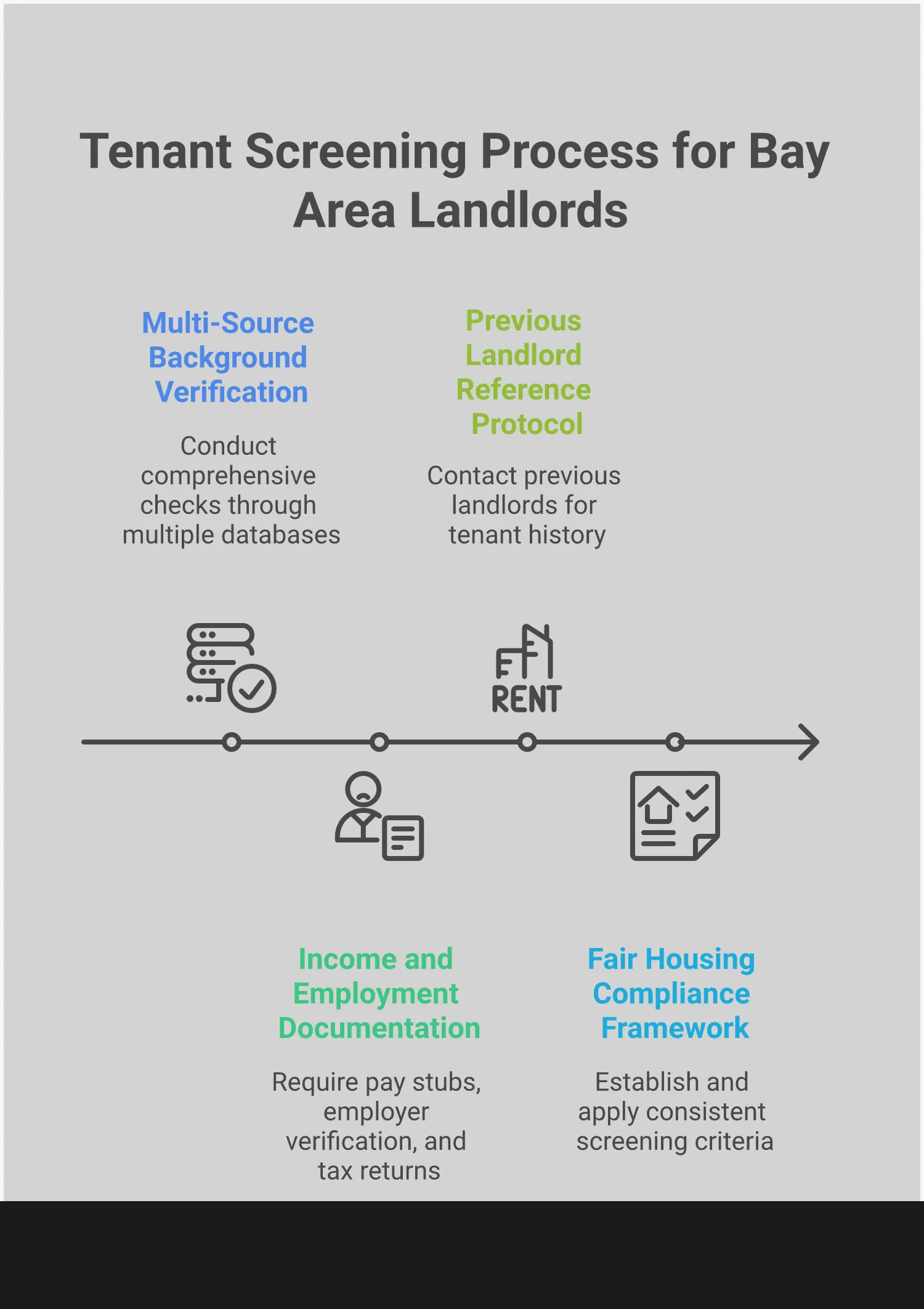
The screening process begins the moment a prospective tenant submits their application. This form is the foundation for everything that follows, collecting essential personal details. A standard application asks for the applicant's name, Social Security number, birth date, past addresses, and job history. It also requires them to disclose any past criminal or eviction history.
Once you have the completed application and the applicant’s written consent, the screening company gets to work. They use the provided information to run a series of checks, pulling data from various sources to verify the applicant's identity, financial standing, and background. The results are then compiled into a comprehensive report for you to review, giving you the clear, factual information needed to make a final leasing decision.
Staying Compliant with Fair Housing Laws
Consistency is the cornerstone of a legally sound screening process. Fair Housing laws require that landlords follow the same rules and apply the same criteria to every single applicant. You can’t change your process or your standards from one person to the next. This means if you check credit for one applicant, you must check it for all of them.
Staying compliant protects you from discrimination claims and ensures you’re making decisions based on legitimate business reasons. This is particularly critical in California, which has its own specific regulations on top of federal laws. A professional partner can help you establish objective screening criteria and apply them uniformly, ensuring your process is both effective and fair. This is one of the most important parts of a successful tenant screening strategy.
How Quickly You'll Get Reports
Landlords often worry that a thorough screening process will be slow and increase vacancy time. Fortunately, that’s usually not the case. Most apartment background checks are finished in one to three days. This quick turnaround allows you to make timely decisions and get your property leased faster.
Of course, some reports can take longer. If an applicant has lived in multiple states or if records are difficult to access, the check might be more detailed and require extra time. A reliable screening partner will provide status updates and communicate any delays, so you’re never left in the dark. The goal is to balance speed with accuracy, giving you a comprehensive report without unnecessarily extending your vacancy period.
Who Pays? Landlord and Tenant Fee Options
It’s standard practice for the applicant to cover the cost of their screening. Landlords can typically pass the cost of a tenant screening onto each rental applicant as part of the application fee. This fee covers the direct costs of running the credit check, criminal background search, and eviction history report.
When setting your application fee, transparency is key. Make sure the fee is clearly stated on the application and that it reasonably reflects your actual screening costs. It’s also important to be aware of local regulations, as some cities in the Bay Area have specific limits on how much you can charge. Handling fees correctly from the start helps build a professional and trustworthy relationship with potential tenants.
How to Choose the Right Tenant Screening Partner
Choosing a tenant screening partner is one of the most important decisions you’ll make as a landlord. The right service acts as your first line of defense, helping you find reliable tenants who will care for your property. But with so many options available, it can be tough to know which one to trust. A great partner does more than just run a background check; they provide accurate data, streamline your workflow, and offer support when you need it. Let’s break down the key things to look for when you’re ready to work with a professional to protect your investment.
Key Features of a Top-Tier Screening Service
At a minimum, any screening service you consider should provide the essentials. Think of this as your core checklist. A comprehensive screening service gives you a full picture of an applicant by delivering detailed reports on their background, credit, eviction history, and income. These reports are the foundation for making an informed decision. Look for a partner that offers clear, easy-to-read reports covering these four areas. Anything less leaves you with blind spots and potential risks. A thorough evaluation of potential renters is the best way to ensure you find someone who is a great fit for your property.
Why Data Accuracy is Non-Negotiable
Inaccurate or incomplete screening reports are more than just an inconvenience—they’re a significant liability. Relying on flawed data can lead you to approve a problematic tenant or reject a great one. This exposes you to financial risks, from the high cost of eviction proceedings to lost rent during vacancies. As one industry report notes, landlords who use incomplete reports face "significant legal and financial exposure." The goal is to find a partner whose data you can trust completely. Accurate information is the bedrock of a fair and effective screening process, protecting both your property and your peace of mind.
Ease of Use and Software Integration
Your time is valuable, and a clunky, hard-to-use screening platform only adds to your workload. The best screening services are designed with the user in mind, offering a clean interface and a straightforward process. Many top-tier platforms also integrate with property management systems, which is a huge advantage. This allows you to automate parts of the application and screening workflow, keeping all your applicant information organized in one place. A seamless system lets you review applications and run reports efficiently, freeing you up to focus on other aspects of managing your property.
Understanding the Costs: What to Watch For
Tenant screening services come with different pricing models, and it’s important to understand how you’ll be charged. Some companies charge landlords a fee for each report, while others have the applicant pay for their own screening. There isn’t one right answer here; the best model depends on your business and local market norms. What matters most is transparency. Look for a partner with a clear pricing structure and no hidden fees. This ensures you can budget effectively and avoid any surprises down the road.
What Happens When You Need Support?
Even with the best software, you’ll eventually have a question or run into an issue. Maybe you need help interpreting a complex report or have a question about compliance. This is when responsive, knowledgeable customer support becomes critical. A good partner will have a support team you can rely on to get timely and helpful answers. Having that expert backup helps you avoid common tenant screening mistakes and maintain a professional, compliant process. It’s a feature you hope you don’t need often, but you’ll be glad it’s there when you do.
Common (and Costly) Tenant Screening Mistakes to Avoid
Finding the right tenant is one of the most critical steps in protecting your investment property. Yet, in the rush to fill a vacancy, it’s easy to make simple mistakes that can lead to significant financial and legal headaches down the road. Steering clear of these common pitfalls is key to securing a reliable, long-term tenant for your Bay Area rental.
Prioritizing Speed Over Accuracy
When a property sits empty, the pressure to sign a lease quickly is intense. But rushing the screening process is a gamble you can’t afford to take. A truly reliable tenant profile is built on more than just a quick income check. A comprehensive screening should always include a thorough review of rental history, conversations with previous landlords, and a check for any past eviction records. Taking the time to verify these details upfront gives you a much clearer picture of an applicant’s stability and helps you avoid costly problems later on. It’s about making an informed decision, not just a fast one.
Skimming Reports Instead of Analyzing Them
Instant screening services promise fast results, but they can create a false sense of security. The real work isn’t just getting the report—it’s understanding it. Many landlords make the mistake of only glancing at the summary or the credit score, missing crucial details hidden within the full report. A pattern of late payments, a high debt-to-income ratio, or an address history that doesn’t match the application can all be red flags. A detailed analysis is your best defense against applicants who look good on paper but may pose a risk to your property and your peace of mind.
Focusing Only on the Credit Score
It’s a persistent myth that a high credit score automatically equals a great tenant. While financial responsibility is important, a credit score doesn't tell the whole story. It won’t tell you if an applicant will respect your property, get along with neighbors, or communicate effectively about maintenance issues. A tenant with a slightly lower score but a flawless rental history and glowing references from past landlords can often be a better choice. A holistic approach that weighs all factors—income, rental history, and references—is essential for finding a truly qualified tenant who will be a partner in caring for your home.
Forgetting to Screen All Adult Applicants
This mistake is surprisingly common and incredibly risky. Every single adult who will be living in the property must complete an application and undergo the same screening process. If you only screen the primary applicant, you have no information about the other occupants. This leaves you vulnerable if the unscreened tenant causes property damage, stops contributing to rent, or has a problematic rental or criminal history. Ensuring every adult resident meets your criteria is a fundamental step in protecting your asset and holding all tenants accountable under the lease agreement.
Overlooking Fair Housing Compliance
Navigating tenant screening requires a firm understanding of fair housing laws. Making decisions based on protected characteristics—even unintentionally—can lead to serious legal trouble. It's crucial to establish objective, consistent screening criteria and apply them equally to every single applicant. This protects you from discrimination claims and ensures your process is both ethical and defensible. Staying current on federal, state, and local regulations is non-negotiable. For Bay Area landlords, understanding California’s specific fair housing rules is essential. If you’re unsure about compliance, it’s always best to work with us to ensure your process is fair and legally sound.
Related Articles
- Work With Rentals Inc | Property & Renter Solutions | Rentals Inc
- Relocation Support & Housing Guidance | Rentals Inc | Rentals Inc
- Find Bay Area Rental Options | Rentals Inc
Leasing Services · SF Bay Area
Schedule a Leasing Consultation
Learn how Rentals Inc. helps property owners reduce vacancy, attract qualified applicants, and lease with confidence.
Schedule a Leasing ConsultationFrequently Asked Questions
What should I do if a great applicant has a low credit score? A low credit score isn't an automatic disqualifier, but it does mean you need to look closer at the story behind the number. Review their full credit report to understand the cause. Was it a past medical bill or a student loan issue, or is there a consistent pattern of late payments on multiple accounts? An applicant with a strong income and excellent rental history might still be a great choice, especially if they can explain the credit issue. You could also consider asking for a larger security deposit or a co-signer, as long as you apply these standards consistently to all applicants in a similar situation.
How can I make sure my screening criteria don't violate Fair Housing laws? The key to compliance is consistency. Before you even list your property, you should write down your minimum qualification criteria—for example, a specific income-to-rent ratio or a policy on prior evictions. Apply these exact same standards to every single person who applies, without exception. This creates an objective, business-based process. The safest approach is to work with a professional partner who understands the specific federal, state, and local Bay Area regulations to ensure your entire process is fair and legally sound.
Is it really necessary to call an applicant's previous landlords? Absolutely. This is one of the most valuable steps in the entire process. A credit report shows financial habits, but a conversation with a past landlord tells you what someone is like as a tenant. You can confirm if they paid rent on time, took care of the property, and communicated respectfully. This simple phone call provides real-world insight that you just can't get from a report, helping you understand if the applicant is someone you can build a positive professional relationship with.
What's the best way to handle multiple qualified applicants for the same property? In a competitive market, this is a great problem to have. The fairest and most legally sound method is to approve the first applicant who meets all of your pre-established screening criteria. This "first-come, first-served" approach for qualified candidates removes any potential for bias in your decision-making. It’s another reason why having your criteria clearly defined from the start is so important for protecting your business.
Why can't I just use a simple online credit check service myself? While those services provide a credit score, they don't give you the complete picture needed to make a sound business decision. A professional screening service provides a comprehensive report that includes a national criminal background check, a search for any past evictions, and verification of employment and income. This multi-layered approach gives you verified, objective data, ensuring you're not just checking a score but are truly vetting a potential tenant to protect your investment.